Review: Alpaka Traverse
Disclaimer
Alpaka has provided me with the Traverse. No money exchanged hands, but I do get to keep the bag. The opinions in this review are entirely my own; Alpaka does not get to see this review before it’s published. No links in this review are affiliate links.
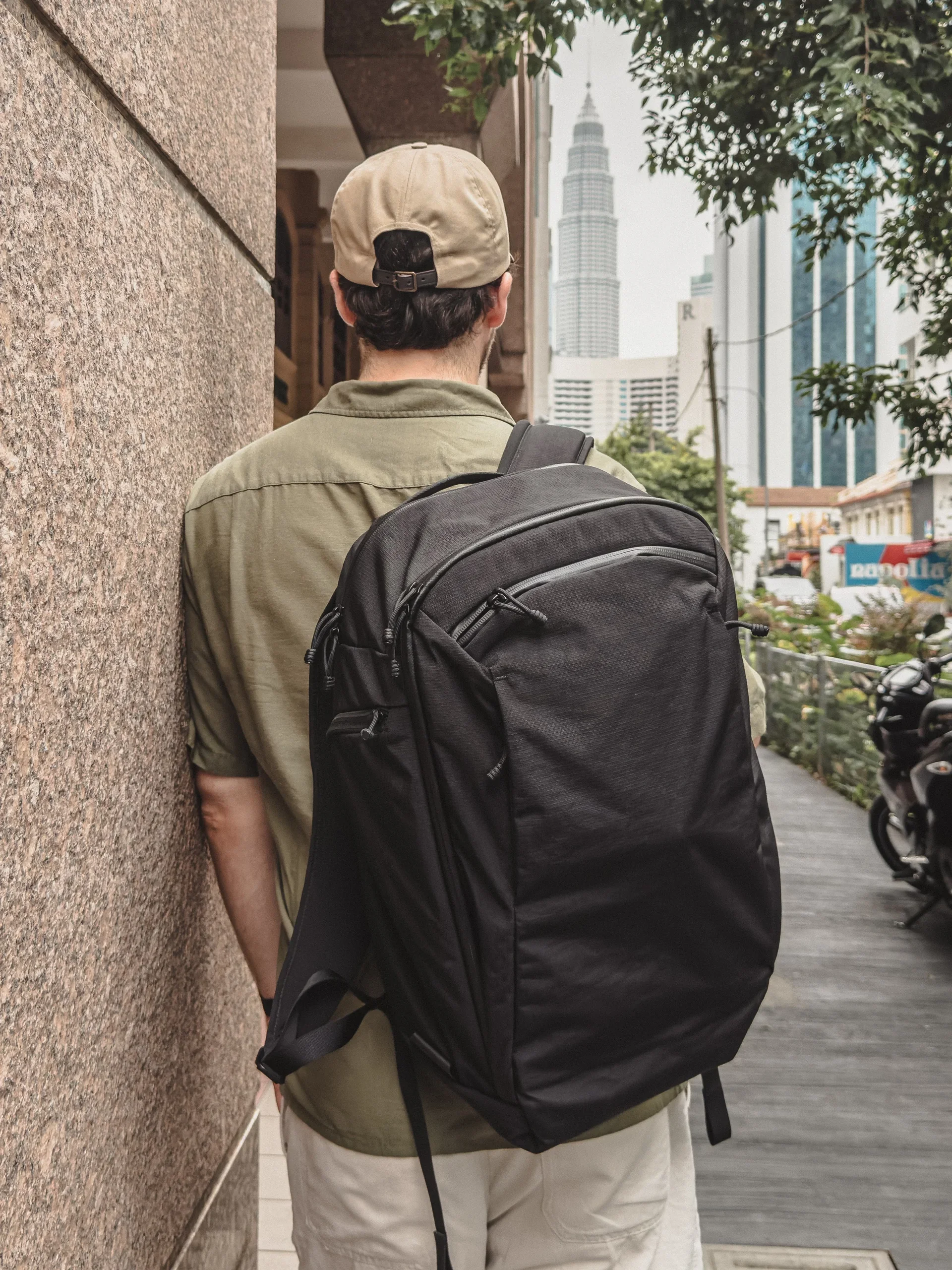
Alpaka Traverse in black Axoflux 400D ripstop nylon. I’m 173 cm, 66 kg (5’8”, 145 lbs).
Introduction
Alpaka is an Australian brand that has been rapidly building out a lineup of travel and EDC bags with a clean, minimalist aesthetic.
The Traverse is advertised as a 30-liter travel backpack but carries closer to a 25-liter bag, which puts it in the all-rounder category: big enough for extended weekend one-bag travel and small enough for daily carry.
Made from Alpaka’s proprietary Axoflux 400D ripstop nylon, with a full clamshell opening, room for up to a 16” laptop, thick ventilated back-panel padding, and plush shoulder straps, the Traverse covers the staples of a modern bag and comes in at $199 USD.
Experience
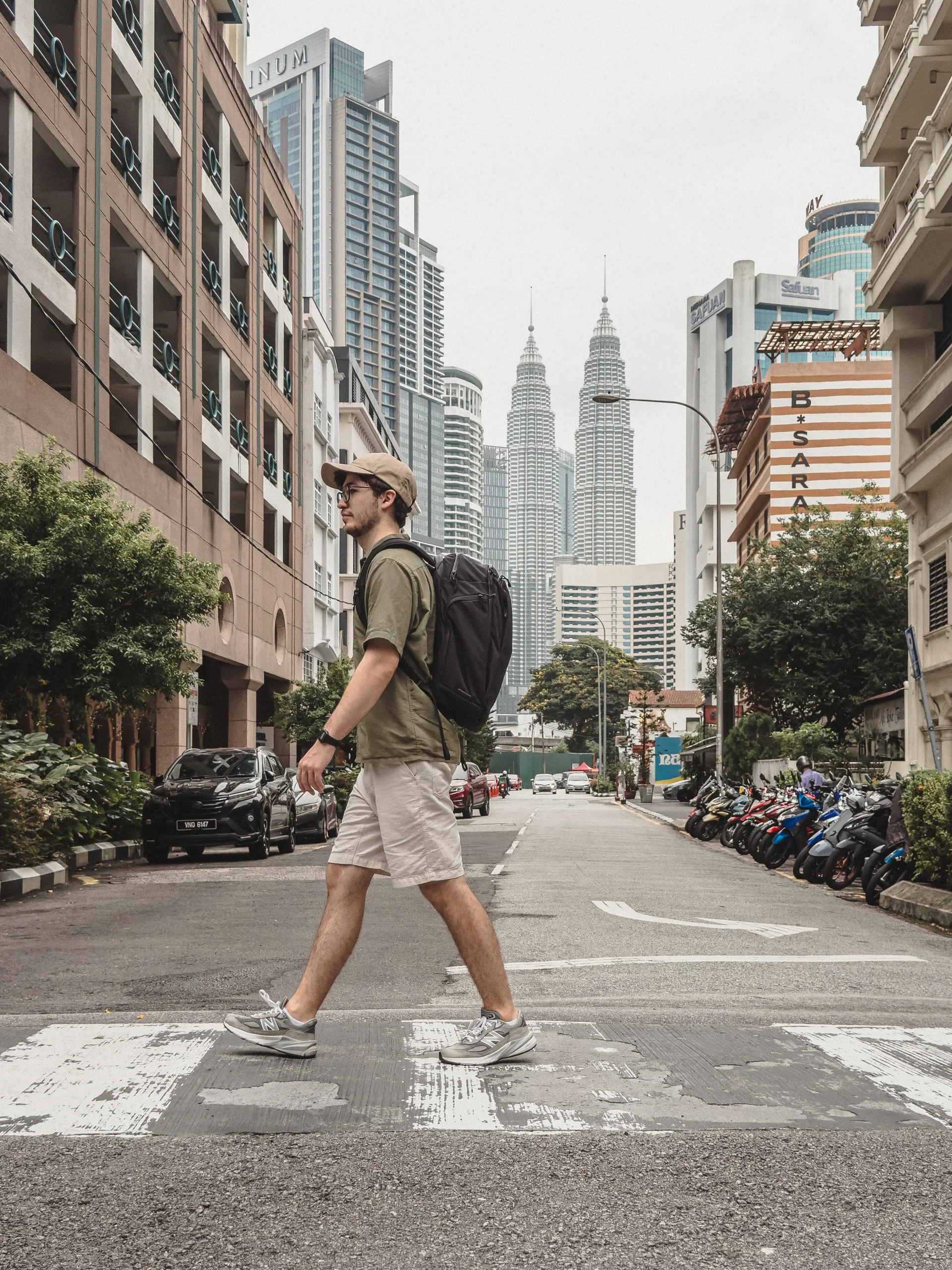
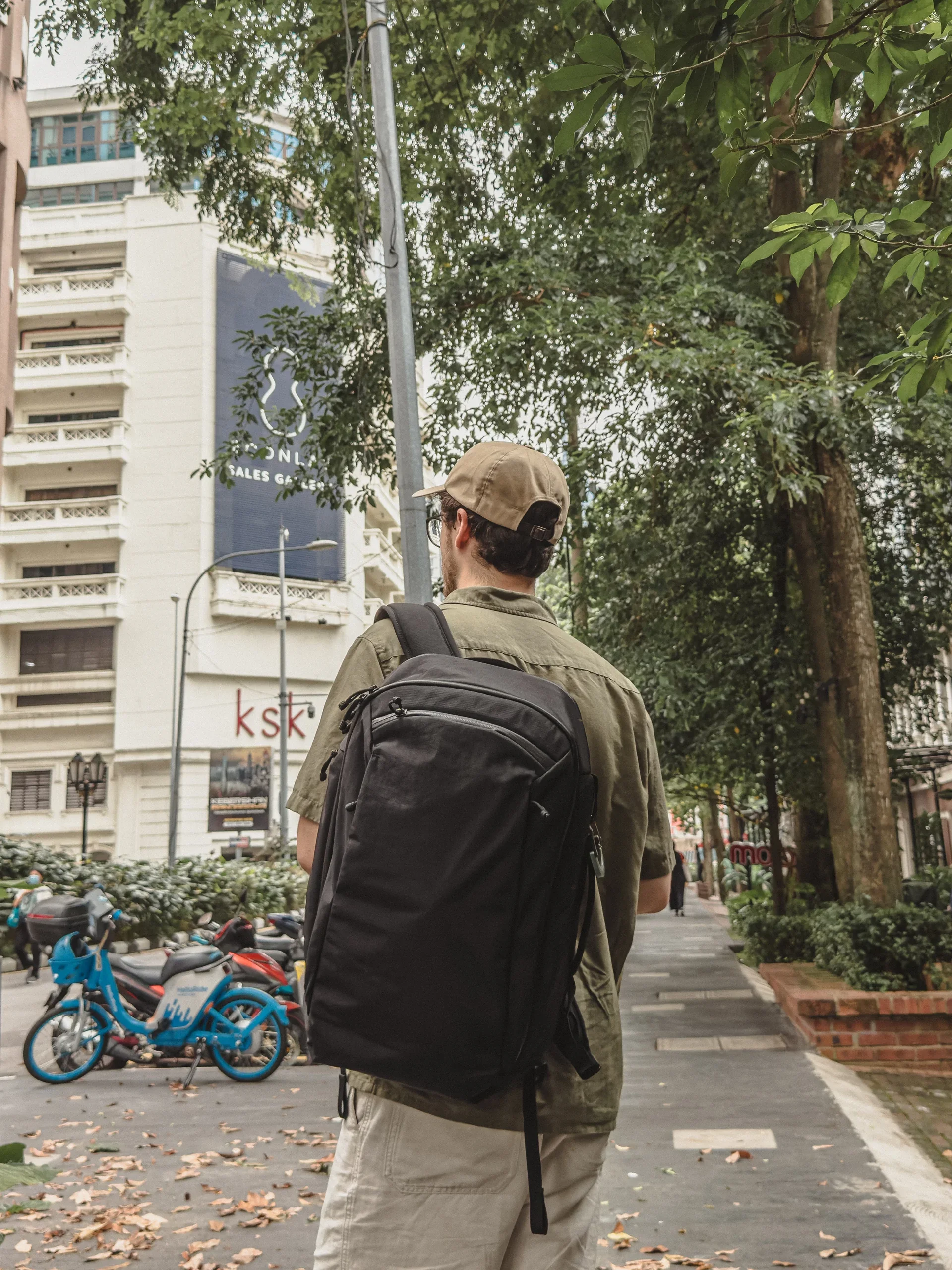
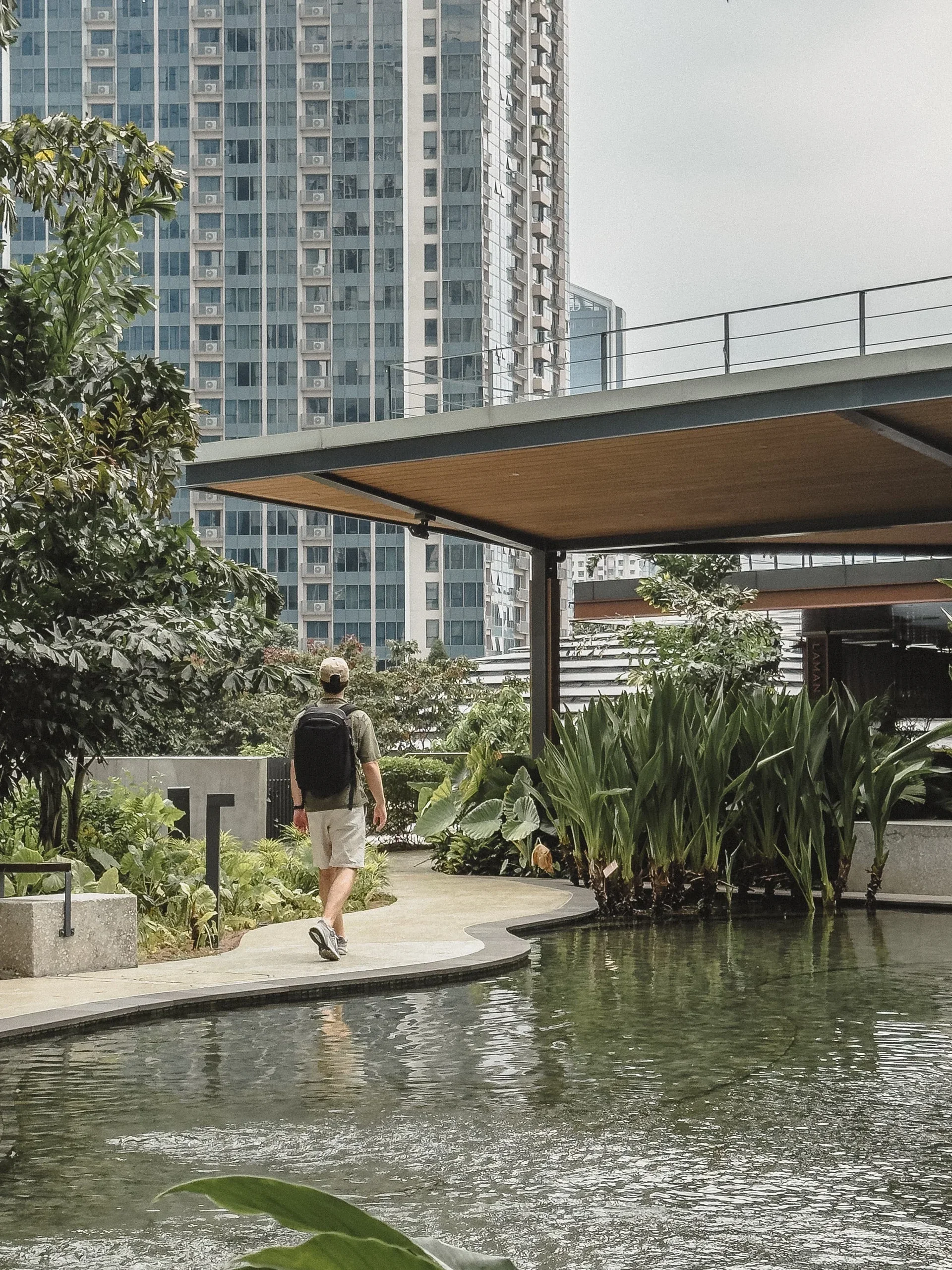
I have used the Traverse as my EDC bag, taking it to work out of coffee shops and for walks in the park, as well as my carry-on and daypack for a 4-night trip to Kuala Lumpur.
Aesthetics
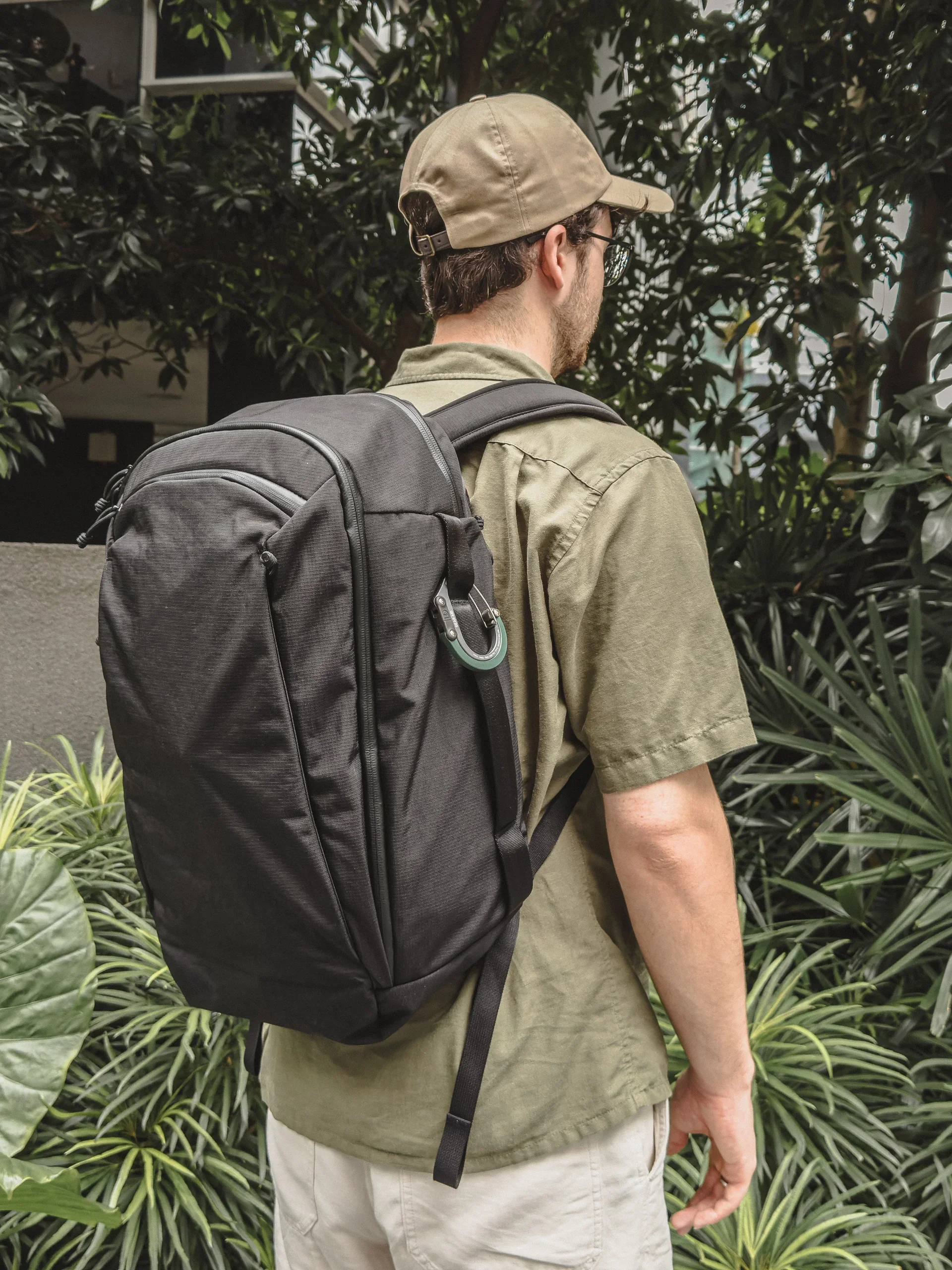
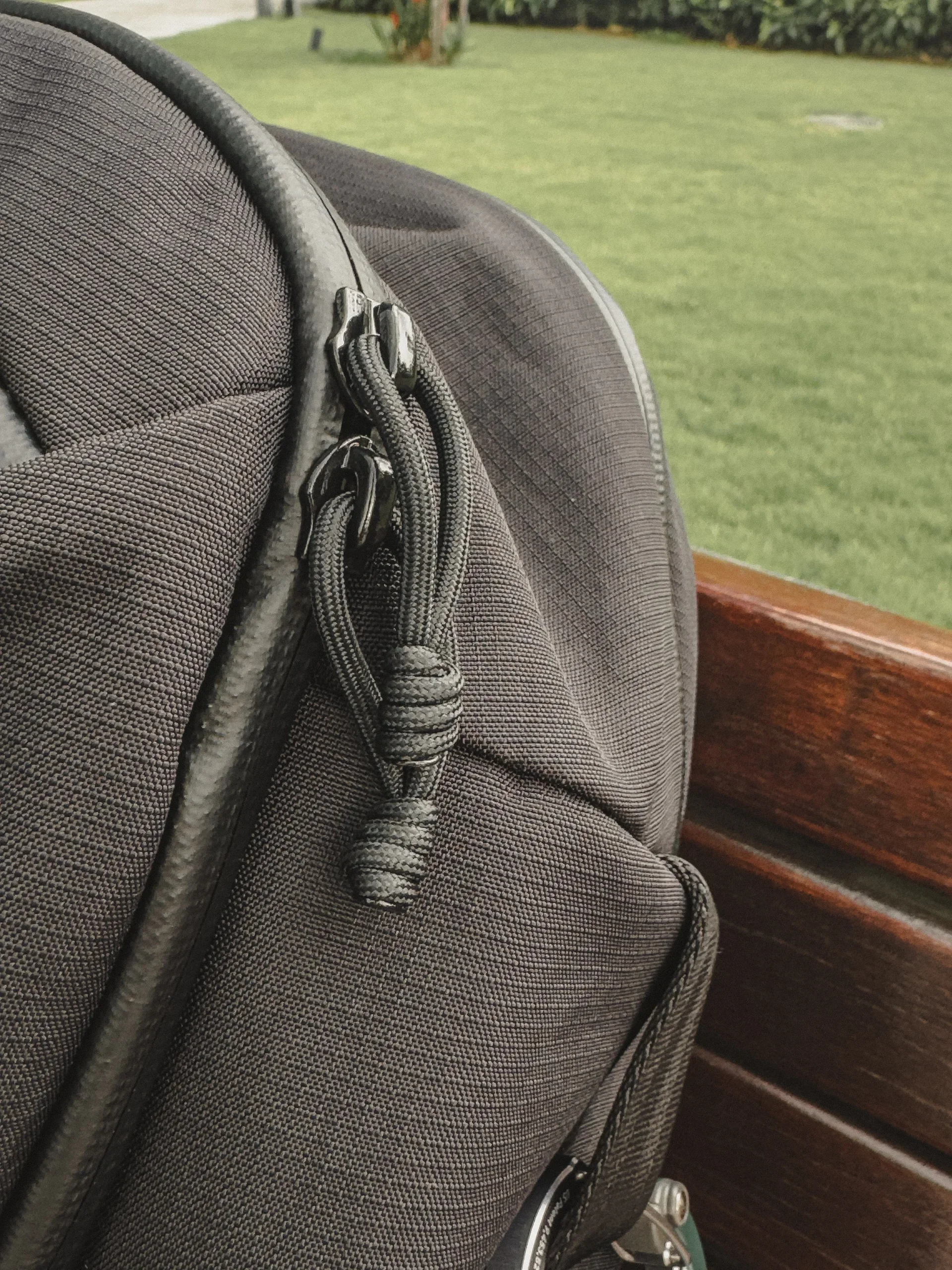
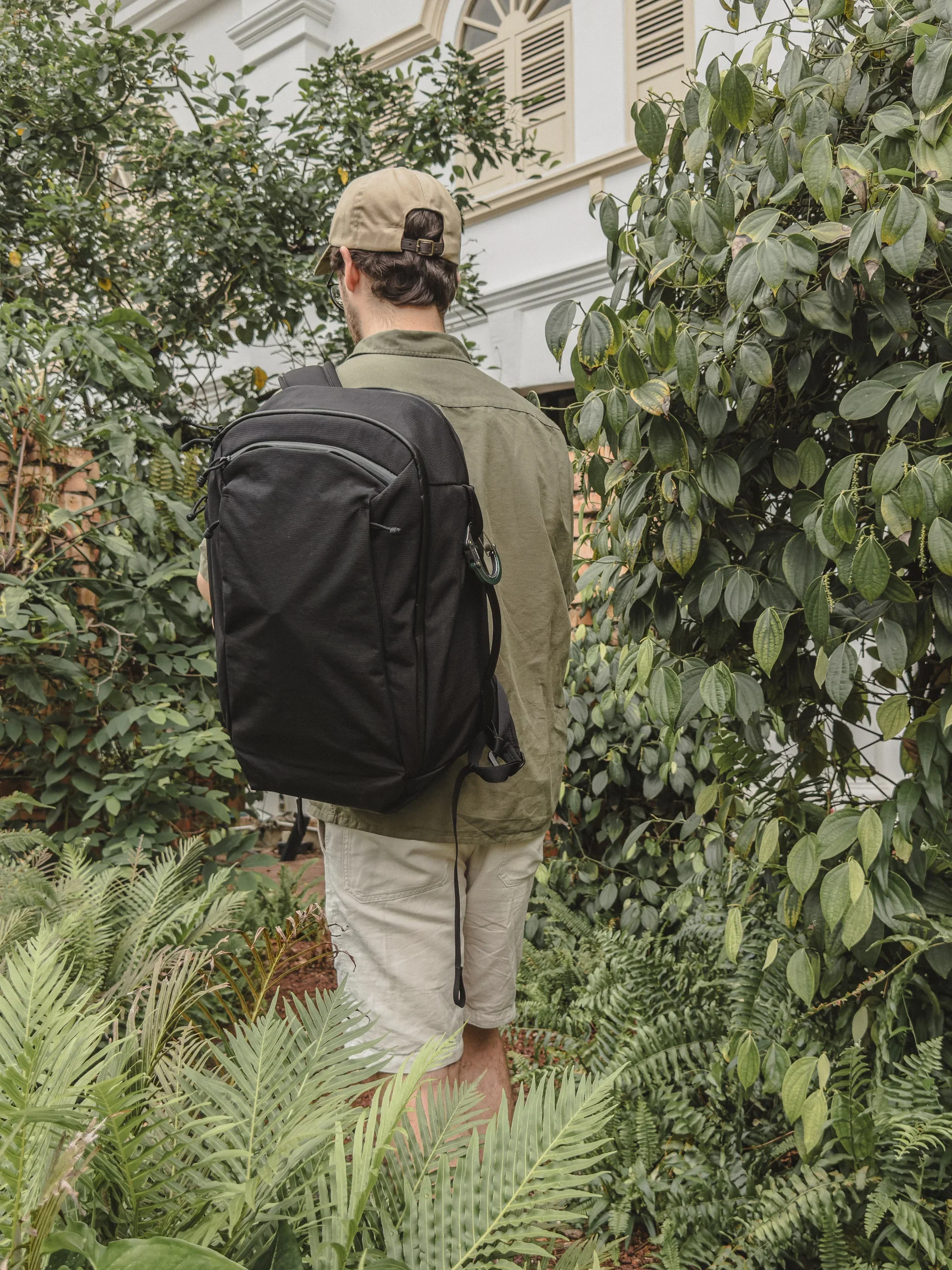
Personally, one of my favorite things about the Traverse is the way it looks. It’s not a tech-forward bag. The dusty effect of the outer ripstop fabric and the paracord zipper pullers create a crossover look akin to Evergoods bags. The Traverse looks fitting for a daily commute, carried through airports and train stations, and taken on a hike, but it might be a bit too casual for the office.
Dimensions, Volume, and Weight
Officially, it’s listed at 47 × 28 × 18 cm (18.5 × 11 × 7 in). Packed out—but not overpacked—I measured my unit at 47.5 × 31 × 20 (18.7 × 12.2 × 7.8 in), which works out to a bounding-box volume of 30 liters. The problem is that when you account for the curved top, the laptop compartment cutting into the main cavity, the front pocket competing for depth, and the fabric thickness, usable volume drops below the advertised mark. In practice, the Traverse carries closer to a 25-liter backpack. Still very usable—and a perfect volume for an extended weekend trip for me personally—but if the 30-liter number is what got you here, you might want to look elsewhere.
In terms of weight, the Traverse comes in at 1.4 kg (3.1 lbs). With no specialized technical material (like the X-Pac on the Max EDC) or heavy-duty ballistic nylon (like the 1680D on the Travel Pack 4) to boast, the Traverse is heavier than I would have liked, especially when taking airline limits into account. Still, comfort makes up for the weight, and I can’t say it’s a dealbreaker.
Organization
The Traverse has a main compartment, a double-sided front compartment, a laptop sleeve, a side water bottle pocket, a side quick-access pocket, and a top sunglasses pocket. Let's go through them.
Main Compartment
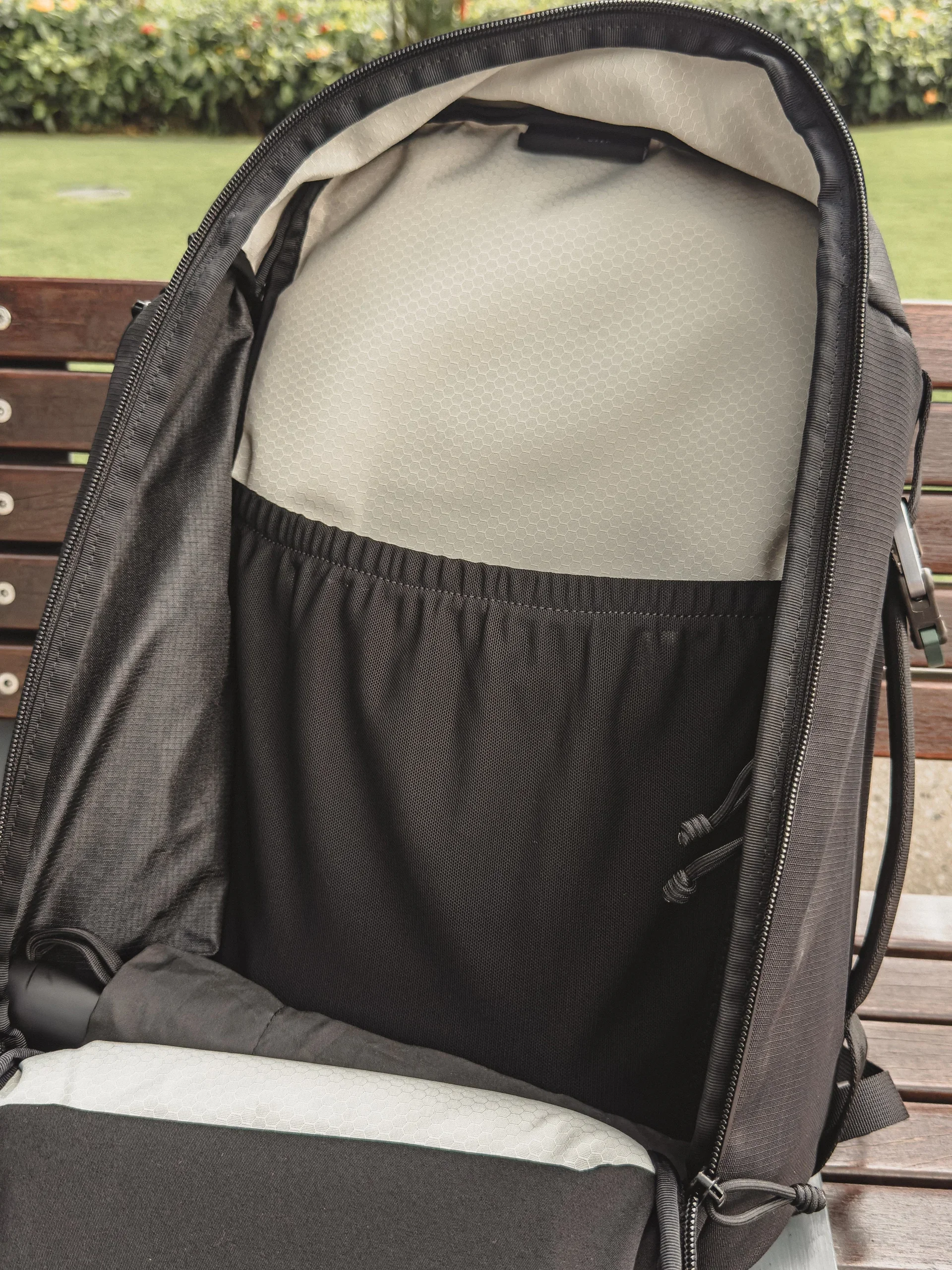
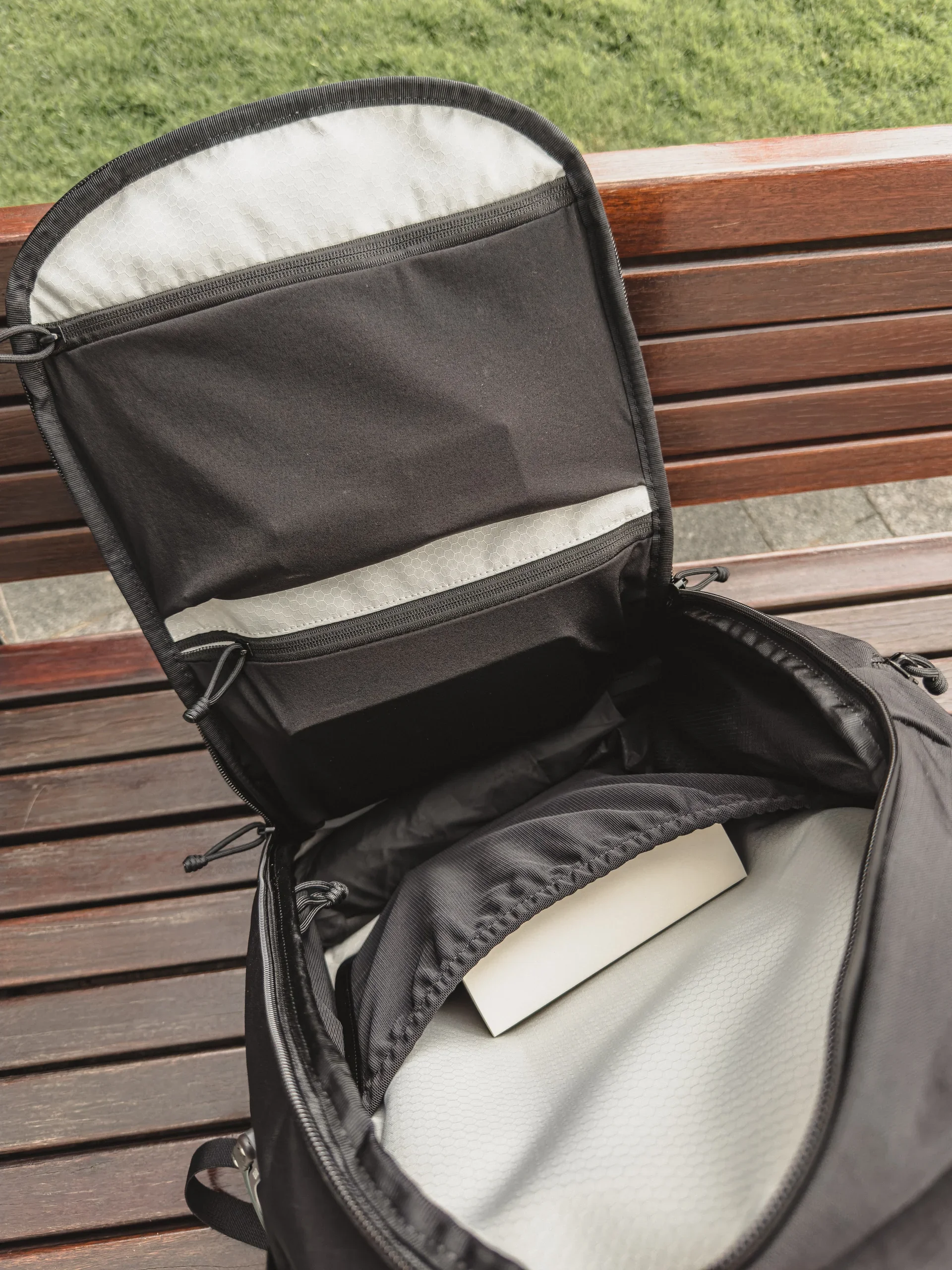
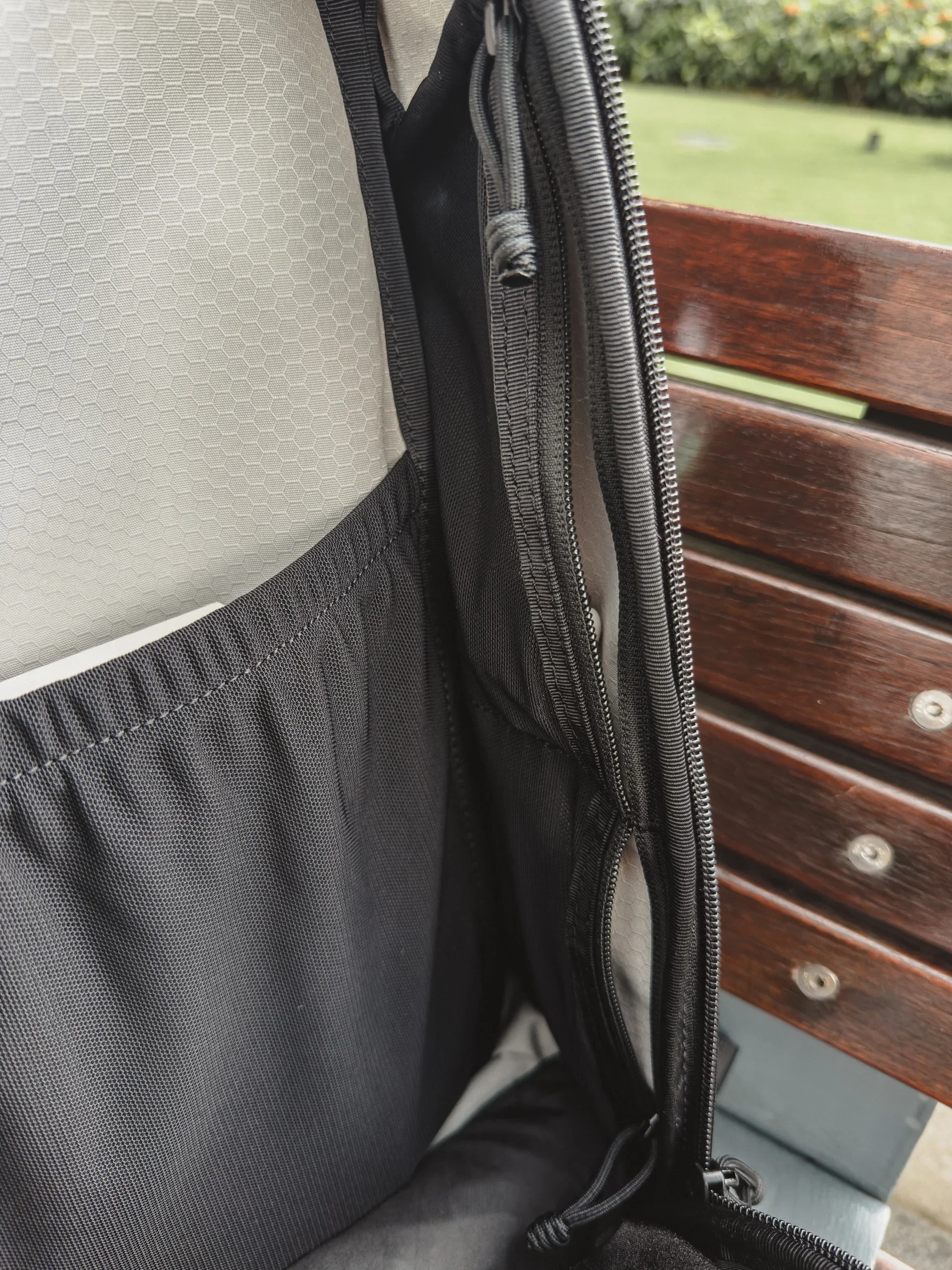
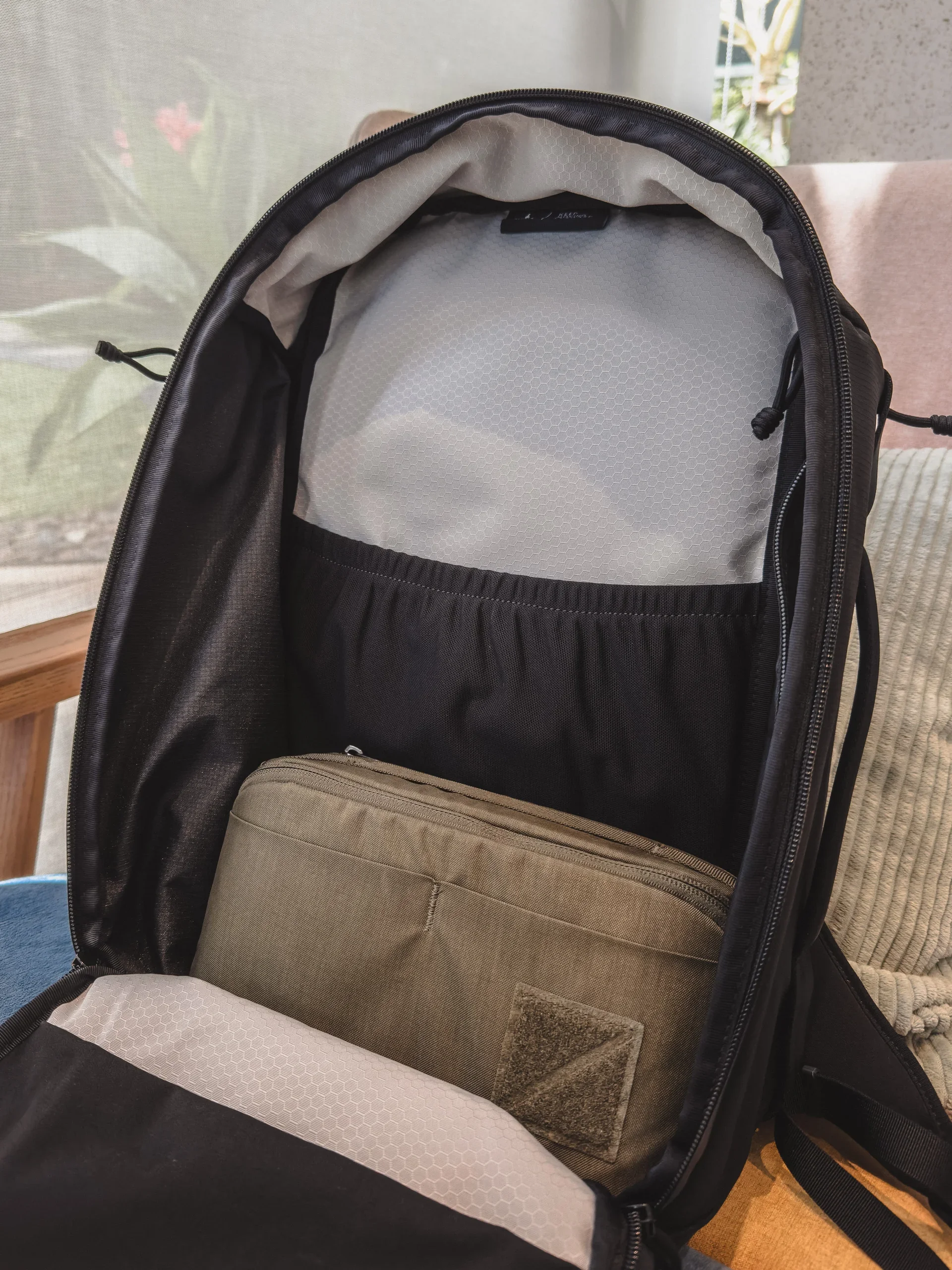
The main compartment opens vertically, clamshell style. There are two stretchy zippered pockets on the front panel: the top one measures 26 × 14 cm (10.2 × 5.5 in), and the bottom one is slightly taller at 26 × 15 cm (10.2 × 5.9 in). The top pocket also has an AirTag sleeve under the top flap.
The back panel features a sleeve that is slightly raised off the ground (1.5 cm, 0.6 in). At the tallest point, the sleeve is 26 cm (10.2 in) wide but narrows down to 21 cm (8.2 in) at the bottom, while being 26 cm (10.2 in) tall.
There are two stretchy mesh zippered pockets on the right side. The top one is angled. The width measures 15 cm (5.9 in) at the widest point and 13 cm (5.1 in) at the narrowest point. The bottom one is a regular 15 cm (5.9 in) wide rectangle. Both pockets are 12 cm (4.7 in) tall.
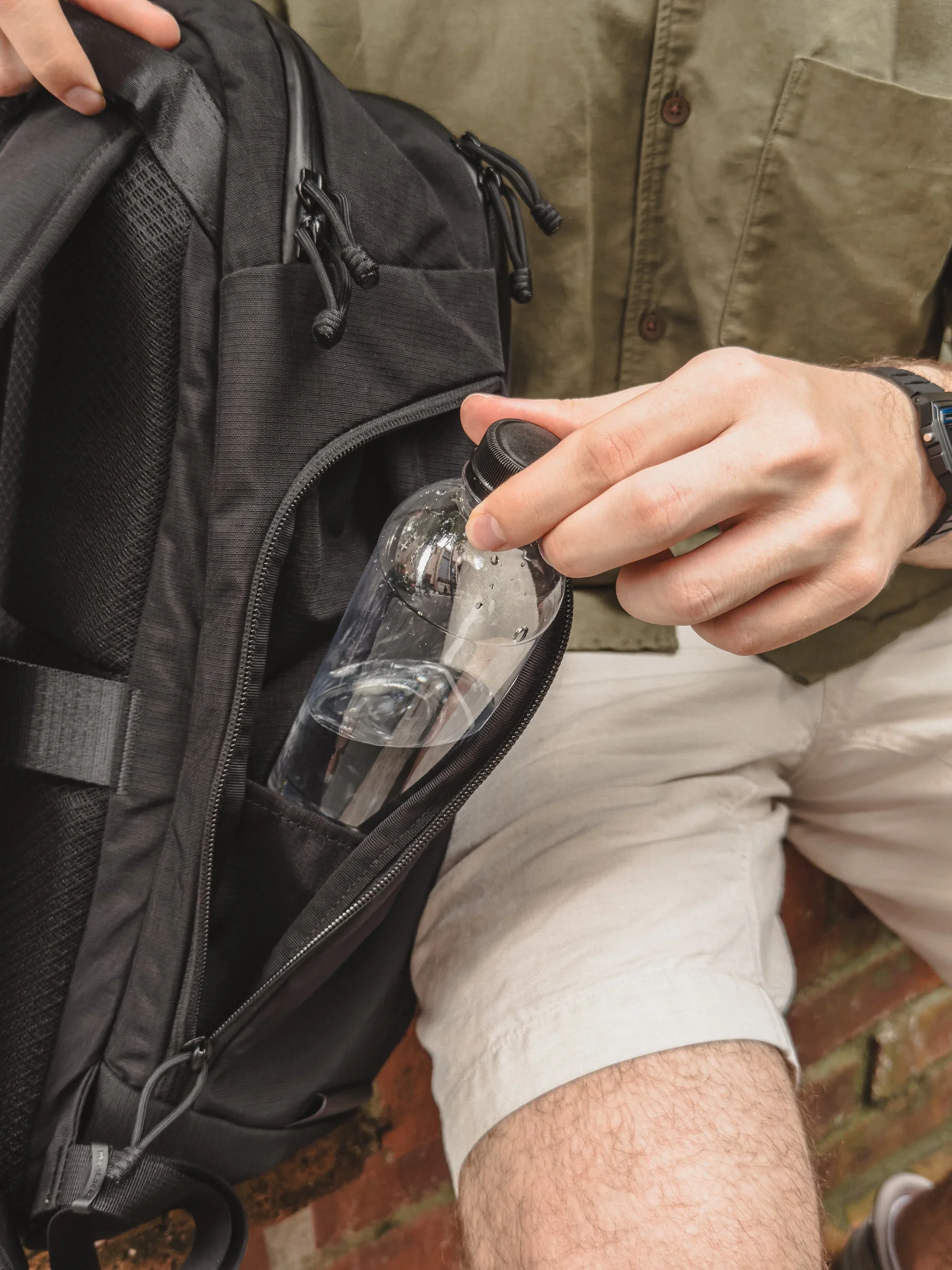
The water bottle pocket fits my 500 ml (17 oz) Kinto bottle and my 750 ml (25 oz) Muji tumbler, but a 1 liter (34 oz) Yeti is a no-go. The bottles do eat up a bit of volume from the main compartment.
Front Compartment
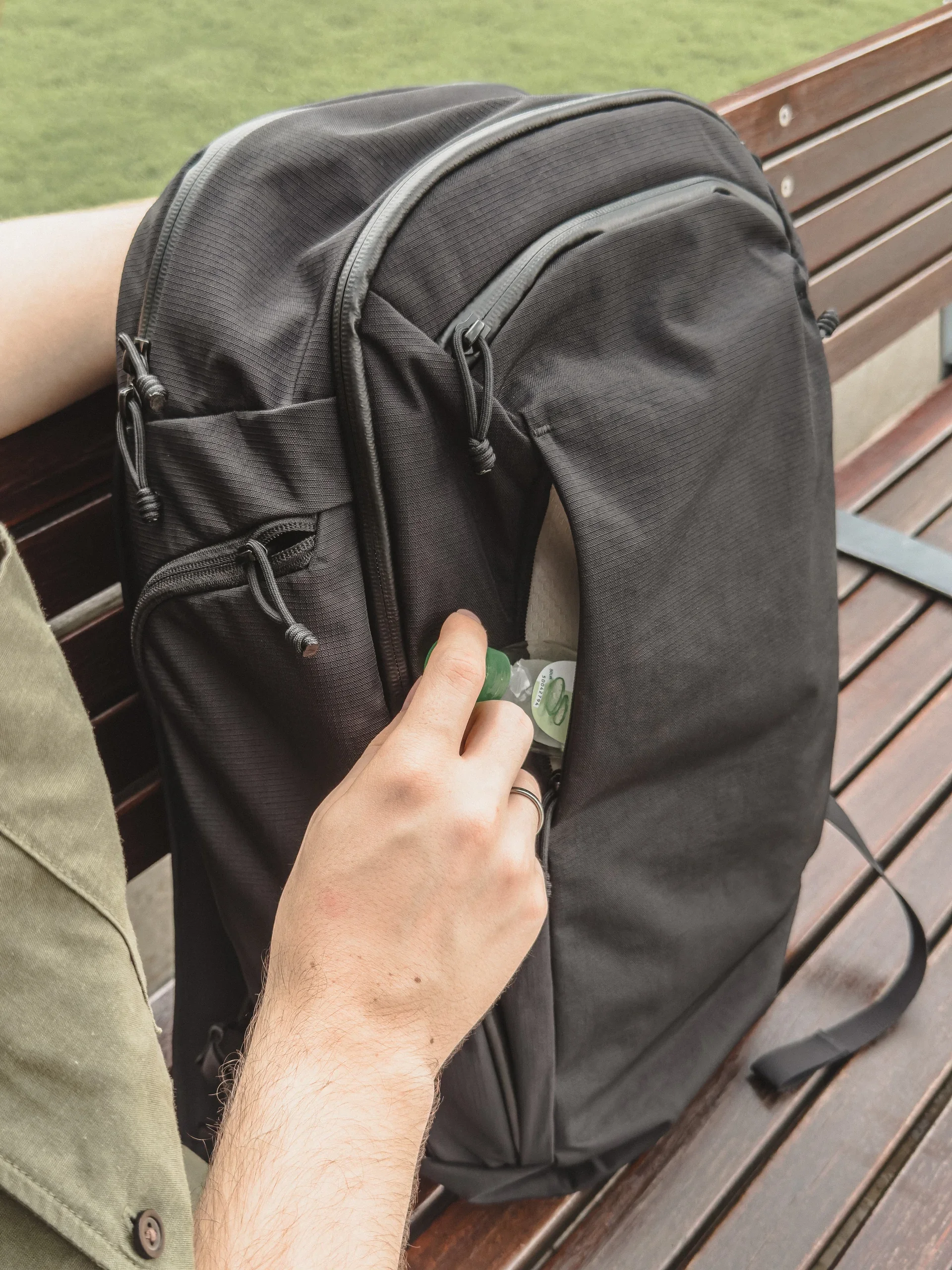
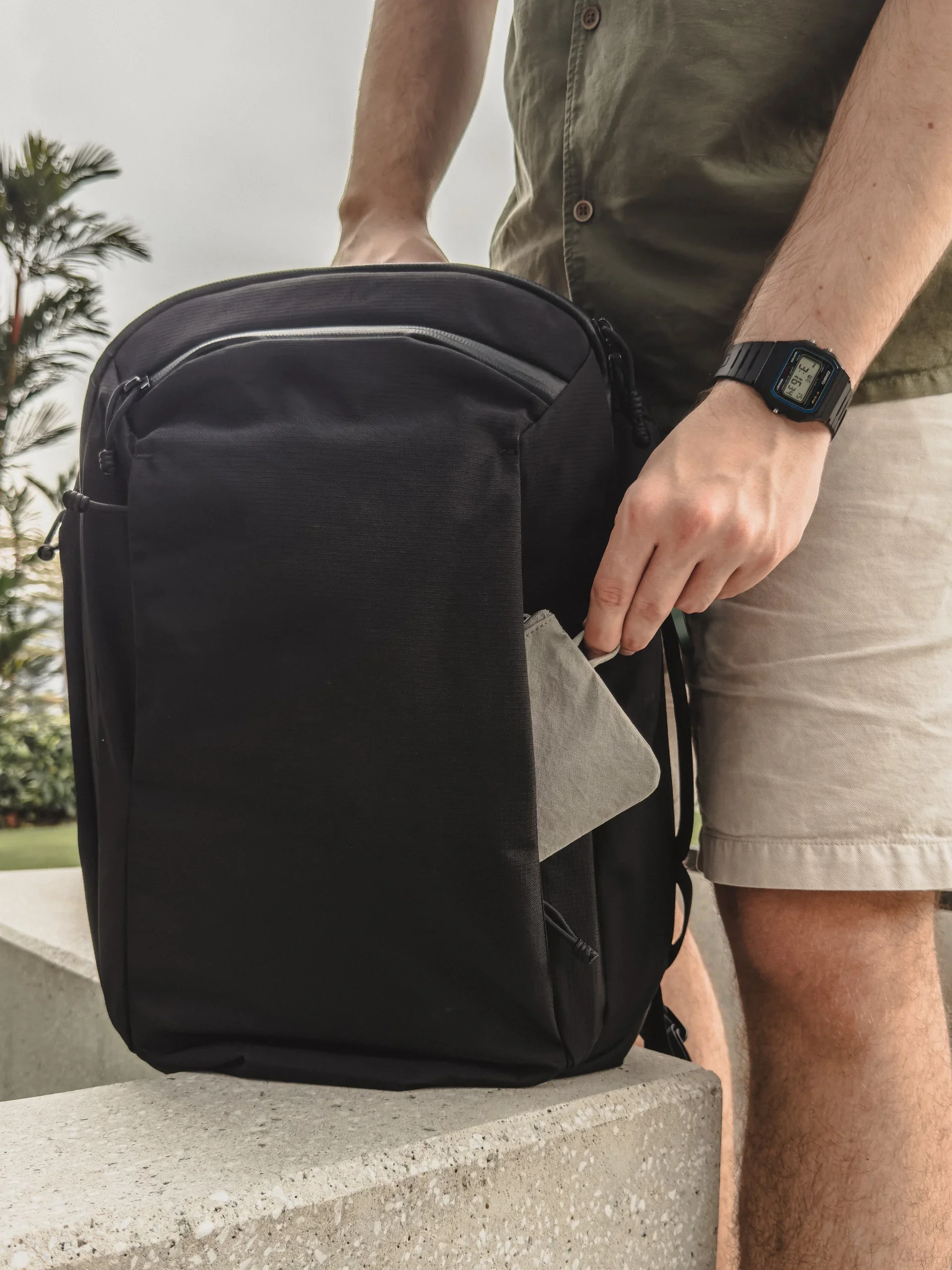
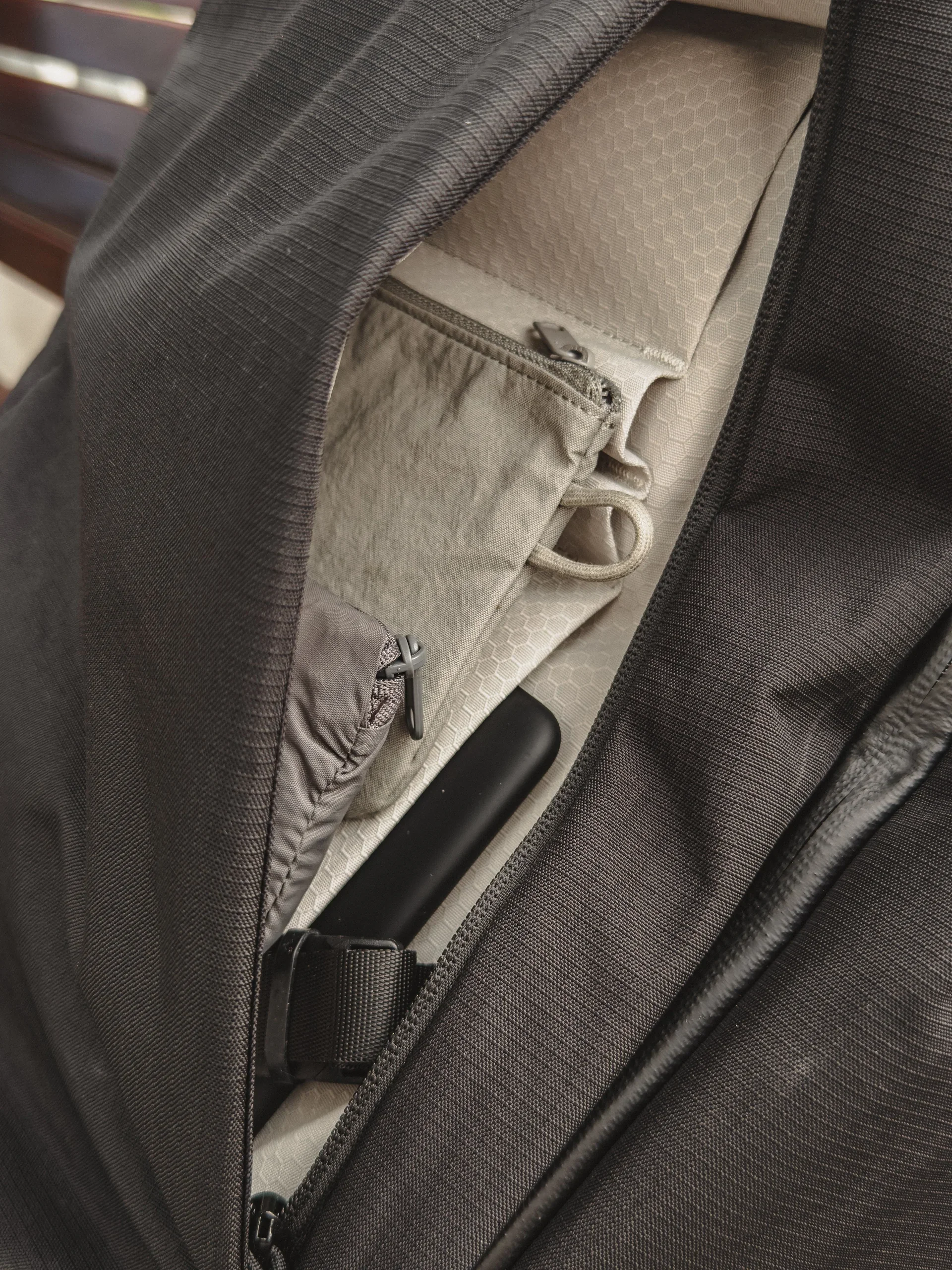
The front compartment is actually two separate compartments. The zipper on the left side leads to a pocket that is independent from the main pocket on the right side.
The left pocket measures 16 × 14 cm (6.2 × 5.5 in), with a 13 cm (5.1 in) opening, and has no internal organization.
The right pocket measures 38 × 24 cm (14.9 × 9.4 in). It’s raised off the ground and ends where the zipper ends, but it runs all the way to the top of the bag. While it’s technically 38 cm (14.9 in) tall, the opening is only 28 cm (11 in), and that’s where my problems with this pocket begin.
Inside are two slip pockets, two pen pockets, all made from non-stretchy internal lining material, and a keyleash. The top and bottom pockets are 18 × 17 cm (8 × 6.7 in), but in practice the top pocket is very difficult to access because the compartment opening ends at about half its height. In fact, it’s so difficult to access that it’s unusable for me personally. The bottom pocket is better and was a nice place for my Kindle, but the non-removable keyleash is positioned right on top of it and gets in the way.
The main cavity of the front compartment does not have much volume of its own and becomes very tight when the bag is packed out.
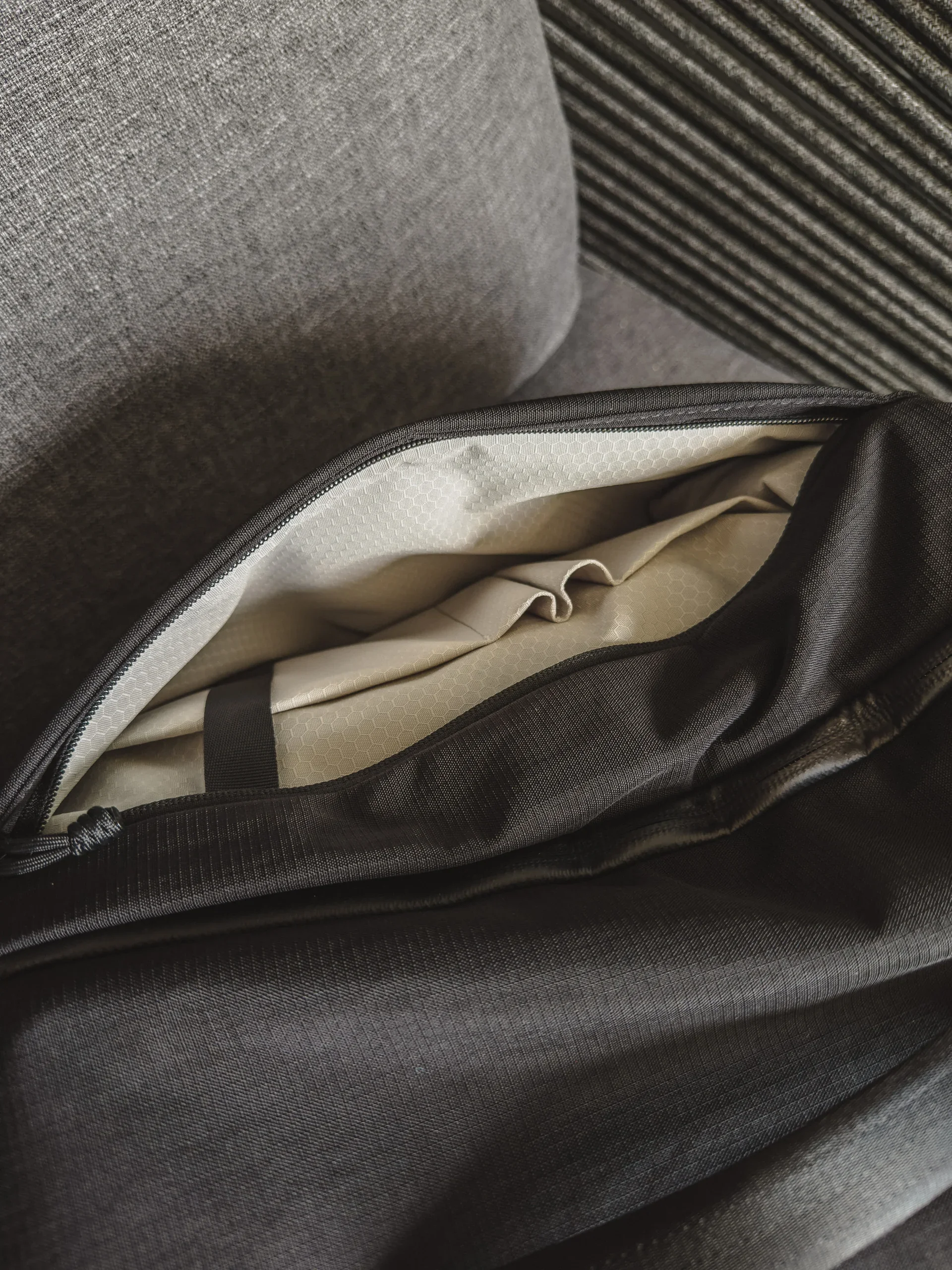
The keyleash gets in the way of accessing the bottom pocket. Half of the top pocket is completely inaccessible because the opening isn’t large enough.
Top Pocket
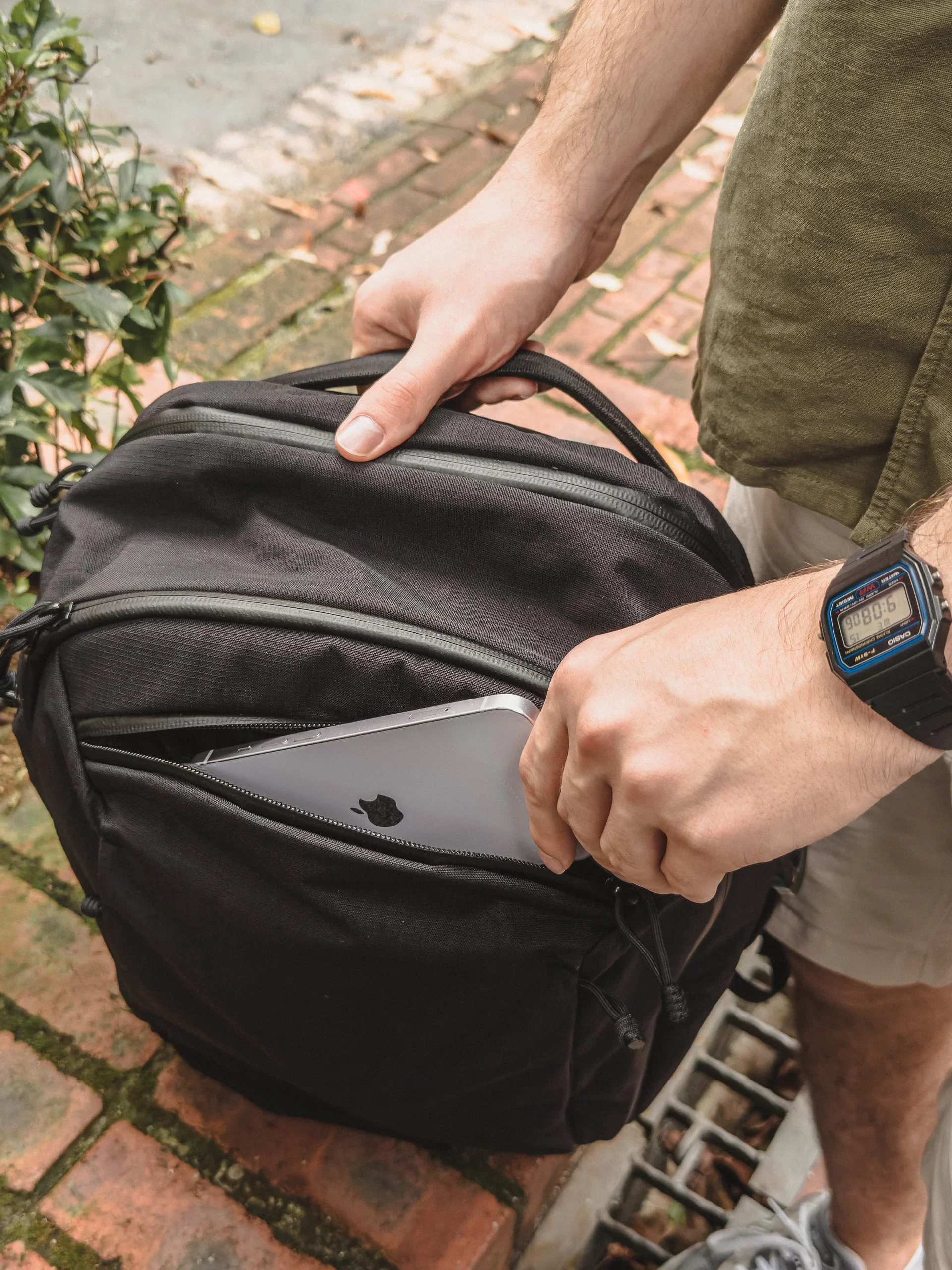
The top pocket features microfiber-like lining. It’s on the coarser side, but it’s still a great place for sunglasses or non-Max smartphones. It measures 13 × 20 cm (5.1 × 7.8 in) if you take into account the space under the top flap.
Side Pocket
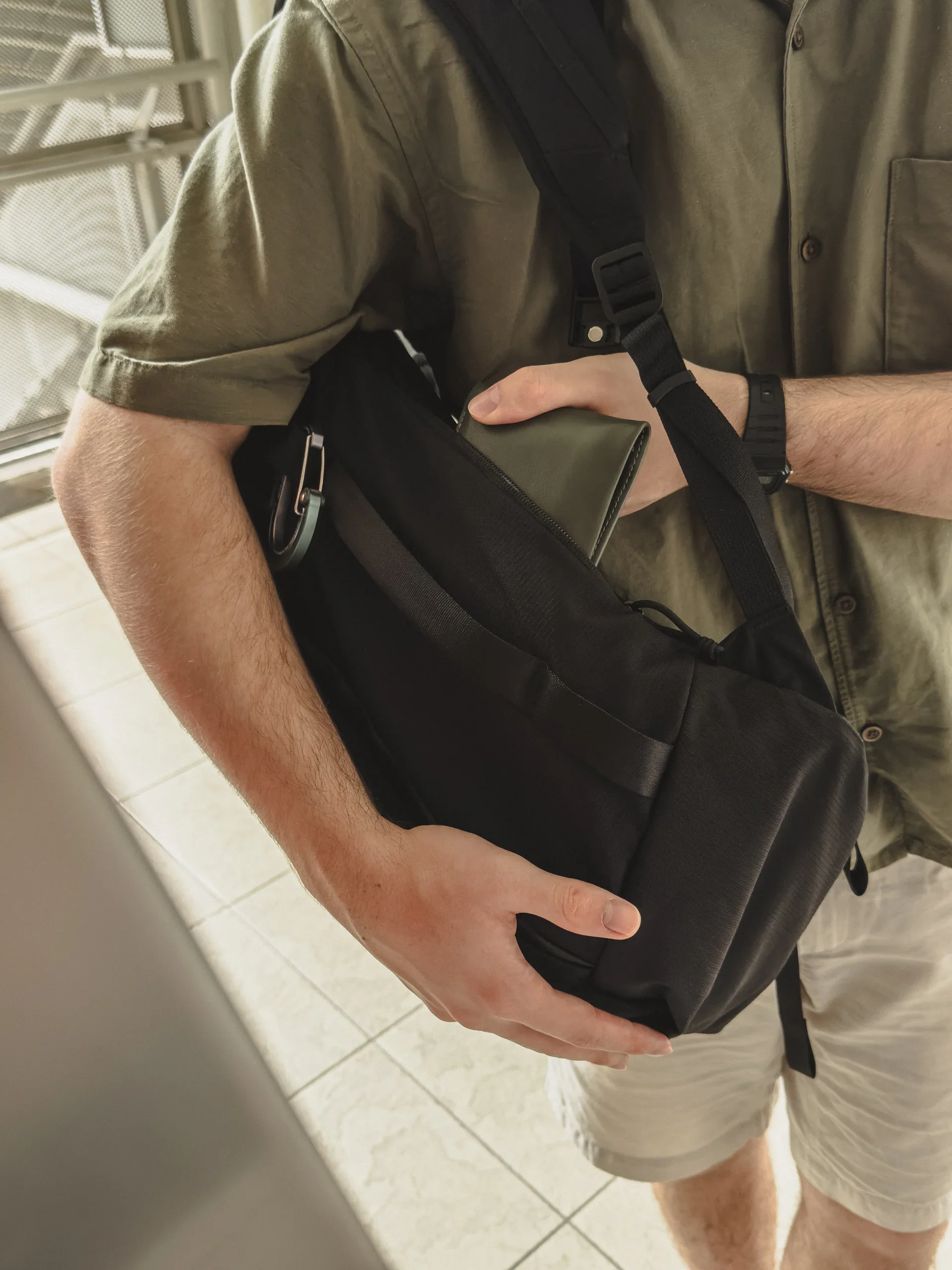
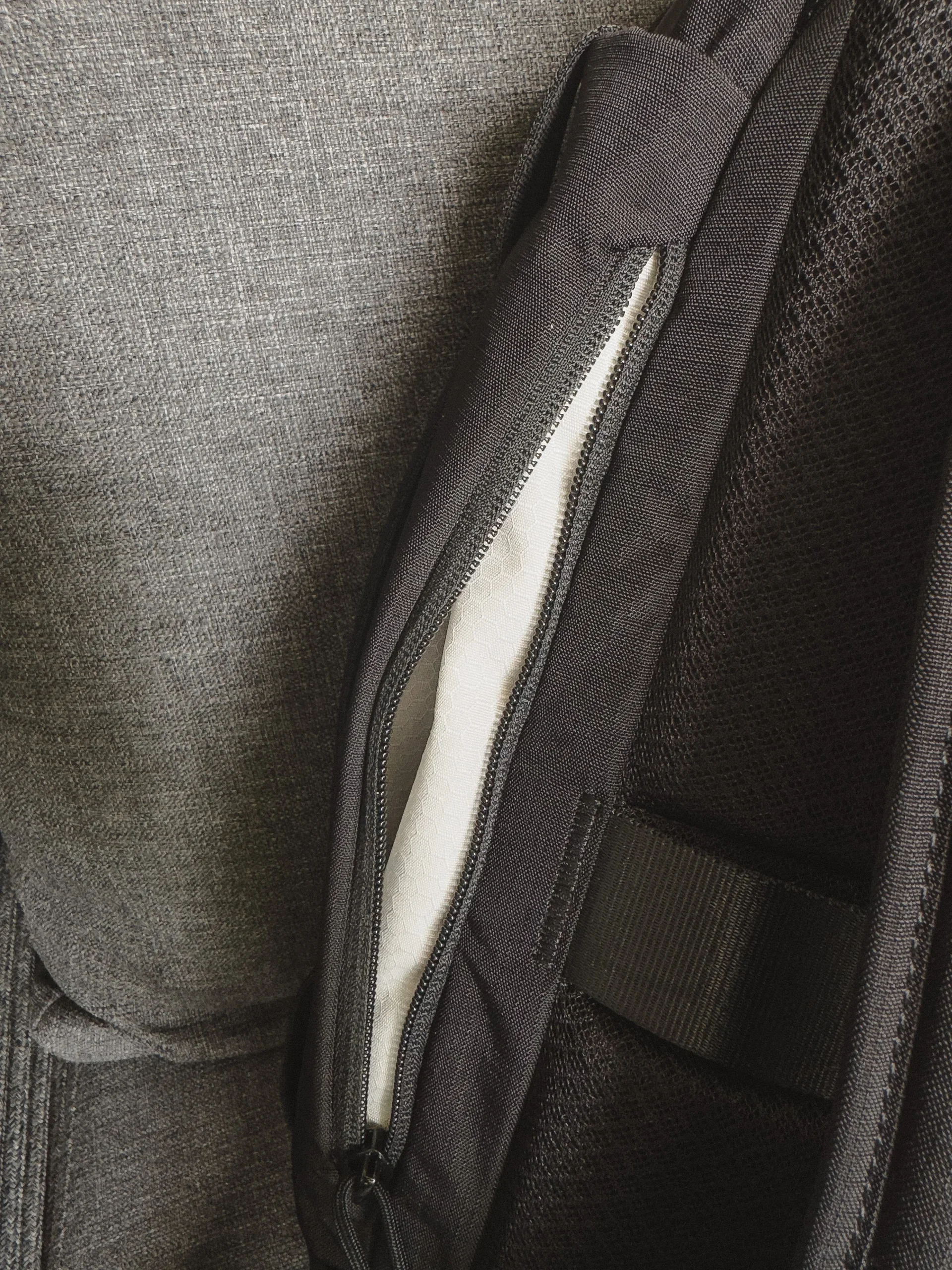
On the right side of the Traverse, there is a pocket that runs across the whole side panel. At the widest point, it’s 16 cm (6.2 in), and at the narrowest it’s 12 cm (4.7 in). The tallest point is 34 cm (13.3 in), and the shortest is 29 cm (11.4 in). It seems fairly big on paper, but access is compromised. The opening is only 20 cm tall (7.8 in), and when the main compartment is not fully packed out, there is a sort of fabric buildup that makes access even more difficult. On top of that, the pocket is tight. Carrying just a wallet was fine, but if you want to carry a phone there as well, it’ll be a struggle.
Laptop Compartment
The laptop compartment is lined on both sides with the same microfiber-like material as the top pocket. There is no internal organization. It is simply a laptop sleeve. The compartment sits slightly off the ground, about 1.5 cm (0.6 in), and the bottom of the bag has padding. That provides some protection, but I am baffled by the lack of a proper false bottom. This is not a small bag. The compartment easily fits my 15” MacBook, and there is plenty of room to raise the laptop at least 5 cm (2 in) off the ground. Why Alpaka chose not to implement it is a mystery to me.
Additional Features
The Traverse has a vertical luggage pass-through. It's plenty wide, nicely reinforced, and not tight at all.
Latch points on the right side of the bag — one near the top of the side handle, one near the bottom — plus latch points on the shoulder straps.
All straps have keepers.
Self-stands decently, but it depends on how it's packed. Put heavier items in the front and the bag tips forward.
Putting It Together
Overall, I have mixed impressions of the Traverse’s organization.
The main compartment is definitely the strongest part. There is plenty of room inside, and the pockets are practical and well implemented; there when you need them, but they do not get in the way if you prefer to use pouches instead.
The water bottle pocket does not eat too much space in the main compartment, and it looks clean when zipped up.
The side pocket is tight, the opening is not large enough, and the lining buildup makes access inconsistent.
The front pocket is a nice idea in theory, but it is poorly implemented. The keyleash gets in the way of the only usable sleeve, while the other sleeve is effectively unusable because the opening is too tight. I do not have any issues with the pocket on the left side, though.
The top pocket is decent, with a wide opening and soft lining inside. I wish it was a bit taller, but it is fine as is.
Speaking of the top, you might have noticed that, besides that pocket, there is no real top-down access. If you often need to access the bag when it is under an airplane seat or in an overhead bin, that might be a dealbreaker.
Materials, Hardware, and Build Quality
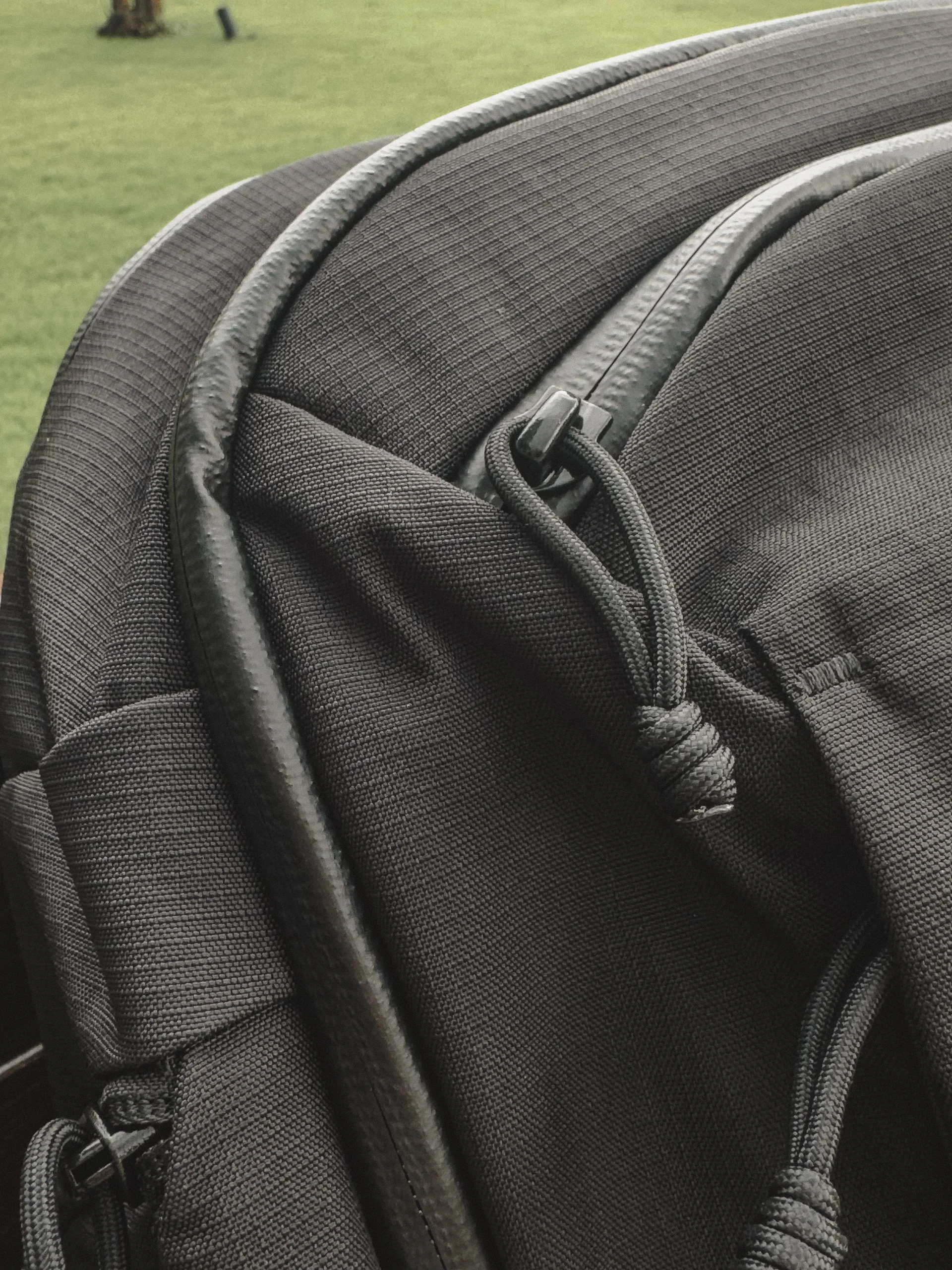
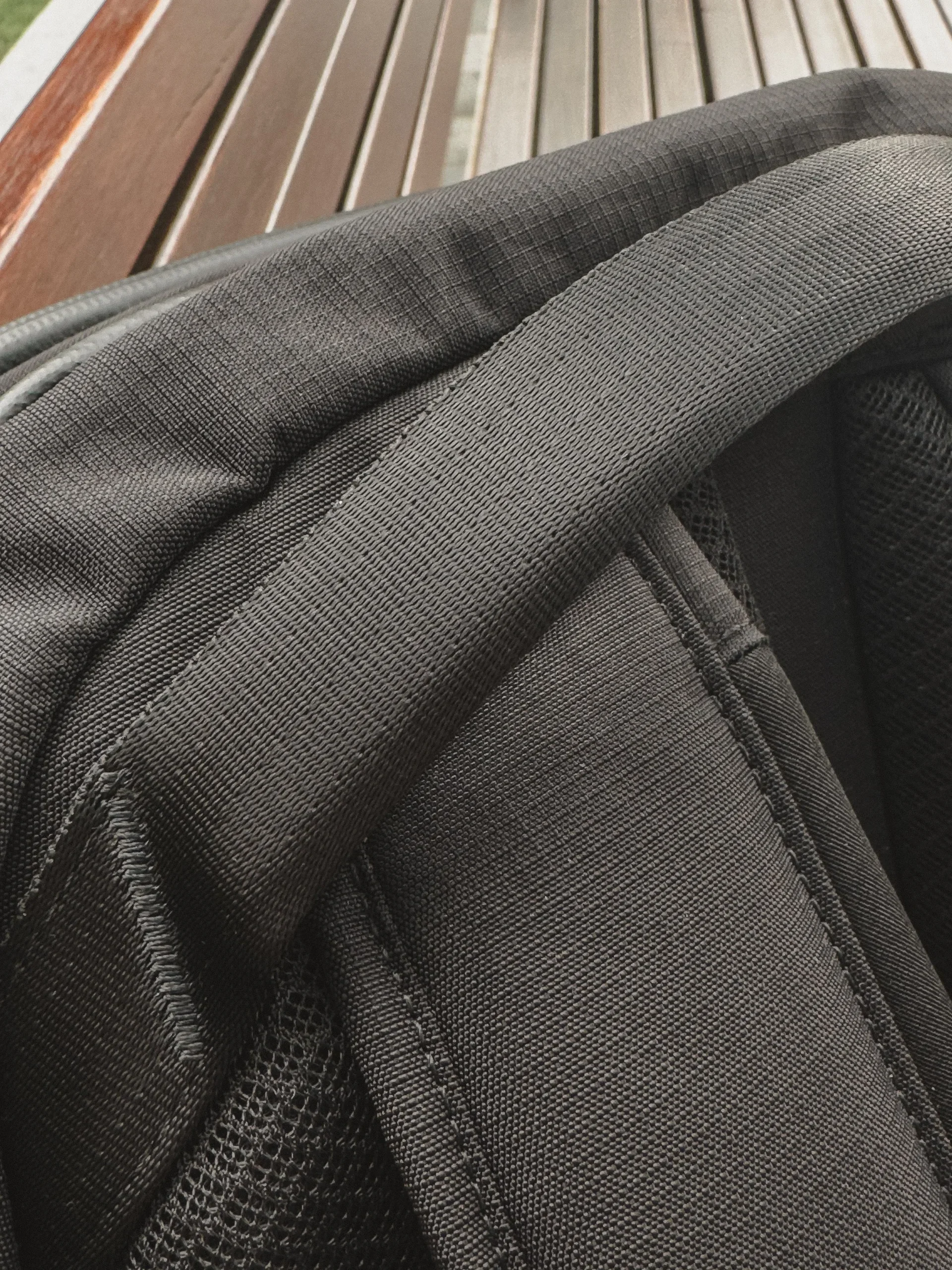
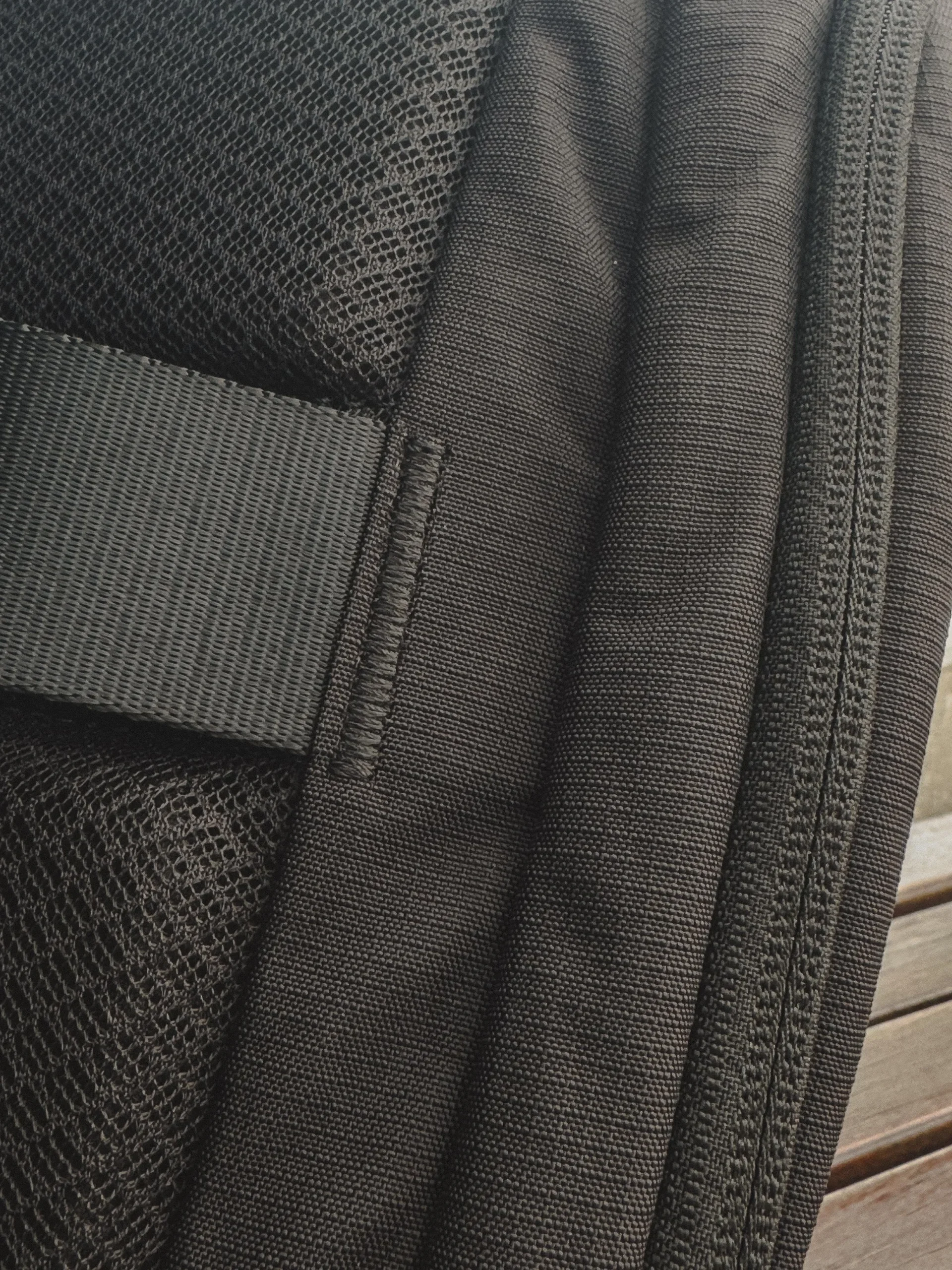
Exterior material is Axoflux 400D ripstop nylon. It's water-resistant and tear-resistant, but it's a daily-use fabric, not a waterproof laminate like X-Pac. Interior uses Axoflux 300D honeycomb ripstop polyester in Cool Gray. The light color creates a useful highlight effect that makes it easier to find your stuff in dimly lit environments.
All zippers are YKK reverse-coil #8. The laptop compartment, main compartment, and top pocket use AquaGuard zippers with a PU coating. Everything else — both zippers on the front compartment, the side pocket, and the water bottle pocket — is standard non-coated YKK. In practice, the zippers are smooth and quick, and the paracord pulls are nice and grippy.
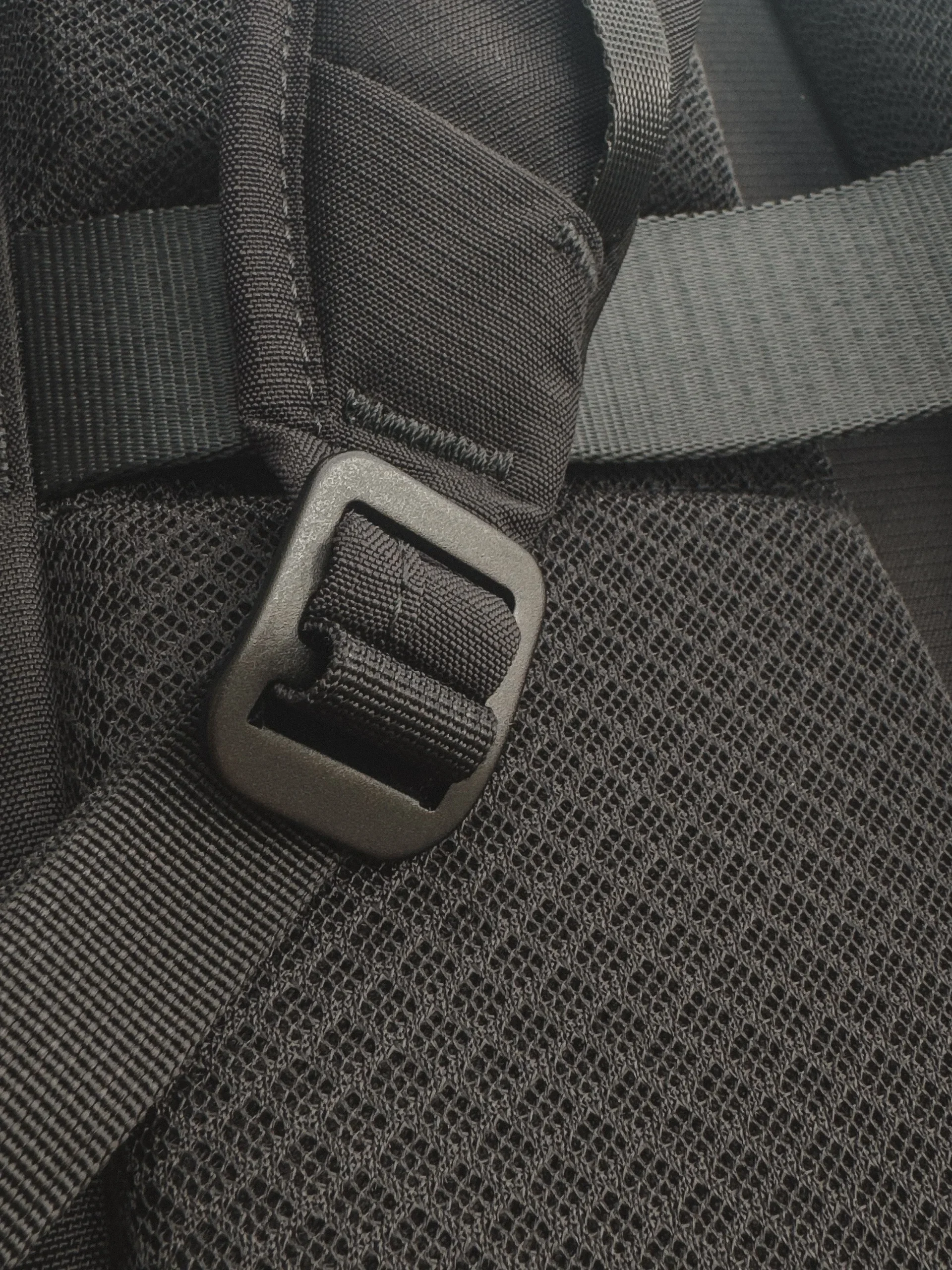
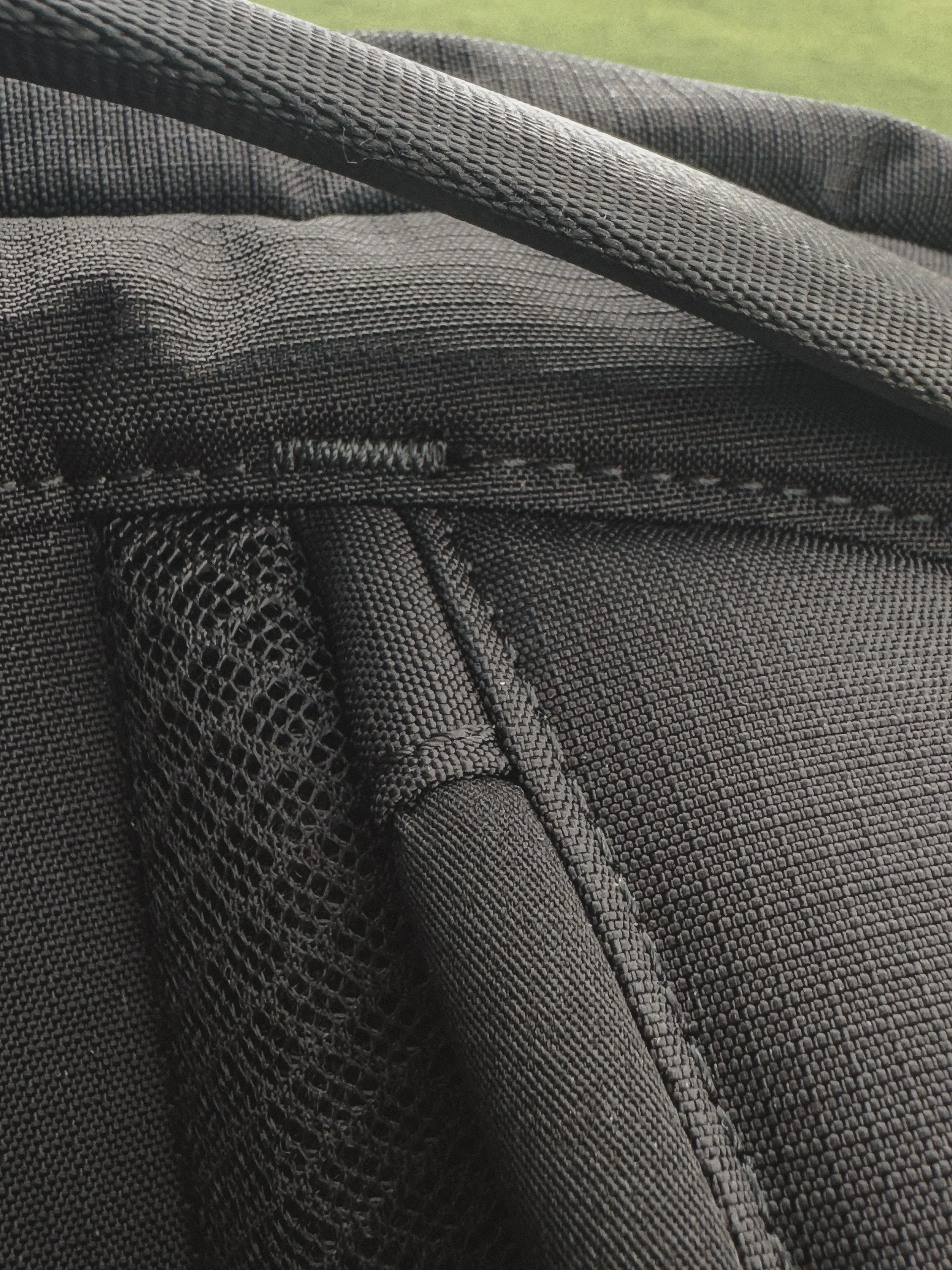
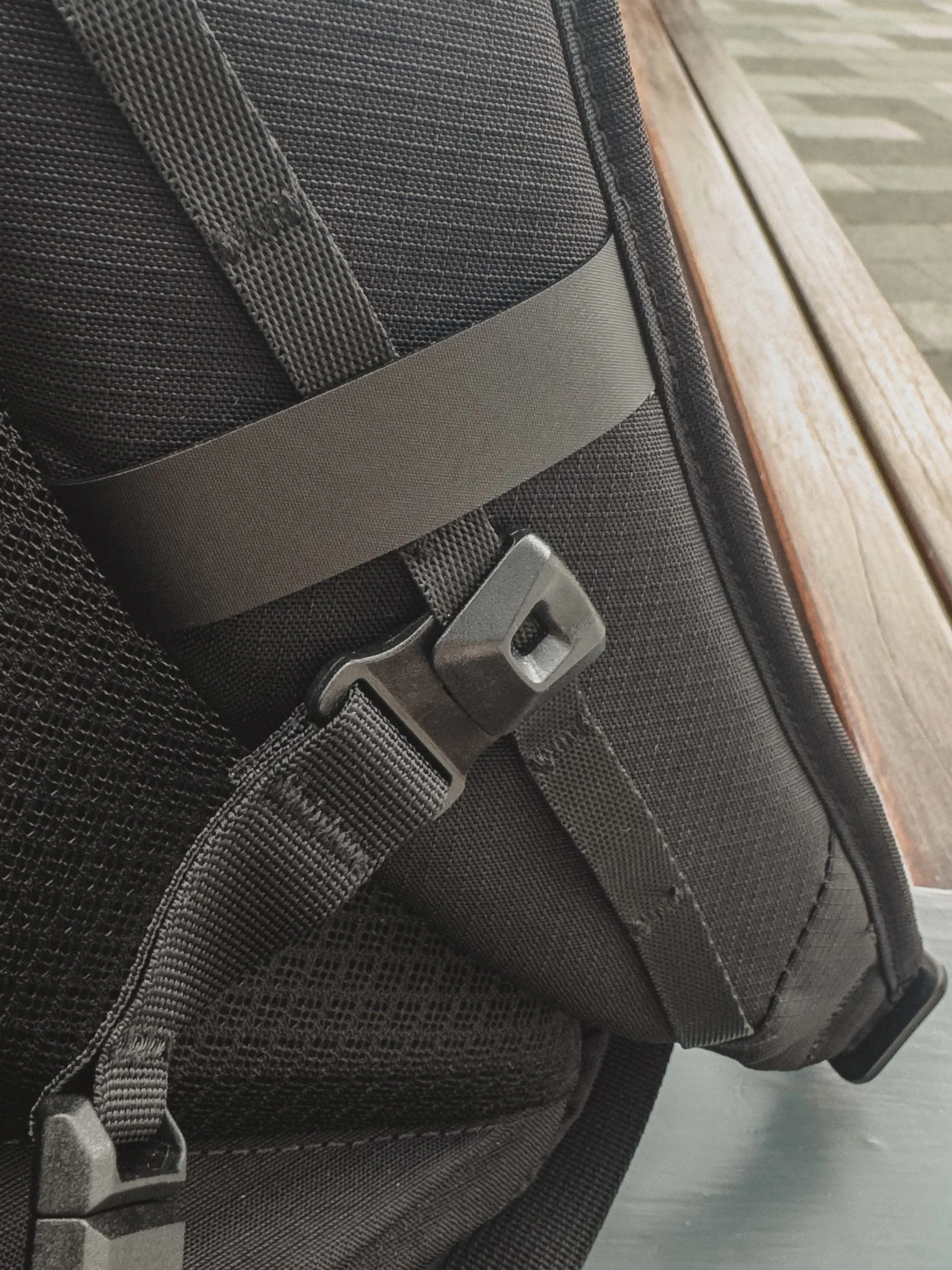
The top handle, side handle, and luggage pass-through are made from premium-feeling seatbelt-like webbing. The shoulder strap webbing is coarser, but I don't think that's an issue — in fact, coarser webbing works better for keeping the strap adjusters in place. The shoulder strap padding feels silky, but the mesh on the back panel is a bit coarser than what Able Carry and Aer use. Strap adjusters are made from nice brushed metal, and the sternum strap uses high-quality plastic with a snappy magnetic buckle.
Overall build quality is great: all stitches are clean and careful, there are no loose threads, and plenty of bartacks reinforce the potential weak points. Combined with the choice of materials, smooth zippers, and quality hardware, the Traverse is a very well-made bag. It doesn't quite match Aer or Able Carry on premium feel, but the gap is narrower than the price difference would suggest.
Comfort
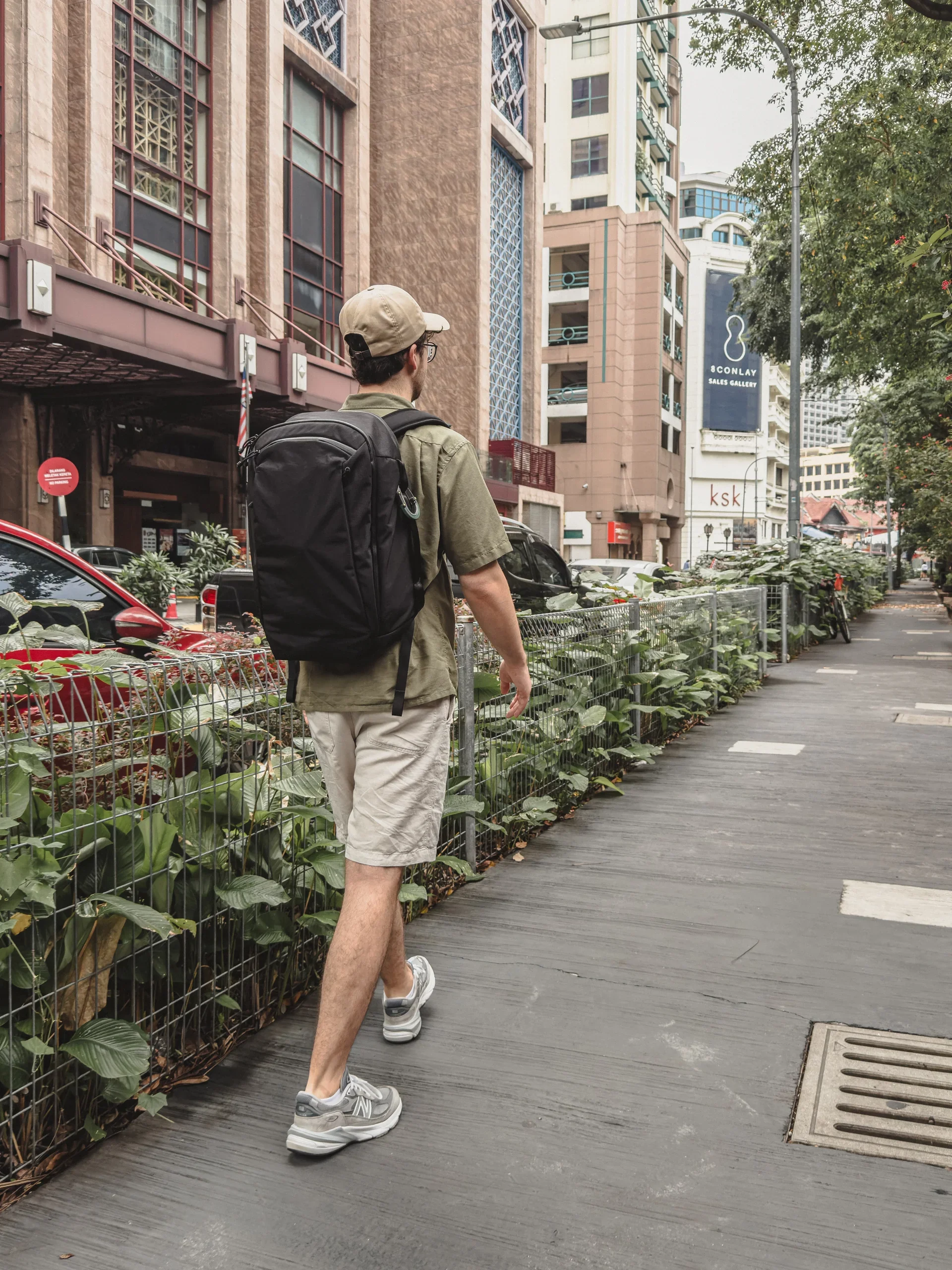
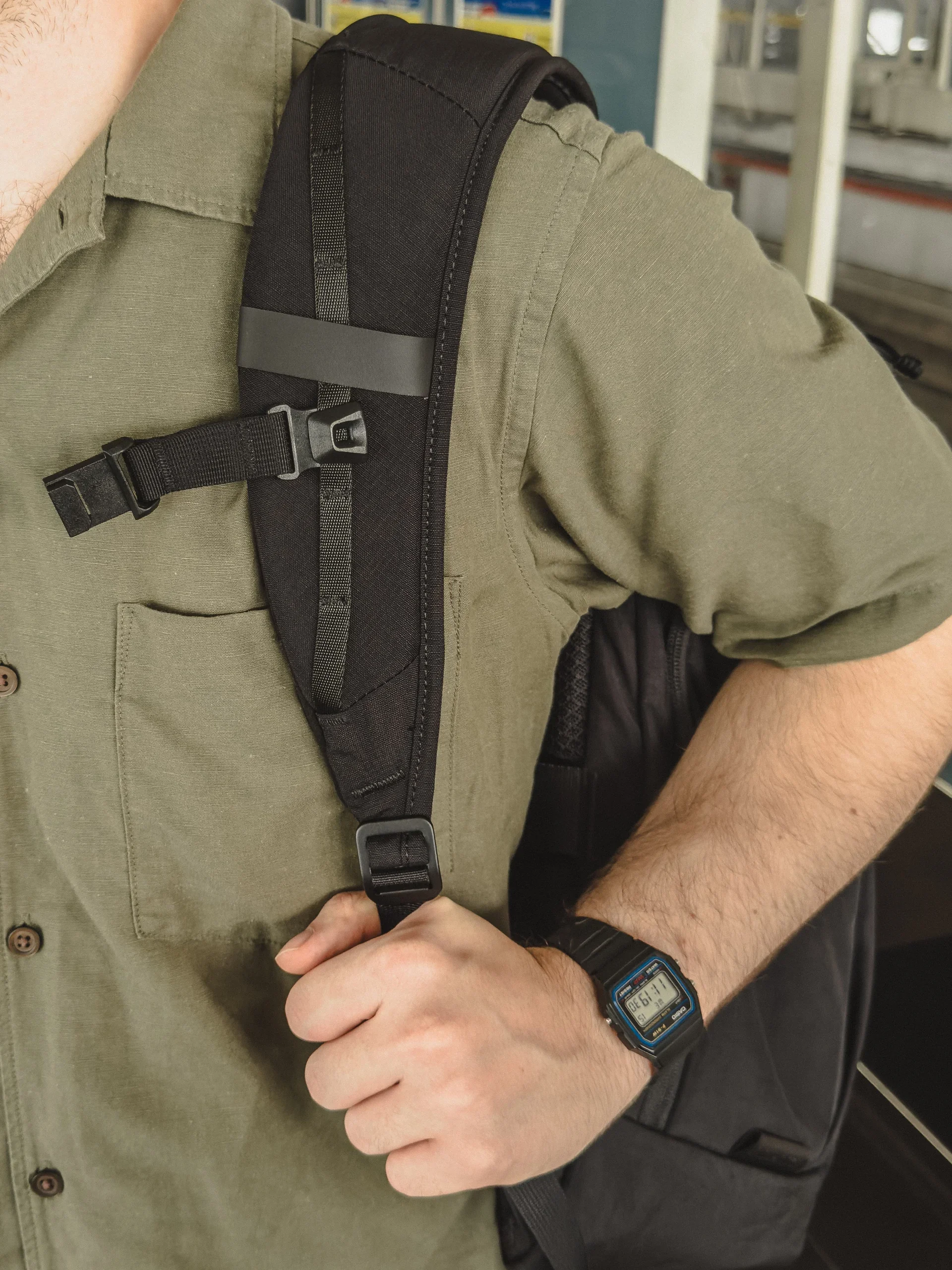
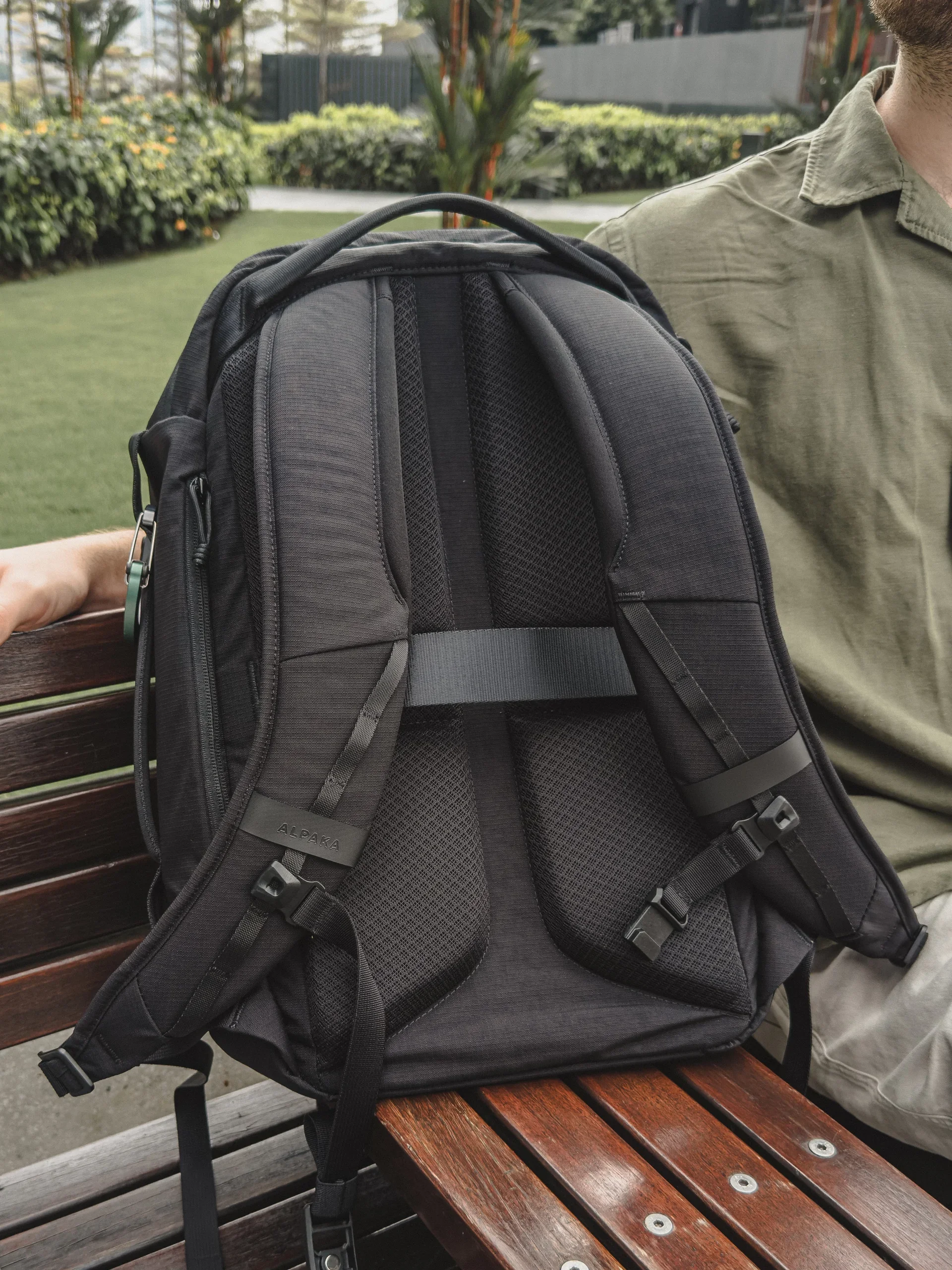
Carrying the Traverse through airports and the sweaty city-jungle streets of Kuala Lumpur, I found it plenty comfortable, with a couple of compromises.
The shoulder straps are 7 cm (2.7 in) wide and 1.5 cm (0.6 in) thick, plush and bouncy. The foam strikes a great balance between soft and supportive, and the straps are nicely contoured to the body. My only quarrel is the lack of ventilation. I would have really appreciated it in the KL heat, especially considering how well ventilated the back panel is.
The back panel has 1.5 cm (0.6 in) thick ventilated padding with deep air channels running through it. The padding provides great support too.
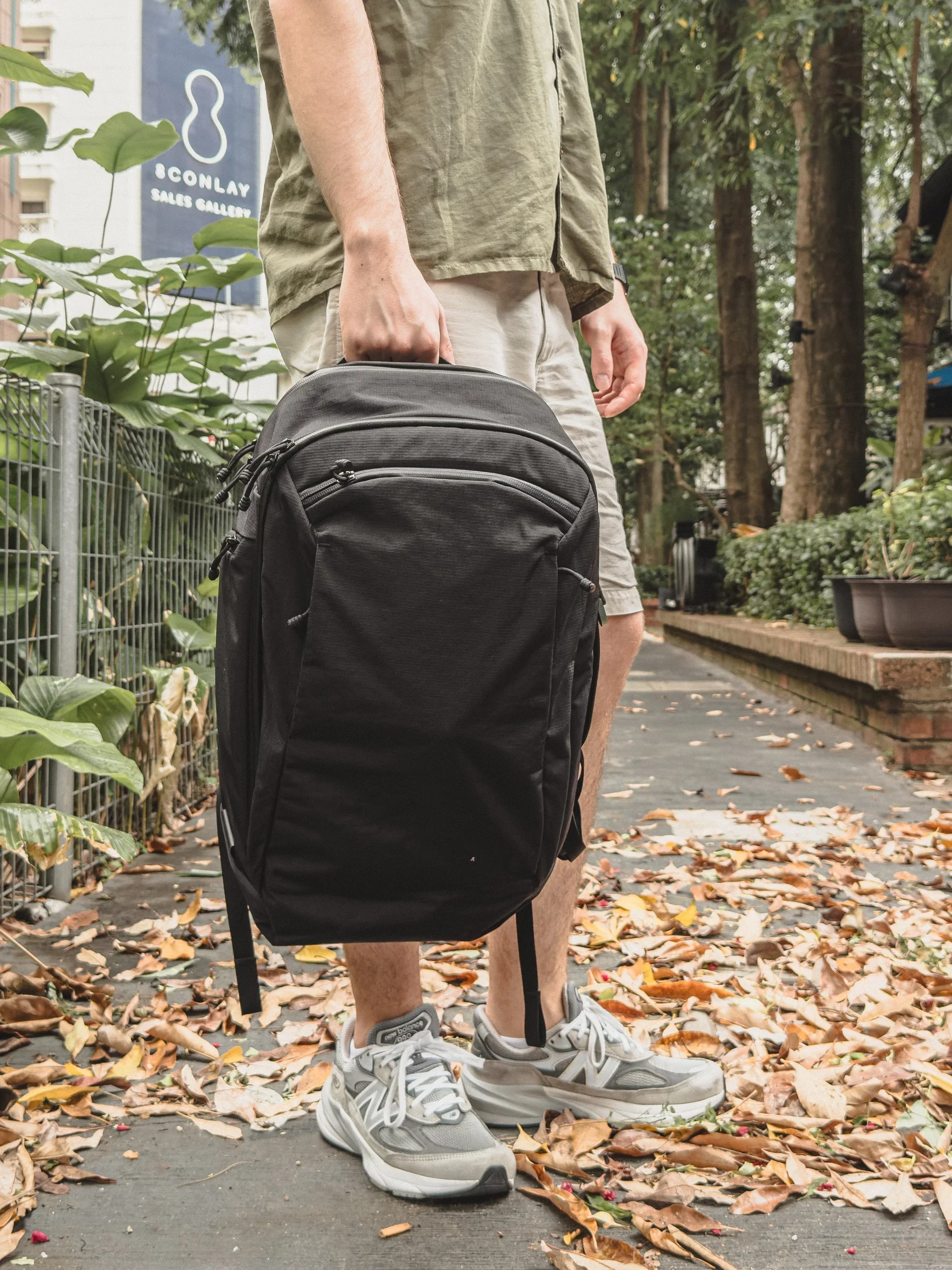
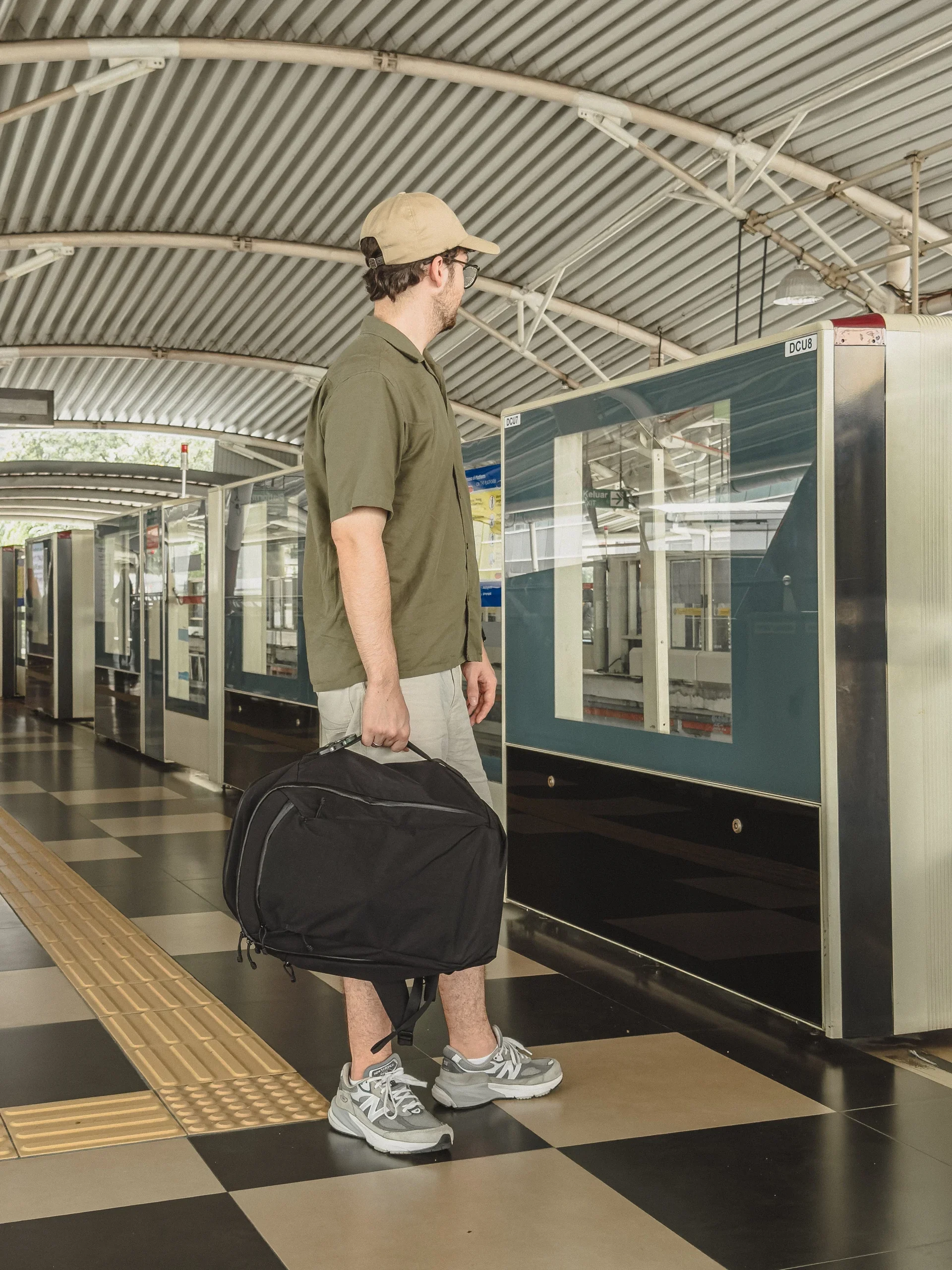
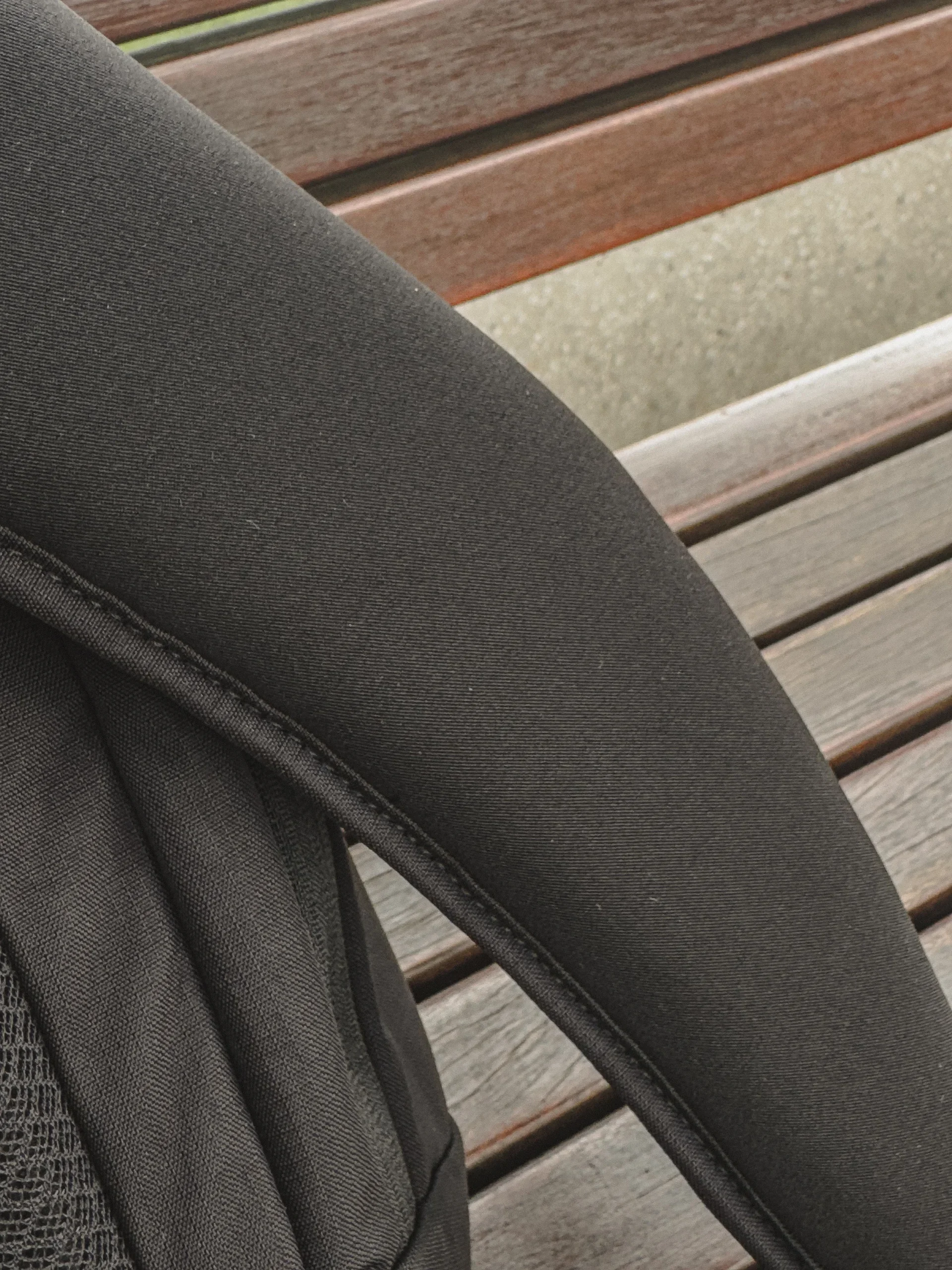
The top and side handles both have plush padding inside and are easy to grab. I felt genuine joy putting the Traverse in the overhead bin and grabbing it out of a taxi trunk.
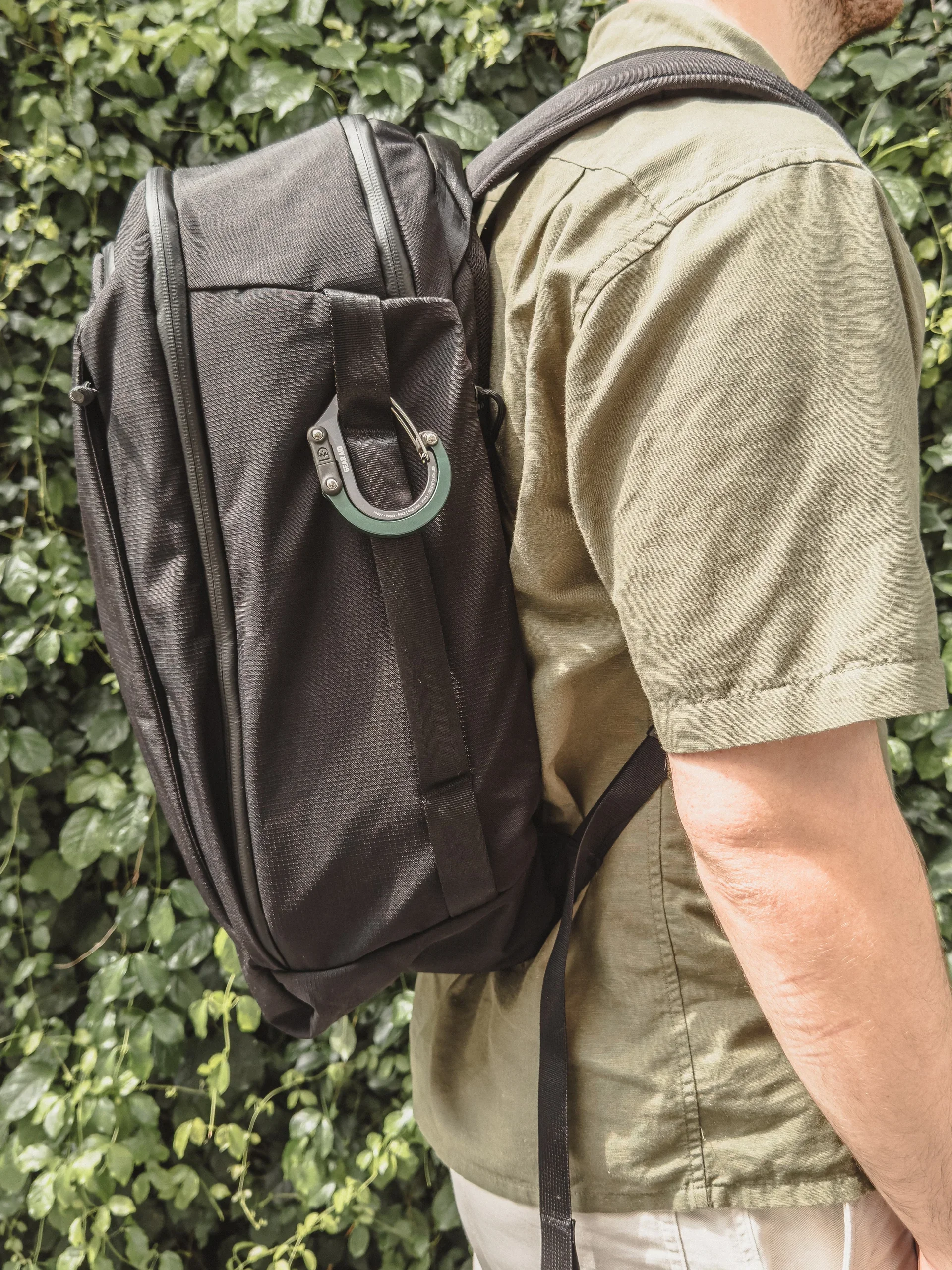
Weight is well distributed and there are no particular pressure points. That said, there is a slight pullback effect. It's not a dealbreaker, but it's noticeable and takes time to get used to. Wearing the bag higher and tightening the sternum strap mitigates the effect somewhat, but won't completely offset it.
In practice, I didn't have any major issues with comfort. I carried it packed out to 6 kg (13.2 lbs) on the KL trip with no back or neck pain. The Traverse's comfort is solid.
Pros and Cons
Pros
Crossover aesthetic.
Excellent main compartment with practical stay-out-of-the-way organization.
Plush, bouncy shoulder straps with a contoured fit and silky contact surface.
Well-ventilated back panel with deep air channels.
Top and side handles are plush and easy to grab.
Solid build quality with clean stitching and reinforced bartacks.
Quality hardware, including a snappy magnetic sternum buckle (same as Able Carry's).
Smooth YKK zippers despite PU coating.
Well-implemented vertical luggage pass-through.
Cons
Carries closer to 25 liters than the advertised 30.
Front compartment opening doesn't work well with internal organization, making one of the pockets effectively unusable.
Non-removable keyleash gets in the way of the only usable front pocket sleeve.
Side pocket is tight and fabric buildup inhibits access.
Laptop compartment lacks a proper false bottom and any internal organization.
Shoulder straps lack ventilation.
Slight pullback effect that takes getting used to.
No real top-down access except for the sunglasses pocket.
1.4 kg (3.1 lbs) empty weight is slightly on the heavier side.
Tips forward when the front section is loaded heavier than the main.
Price and Availability
Before moving to the usual conclusion, I want to touch on pricing, because it gets interesting if you are choosing between the Alpaka Traverse, the Able Carry Max EDC, and the Aer Travel Pack 4.
On paper, Alpaka is only slightly cheaper. The Traverse 30L is $199 USD direct from Alpaka. The Aer Travel Pack 4 28L is $239 USD. The Able Carry Max EDC is $280 USD. So Alpaka has a $40–80 lead before anything else is factored in.
But “before anything else is factored in” is doing a lot of work here. In Thailand, the pricing picture changes completely. Alpaka has an authorized online presence in local marketplaces, which means I can pick up the Traverse at retail price and often even cheaper with a discount, for the equivalent of $150 USD.
Compare that to ordering the Max EDC. It ships from Hong Kong, and by the time I add the cost of international shipping and Thai import duties, I’m looking at a bag that costs $450 USD.
So if you are outside the US, particularly in Southeast Asia, Latin America, India, and Turkey, it is worth checking the local retail network. Alpaka has put in the work to be globally available, and that can shift the entire value equation.
Conclusion
The Alpaka Traverse is a decent all-rounder but not a particularly great bag.
As a travel bag, it has good organization, a great harness, excellent handles, and a well-implemented vertical luggage pass-through, but it lacks top-down access and runs heavy. As an EDC, it's comfortable to carry and offers plenty of volume, but the front compartment and side pocket feel underwhelming, and the laptop protection is lackluster.
That said, the Traverse is still a strong value for the crossover aesthetic, great comfort, and quality of materials and build. The actual 25-liter form factor is very practical, sitting in the sweet spot between a daily carry and a one-bag travel pack.
If you're looking for a bag that does most things competently and you can live with a few rough edges, the Traverse delivers. If you're looking for a bag that excels at either travel or daily carry specifically, there are better options in both directions.