Review: Lojel Eblo
Disclaimer
I bought the Lojel Eblo with my own money. The opinions in this review are entirely my own. None of the links are affiliate links.
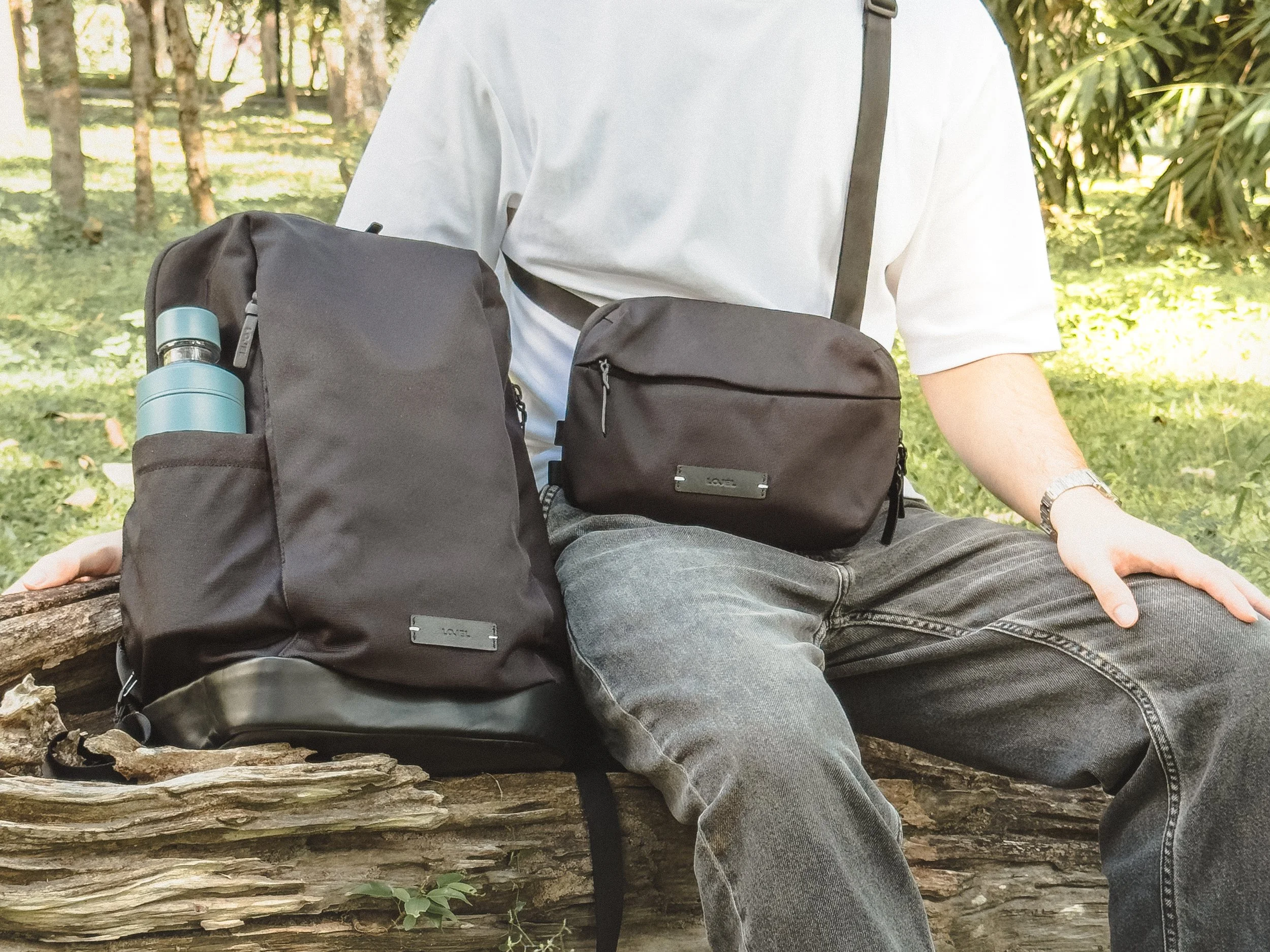
Lojel Eblo Sling and Backpack. I’m 173 cm (5’8”), 66 kg (145 lbs).
Introduction
Lojel, the Hong Kong-based brand that originated in Japan and is best known for its high-quality premium luggage, has dipped its toes into everyday gear.
The Eblo is not just a backpack but a system that consists of a sling and a backpack, designed to work together as you go about your day.
The suprisingly spacious 2.5-liter sling can be clipped to the inside of the bag using magnetic hooks, so it stays accessible and does not fall to the bottom. The 18-liter backpack has detachable, replaceable shoulder straps, smart side pockets and well-padded back panel that serves as a vertical luggage passthrough.
Both the backpack and the sling are made from high-quality materials—Cordura 900D recycled polyester—with the backpack featuring a full-grain leather base, elevating its look.
The Eblo comes in three configurations:
All Day Set: backpack, sling, and simple shoulder straps without a sternum strap.
All Terrain Set: includes an extra shoulder strap set that comes with a sternum strap.
All Conditions Set: adds a rain poncho.
The set featured—the All Terrain Set—cost me 2,450 HKD, or around 310 USD.
Aesthetics
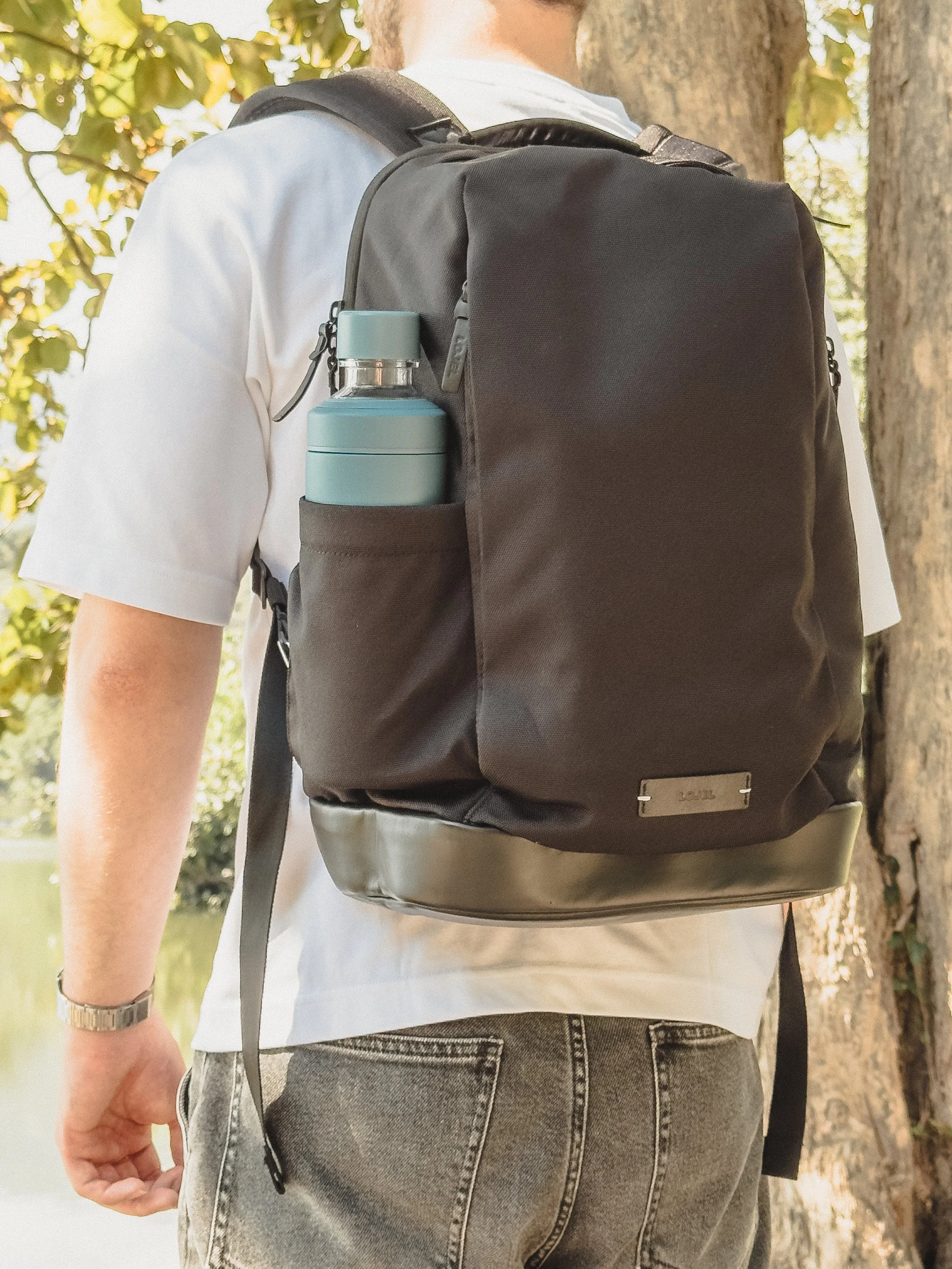
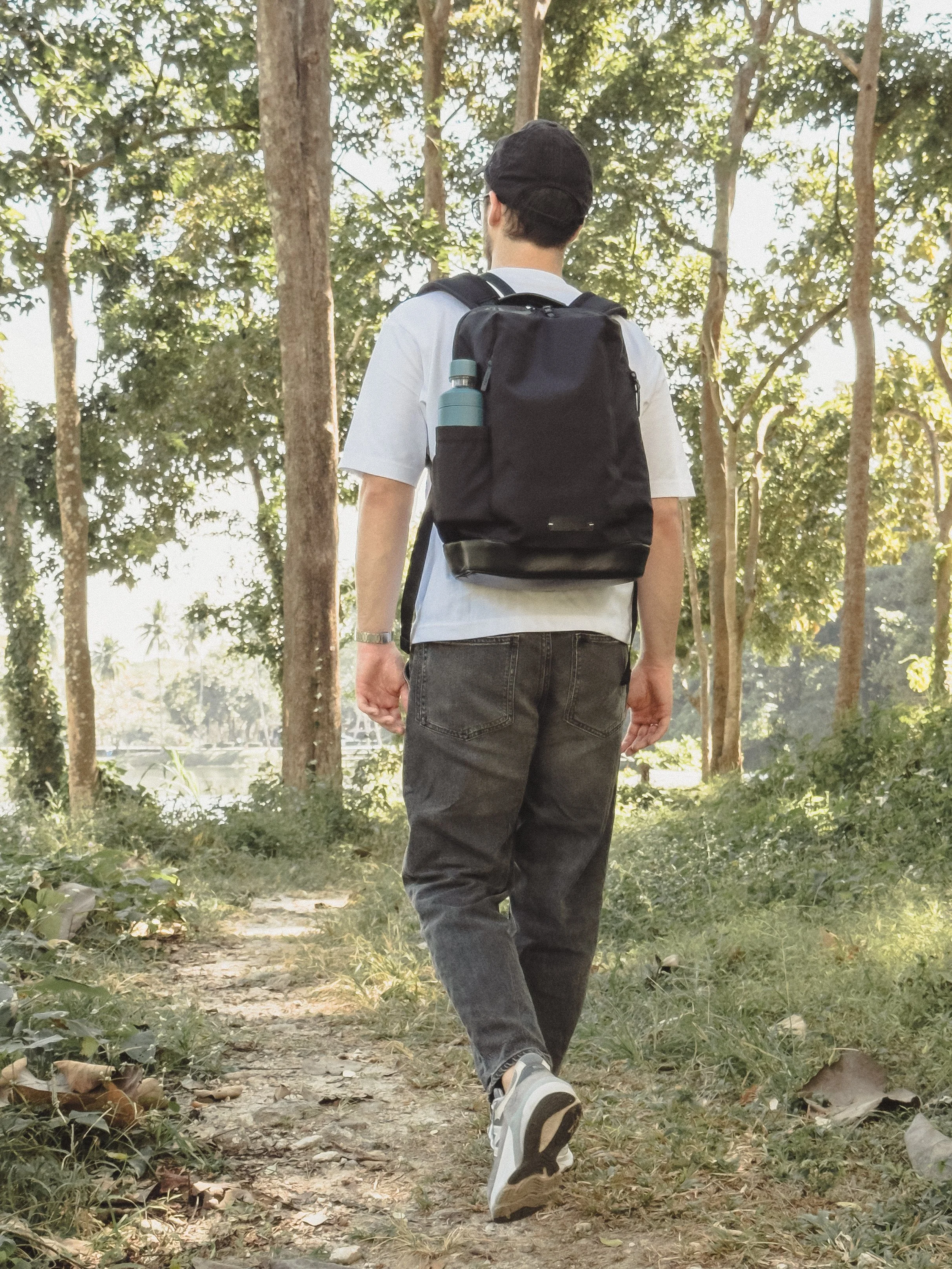
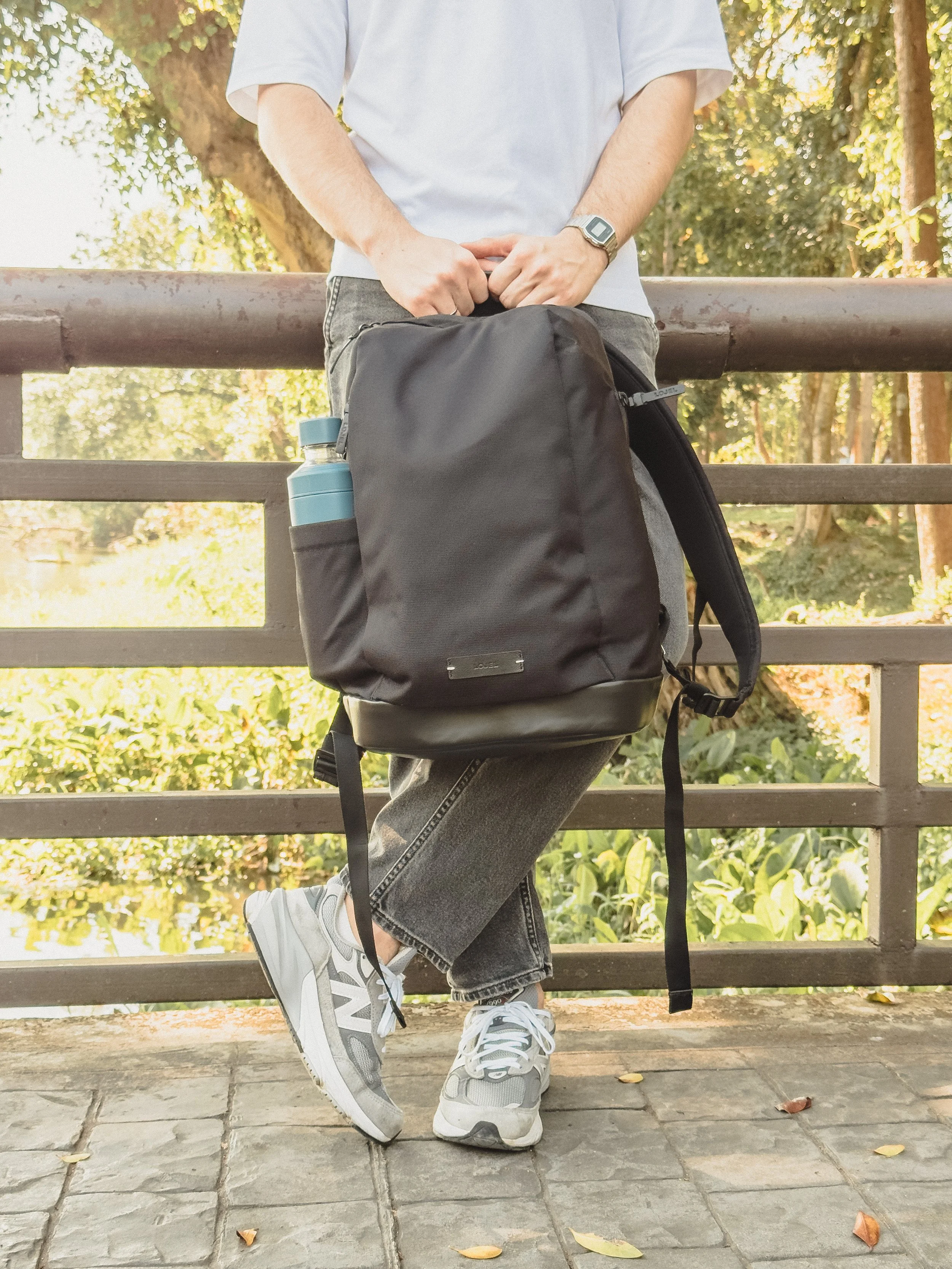
Let’s start with the aesthetics. Cordura polyester, together with a leather base and accents, creates an elevated smart-casual look that works well in a variety of situations. It’s one of the strong points of the Eblo—aesthetics that do not force you into a certain style.
Take Aer and Alpaka for example—their gear is very “techy”, nudging you into a specific look that might not work for you every time, while Eblo looks fitting from the office to the trail.
Organization
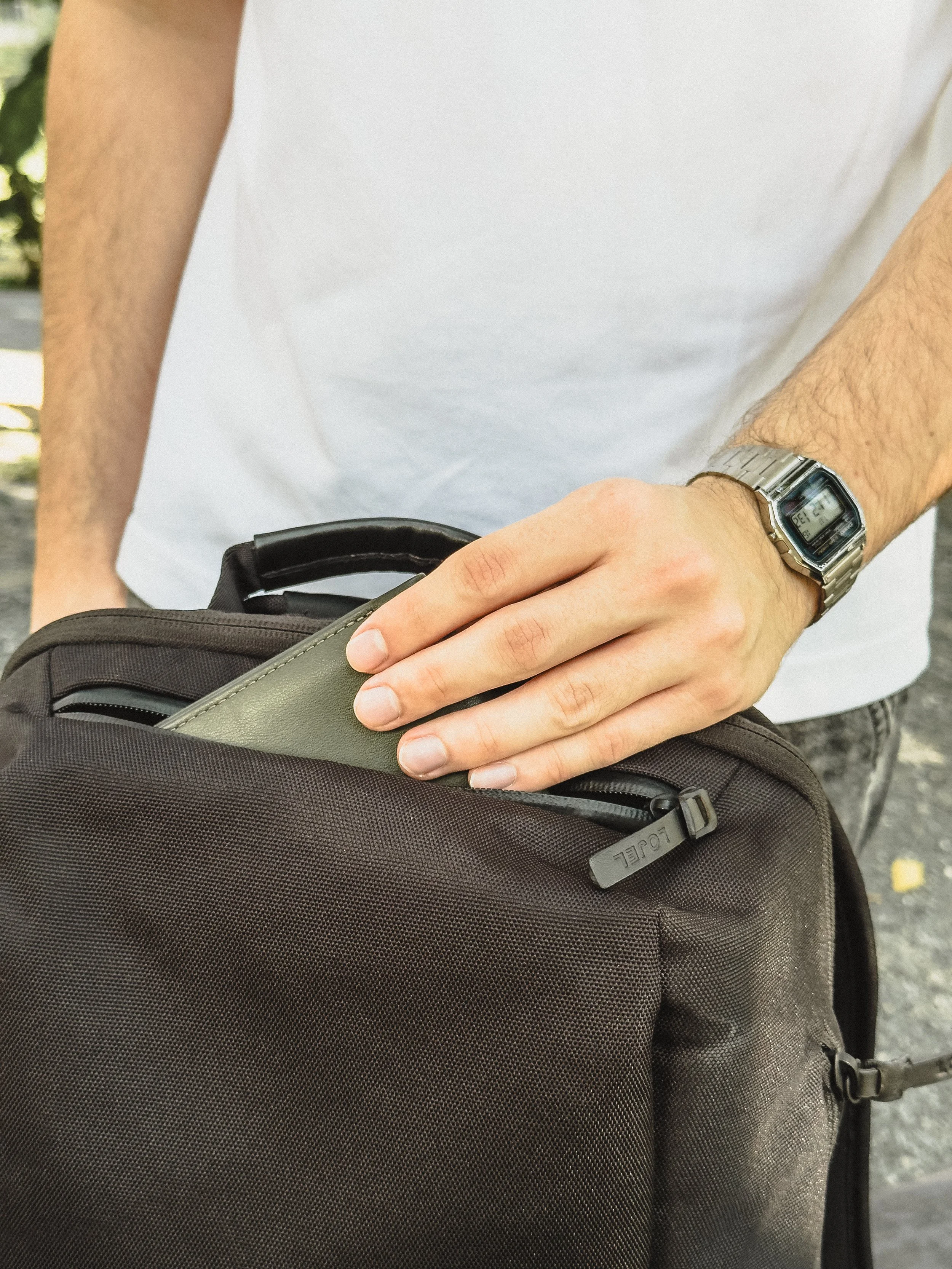
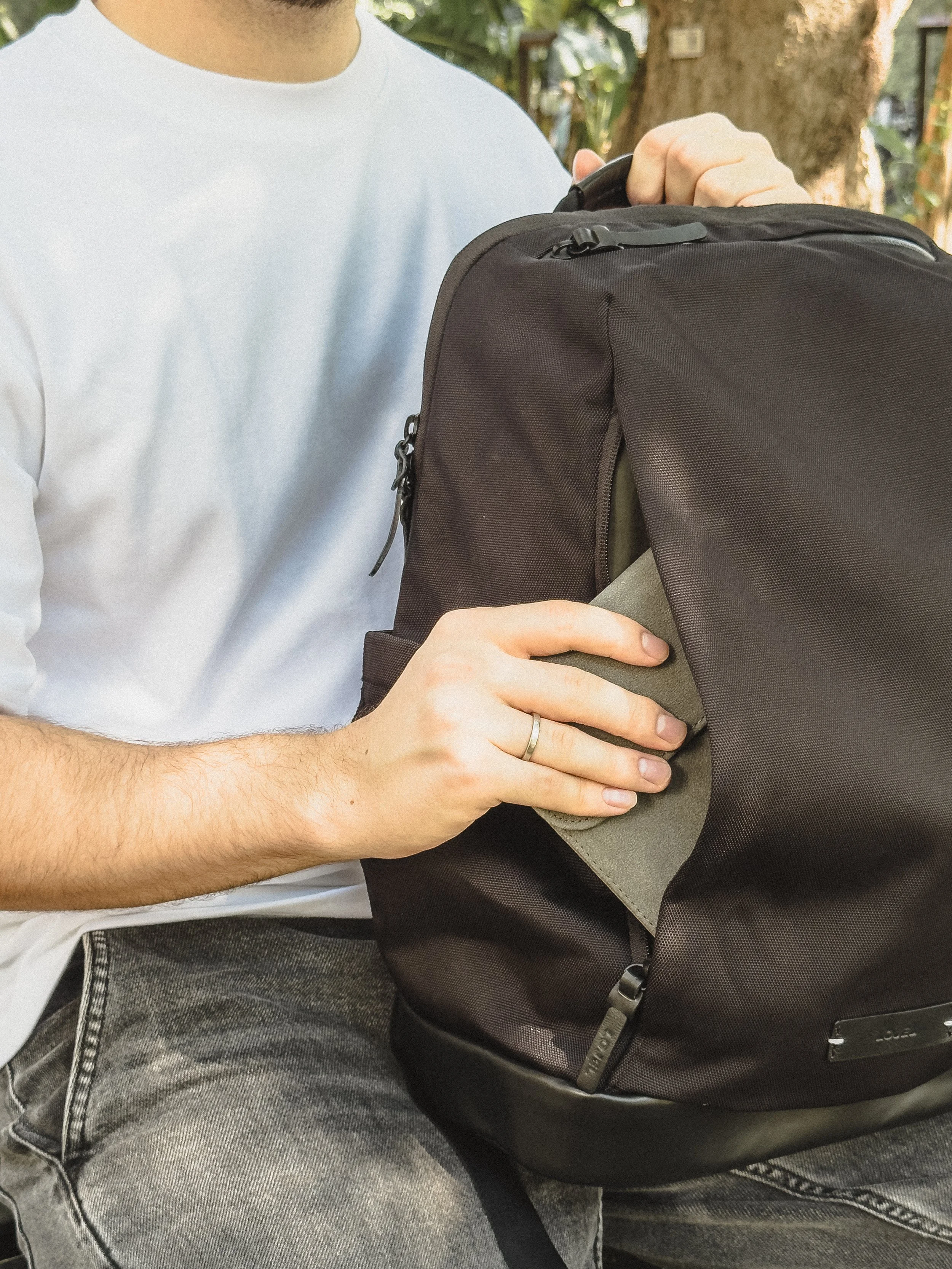
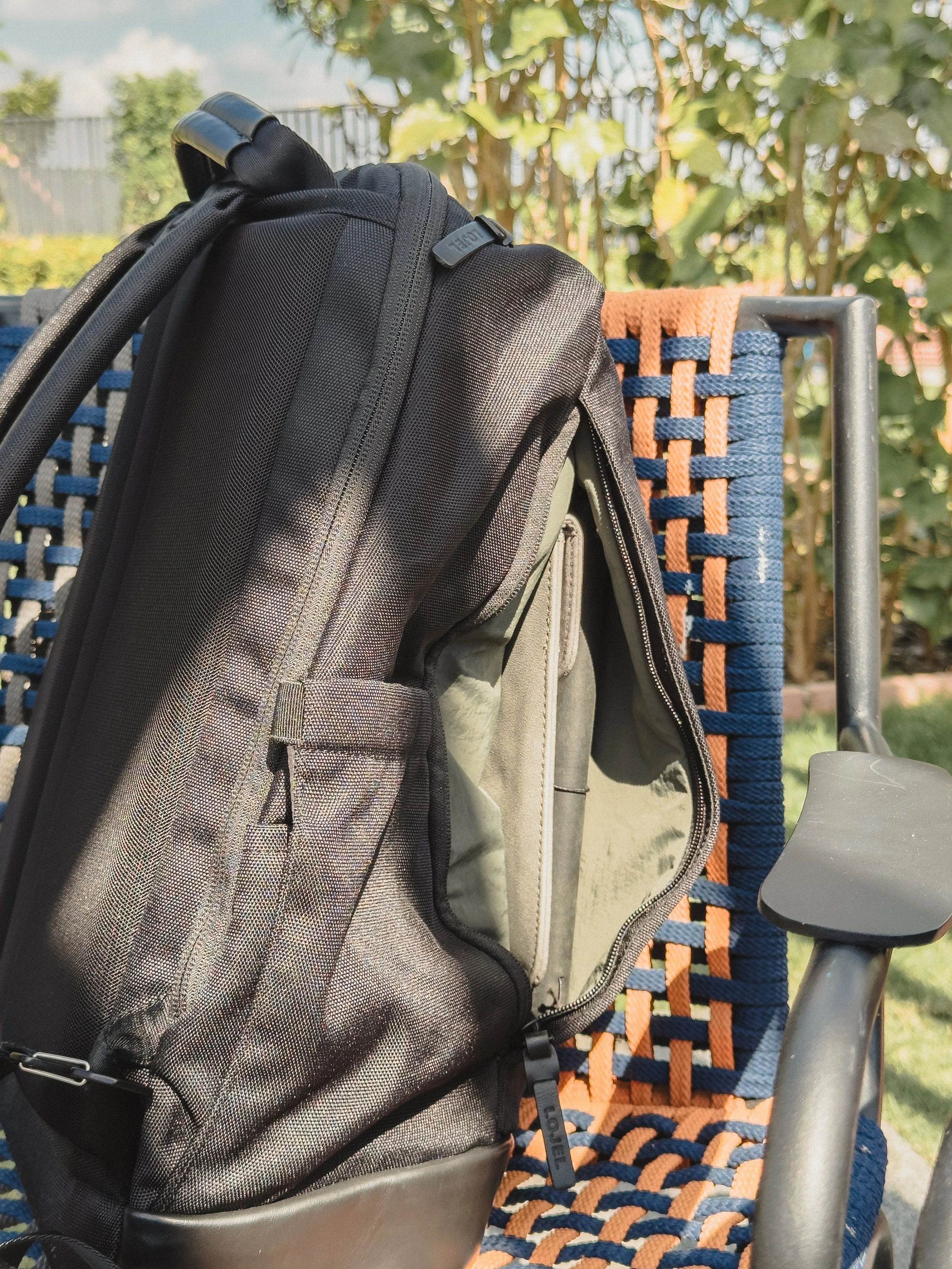
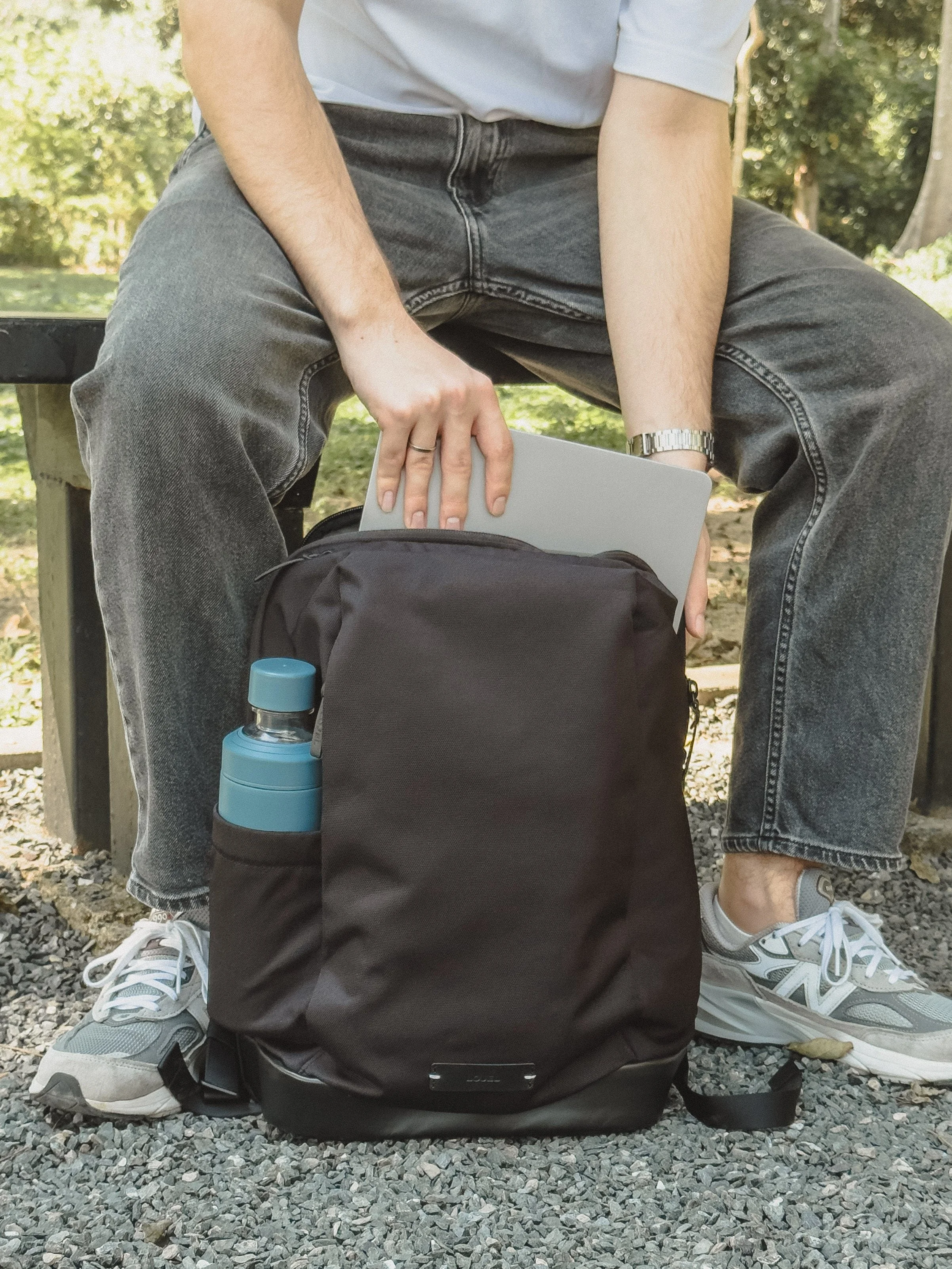
The backpack has four compartments: the main compartment, the top pocket, the front pocket, the side pocket, as well as an external water-bottle holder.
The front pocket features vertical zipper access. It does not have any interior organization but has a decent volume. It’s a good place for bulkier gear like over-the-head headphones or a light jacket. Note that smaller bits of gear will fall to the bottom. While the interior color is a nice shade of green, it is quite dark.
The top pocket is spacious enough for a phone and a full-size wallet, but it does not have any sort of soft lining. A practical pocket that I have used regularly.
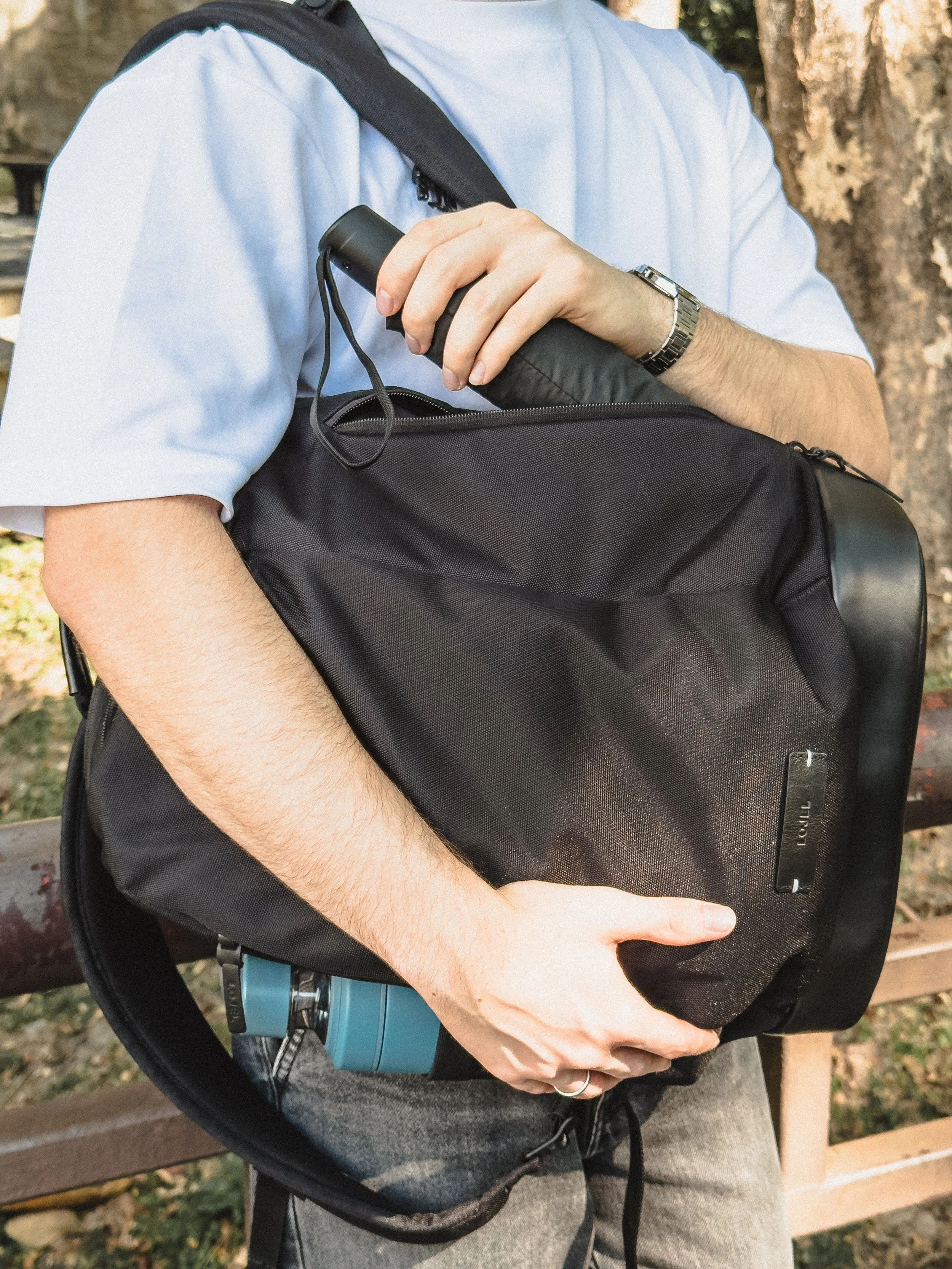
The side pocket is a good place to store your umbrella. It’s easily accessible when swinging the bag around the shoulder and features a stretchy mesh holder. It does compete for volume with the main compartment, but it sits flush, keeping the silhouette intact.
The water-bottle holder stretches nicely thanks to the elastic band. Both 700 ml Muji tumbler and a one-liter YETI bottle fit inside comfortably. Water bottle does compete for space with the main compartment a bit, but in return, it does not protrude too much.
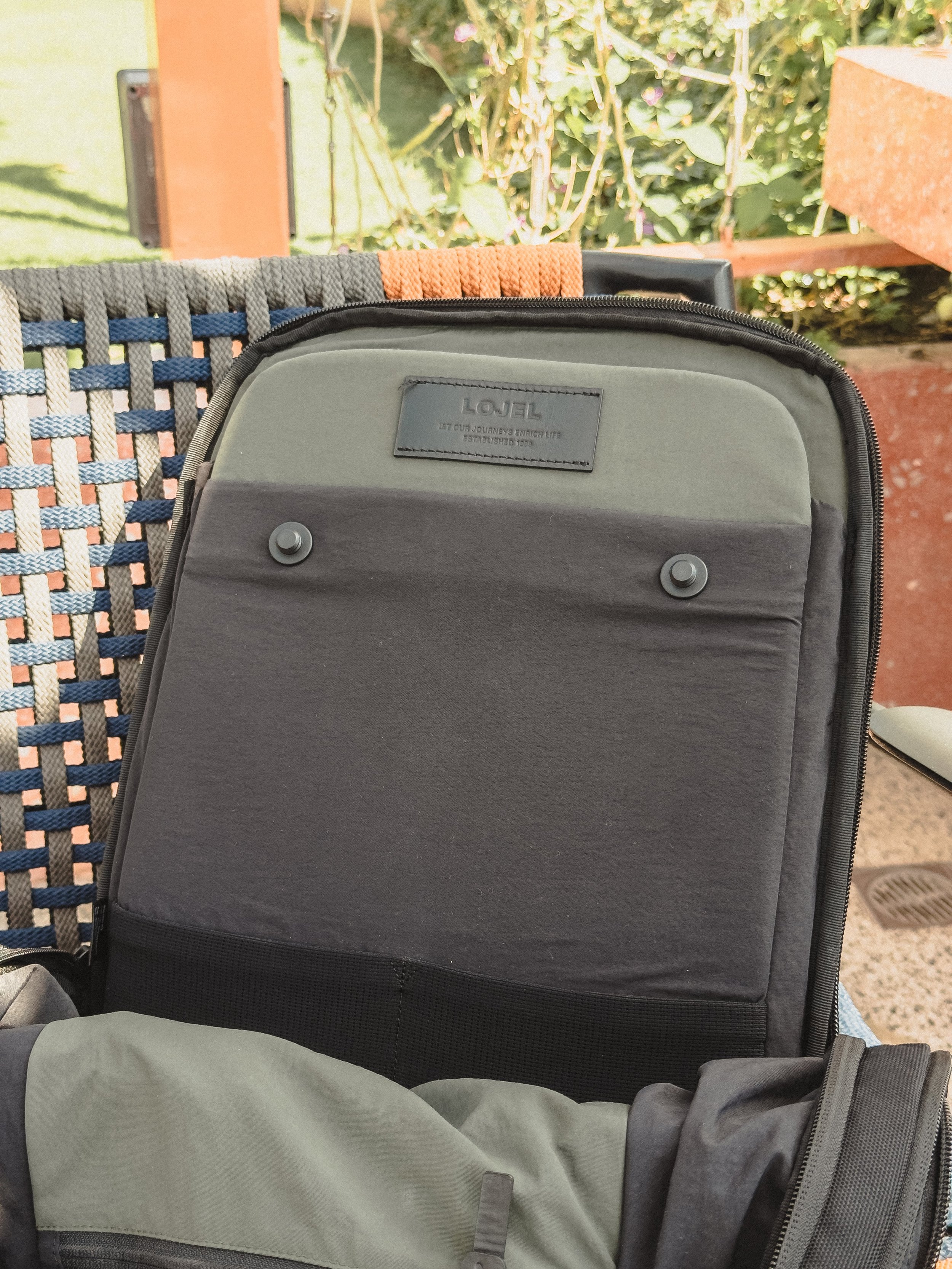
The main compartment opens wide, making access easy. On the back, there is a laptop sleeve and a tablet sleeve. Both are well padded, but the laptop compartment does not have a false bottom. There are also two stretchy mesh pockets below the magnetic sling attachment points. On the opposite side, there is a zippered pocket with an AirTag sleeve, but no other organization beyond that.
Overall, the bag has just enough organization, with the side and top pockets being my favorite features.
Materials and Hardware
The 900D recycled Cordura polyester seems durable—worthy of the price point. I have not had any issues with it. The leather elements are a welcome touch and build the aesthetics that I’m so keen on.
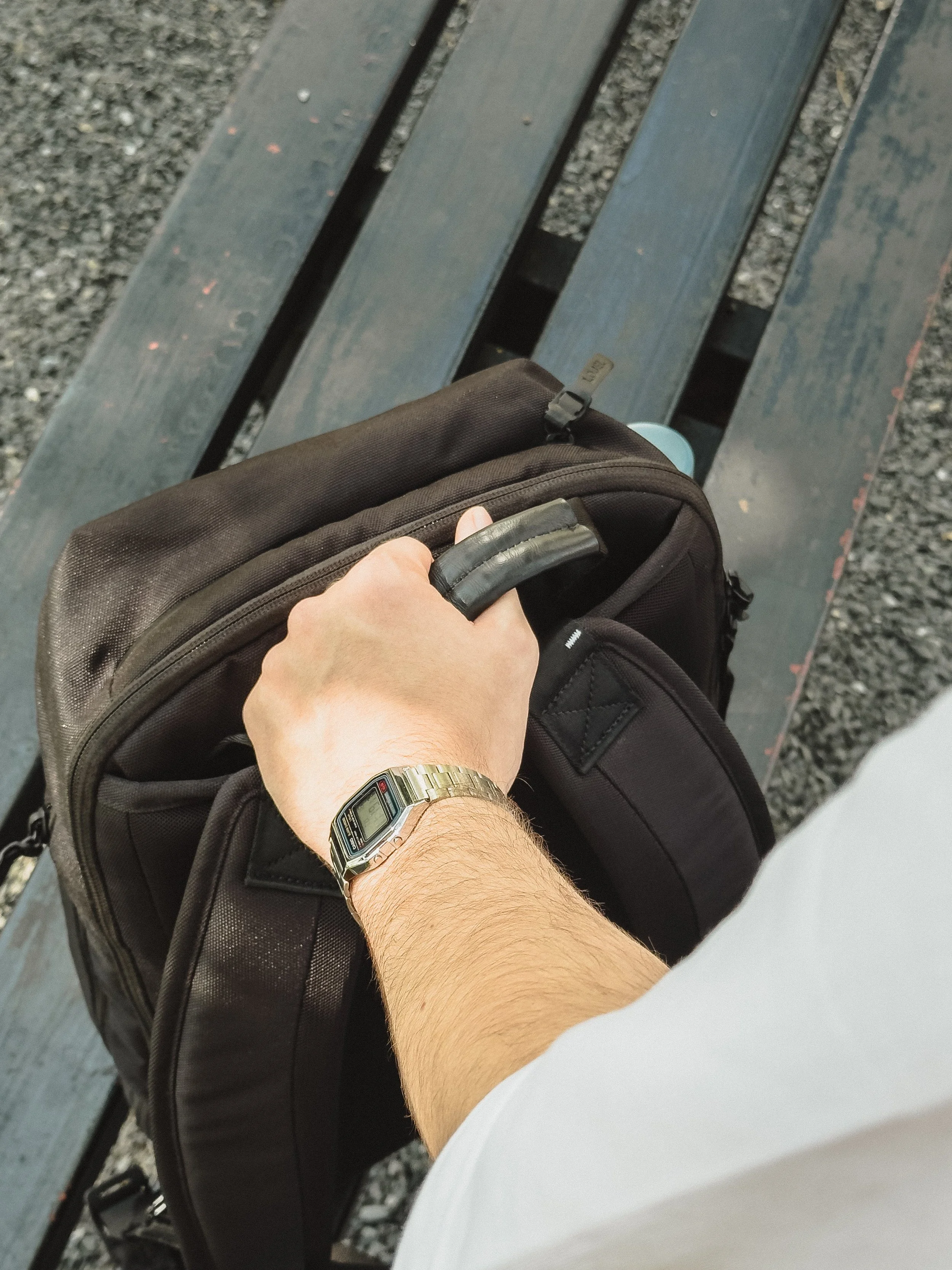
I do, however, find the leather on the top handle too hard. Even after six months, it didn’t become softer, making the handle uncomfortable, especially under load.
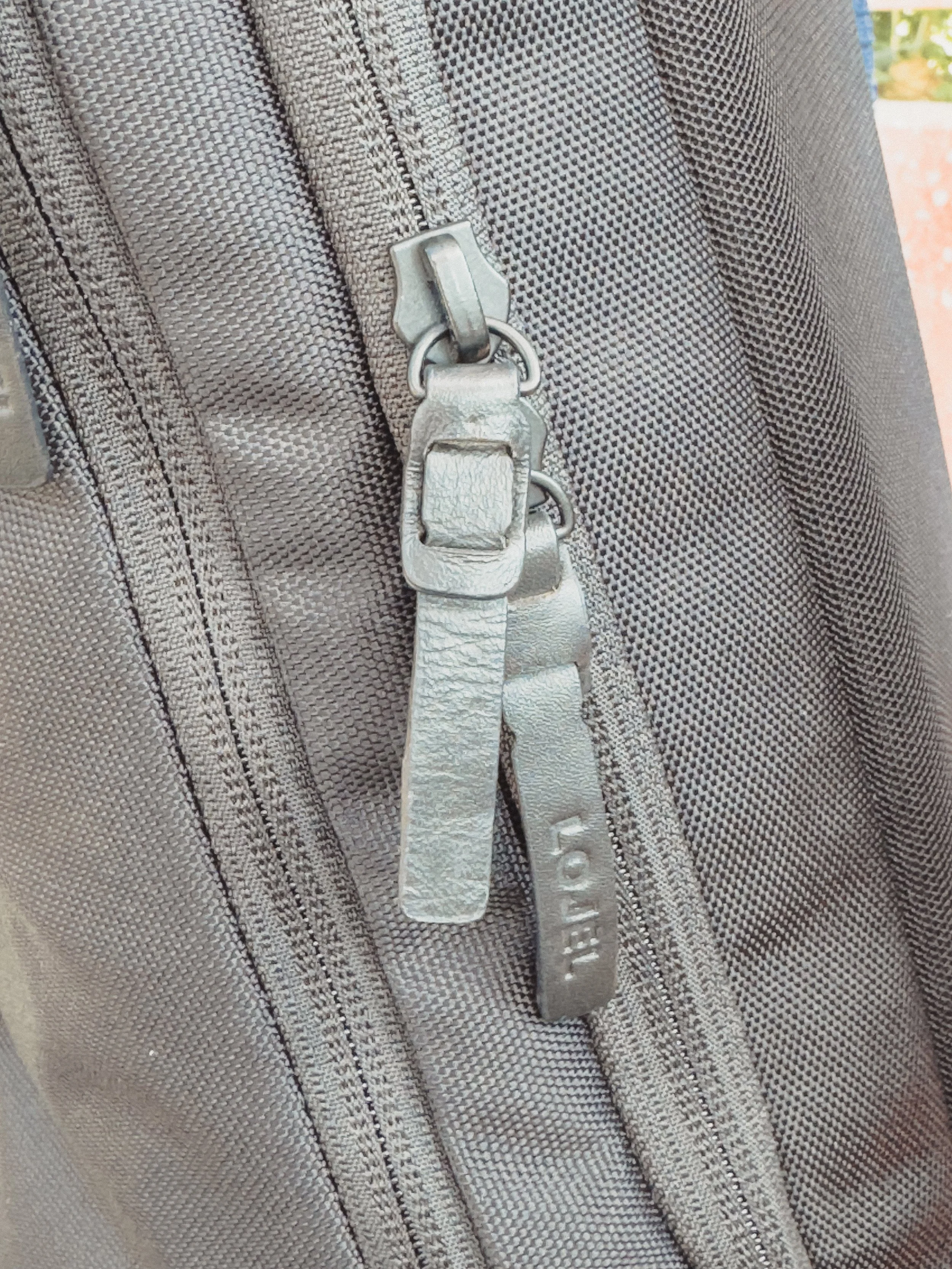
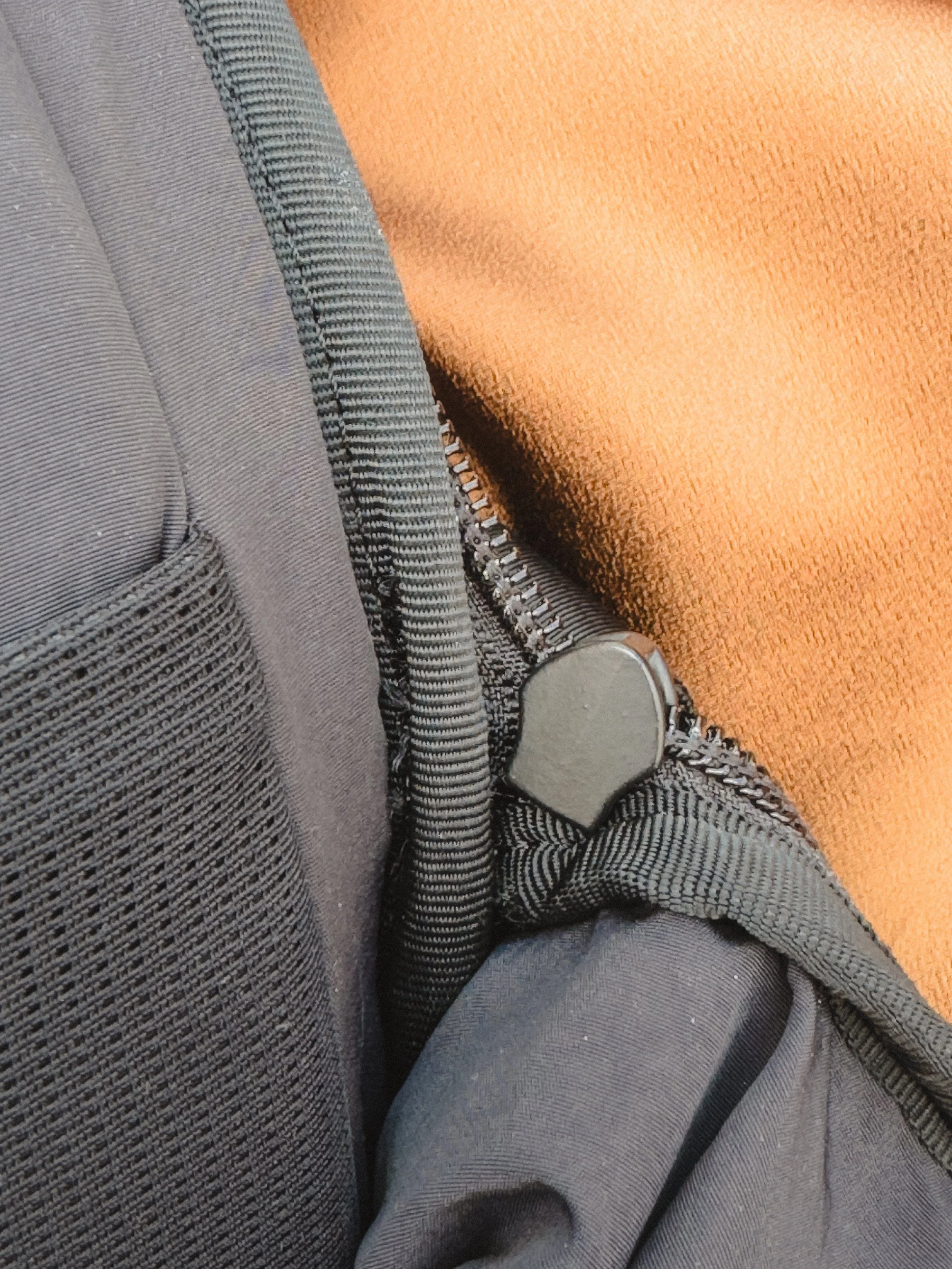
I do like the use of leather on the zipper pulls a lot, though. The pulls are grippy and long, making the experience of opening and closing the bag quite nice. The zippers themselves are not branded—there is no YKK or other brand logo—which I find wild for a bag at that price point. They seem durable but do not glide as smoothly as the Able Carry Daily, for example.
Most of the zippers are not PU coated, with the exception of the top pocket. Personally, I like this strategic use of PU coating since, while the coating can provide additional weather resistance, it can peel over time. And a bag at that price point should last you a long time.
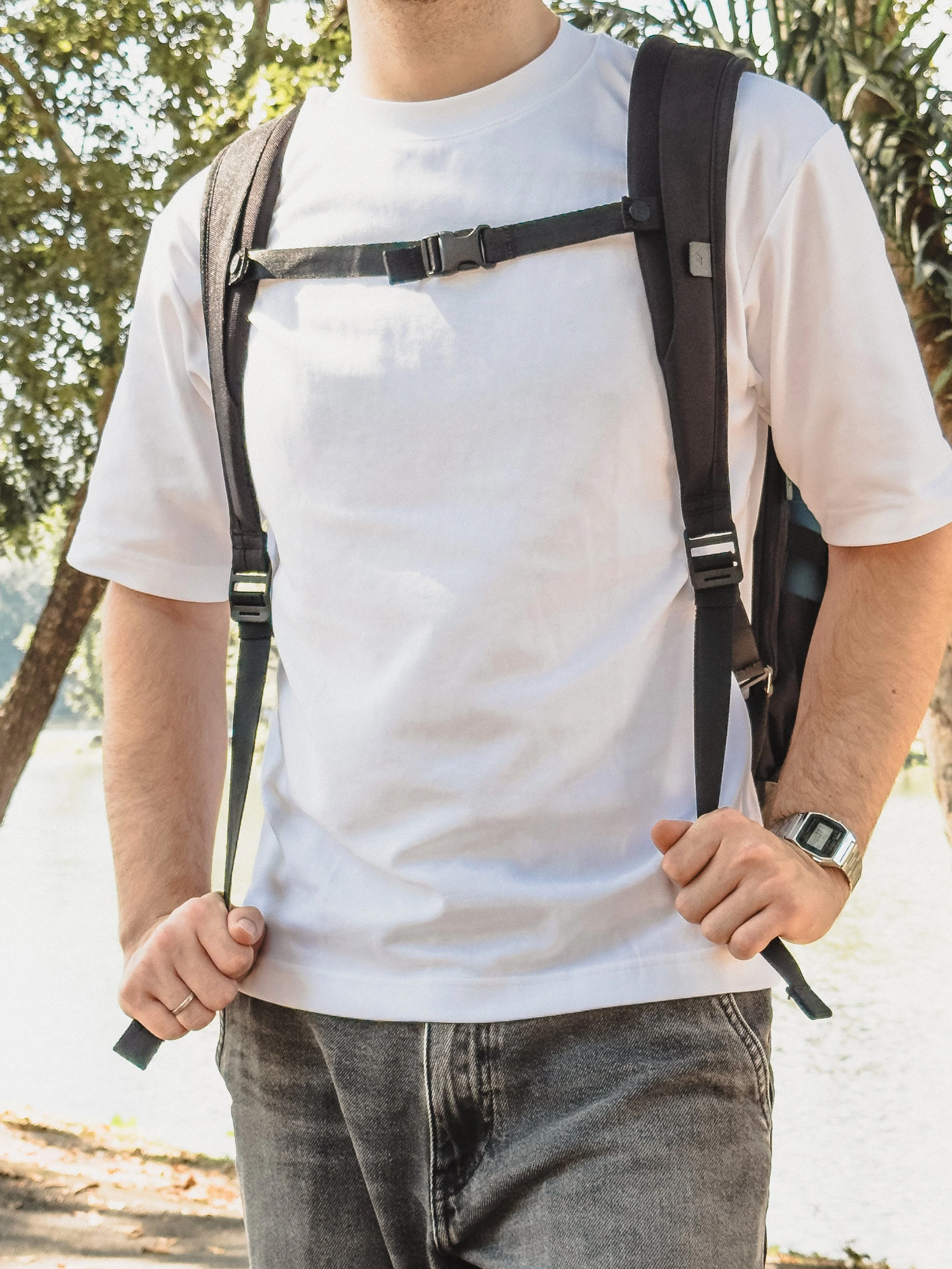
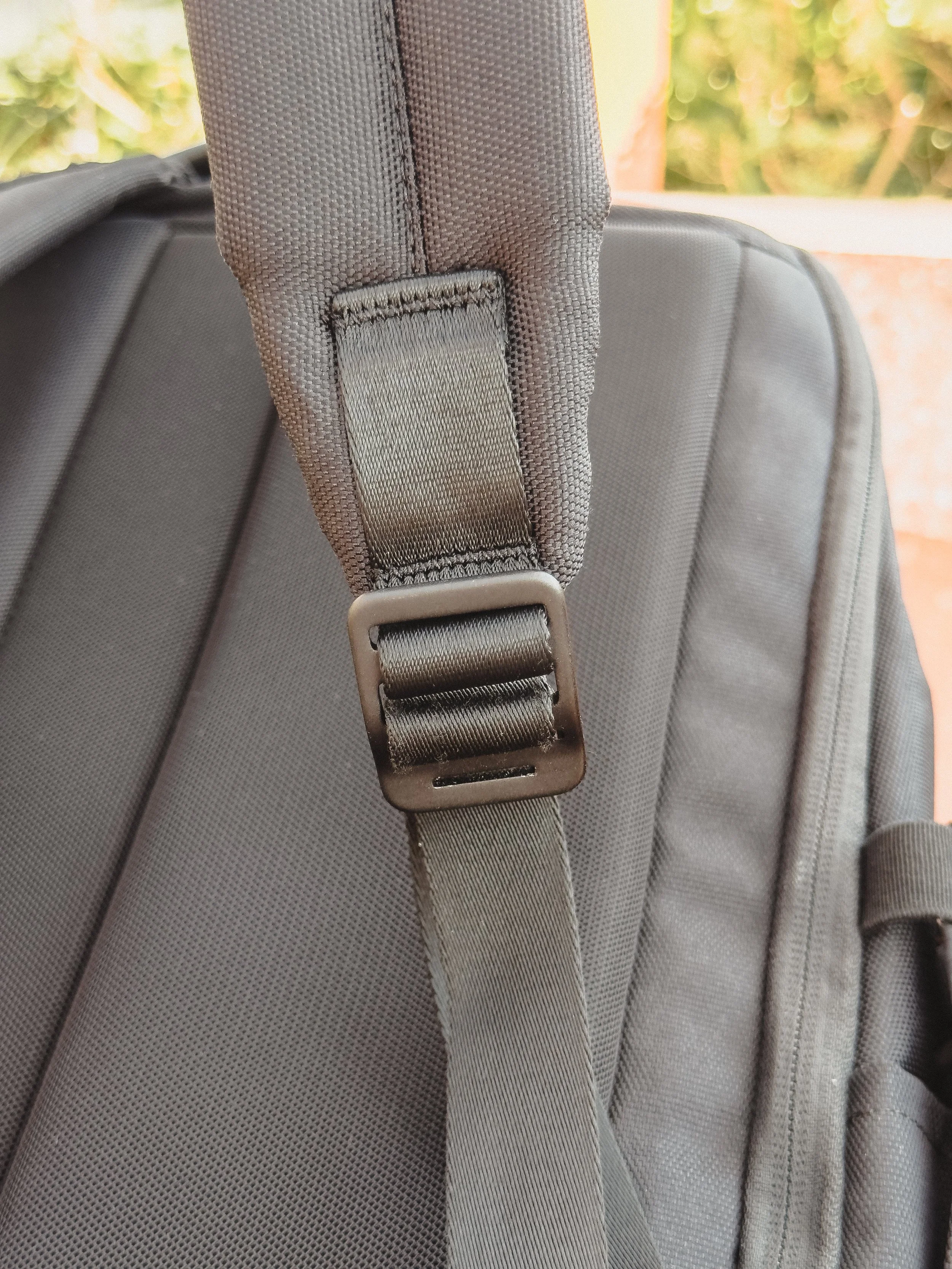
The straps use aluminum hardware. While it does feel premium, the roller strap webbing adjuster can be slippery. I’ve noticed that I had to readjust the bag quite often after putting it back on.
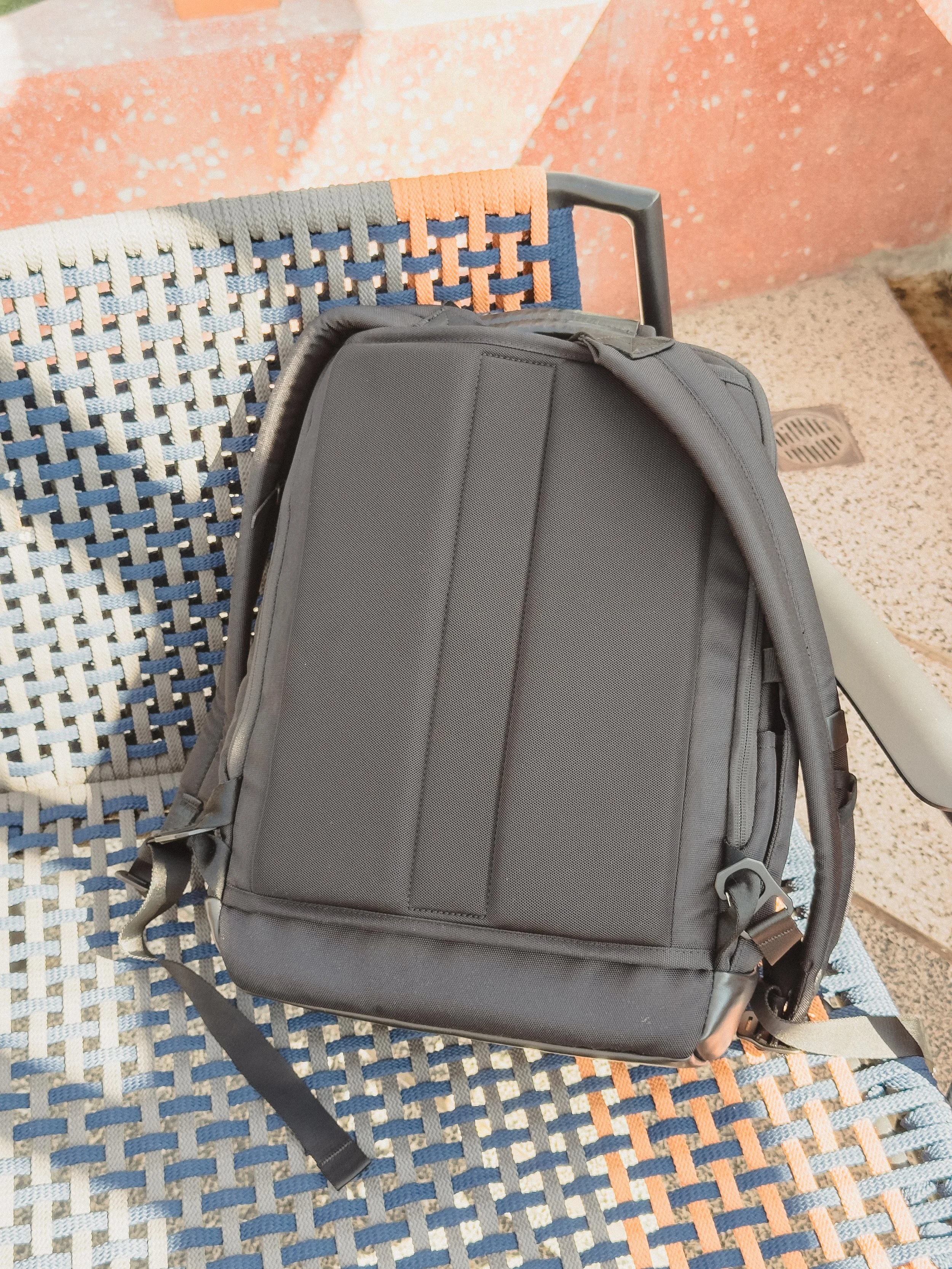
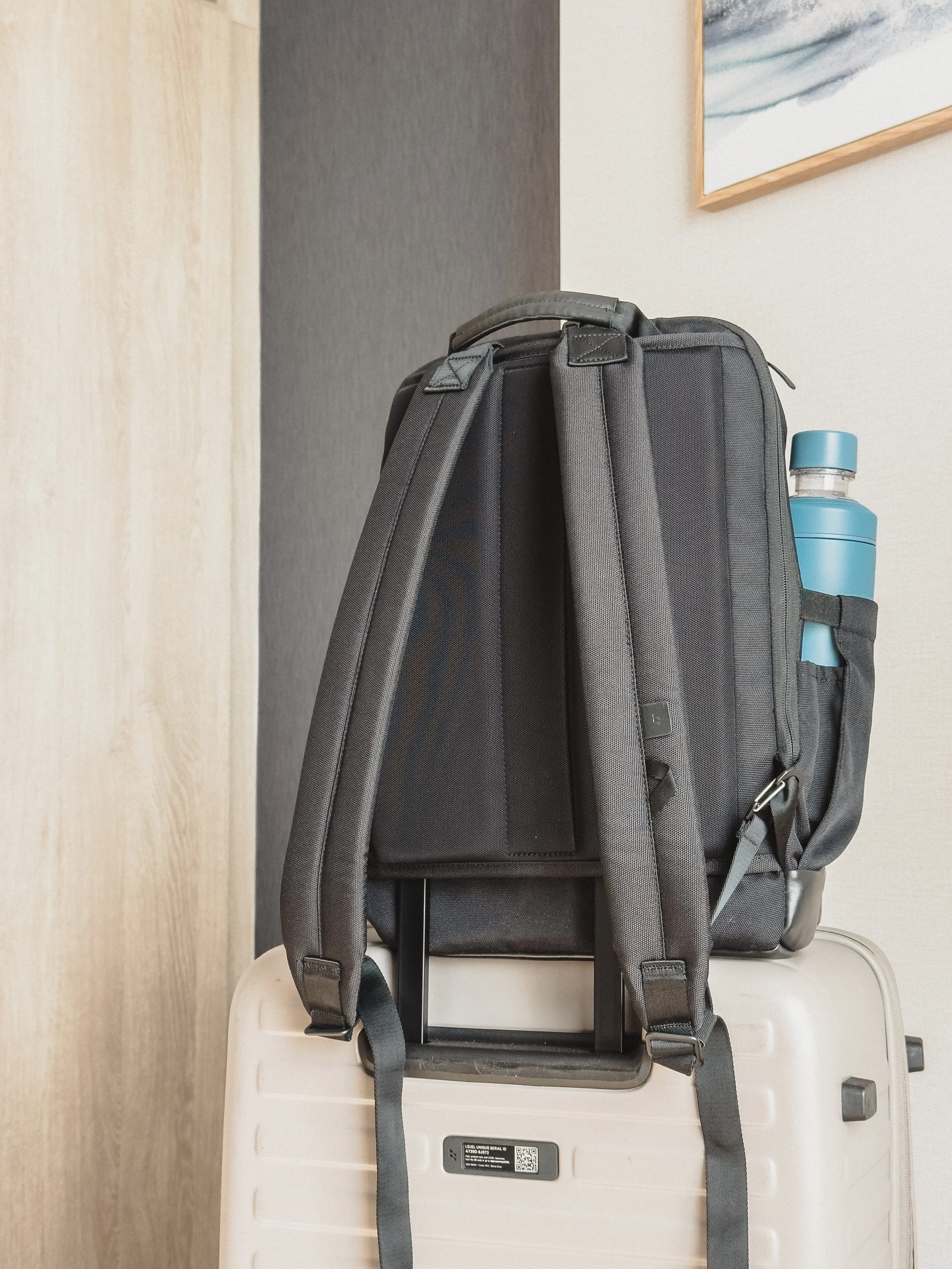
The back panel padding is quite soft and spongy and has some ventilation but not a lot. There is no proper air channel running alongside the back panel. I don’t have a problem with it, though—as even in hot Thailand weather, my back stayed relatively dry.
Unlike some other backpacks that have a thin, tight strap for a luggage passthrough, the Eblo features a full back-panel–length luggage passthrough, which works well and keeps the bag stable. However, some suitcases with shorter handles might not pass all the way through.
There are two shoulder strap sets—the City Straps and the Active Straps. The City Straps are straight and minimal, while the Active Straps have a contoured shape and a detachable sternum strap. Both are rigid and firm—to the point of being uncomfortable. And, in fact, most of my issues with the comfort of this bag come from the shoulder straps, which we discuss in detail in the Comfort section of this review.
Build
General build quality is good. There are no obvious stress points, loose threads, or sketchy-looking stitches.
The empty sling weighs 250 grams; the empty backpack—1150 grams. Definitely on the heavier side for an 18-liter bag. I would have said it’s worth it—considering the quality of materials—but the backpack has a tendency to collapse in on itself, ruining the sleek aesthetics.
For me, it’s one of the drawbacks of the bag, as I often carried it half-empty—the laptop, water bottle, umbrella, and some essentials—leaving the main compartment unused, which caused the bag to collapse.
It may seem like a minor quarrel, and not an issue at all if you actually pack out the bag. But considering the price point of 300 USD and the weight of 1.15 kilos, I’d say that is a definite drawback.
The System
Now, I’ve mostly talked about the backpack, but the main feature of the Eblo is that it’s a system combining a sling and a backpack. Let’s quickly go over the sling before showing how it works together with a backpack.
The Sling
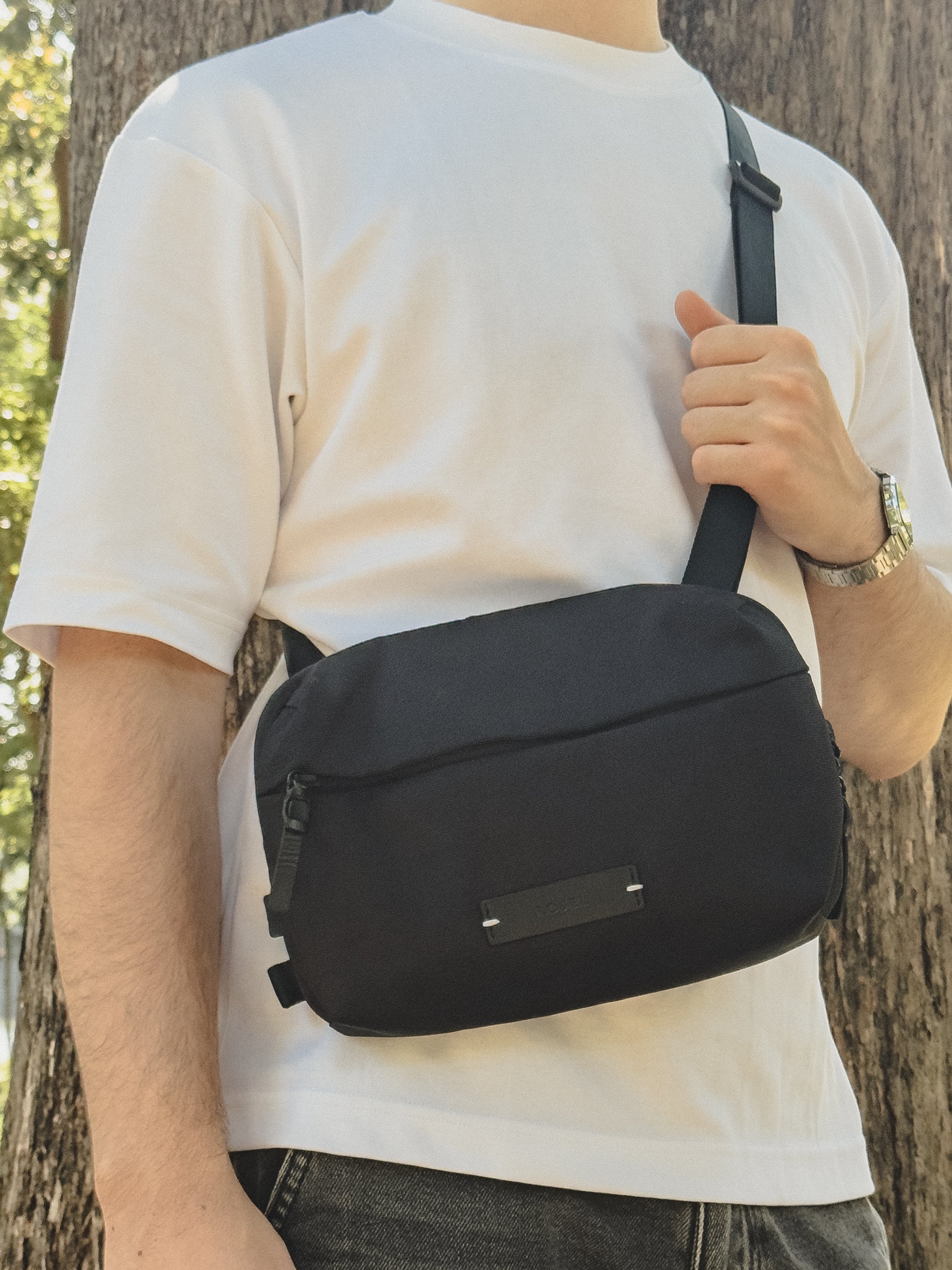
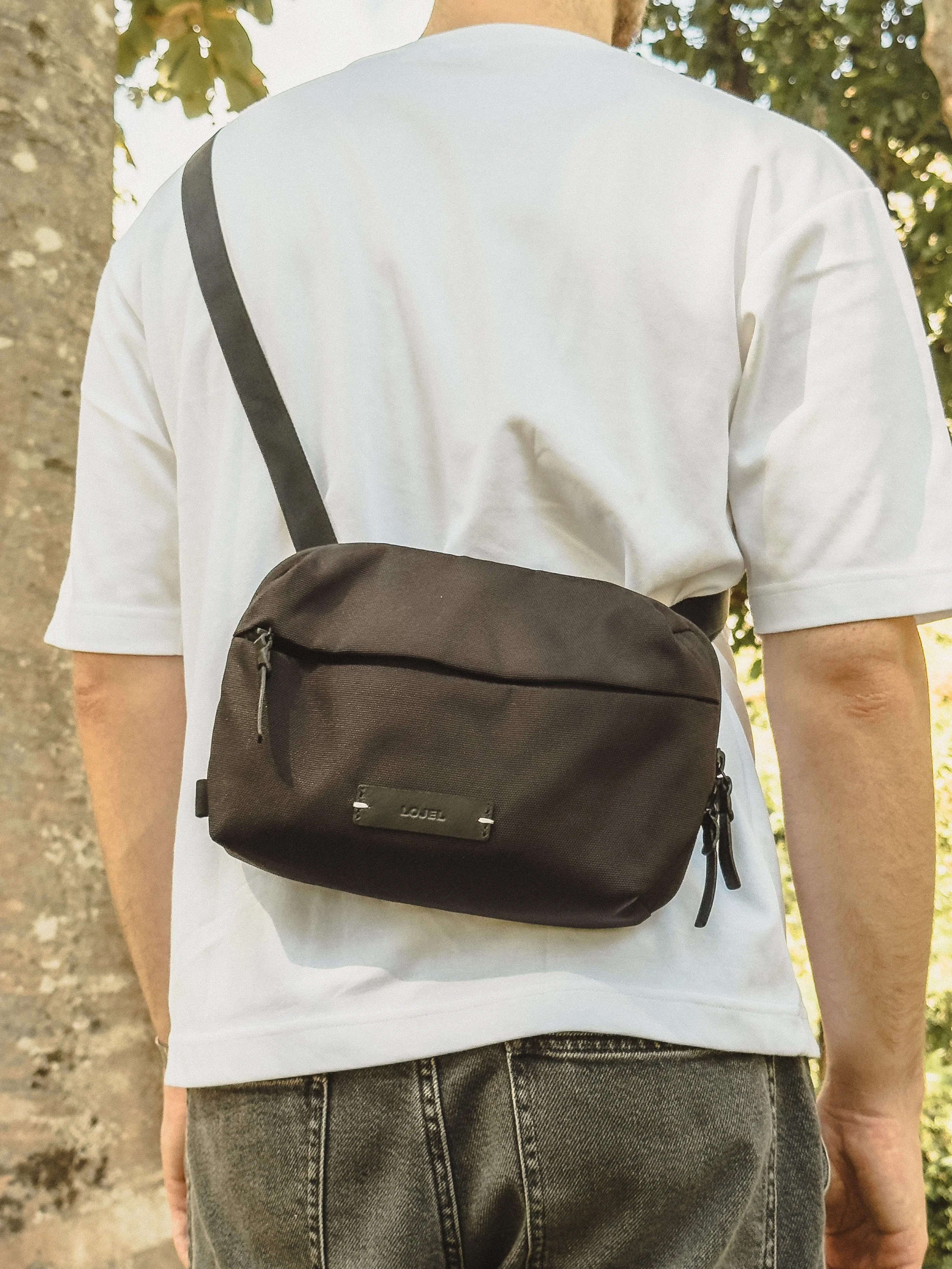
The sling uses the same materials and hardware as the backpack and is stated to be 2.5 liters in volume. There are three compartments: the front flap-covered front pocket, the main gusseted compartment, and a buttoned back pocket that is designed to hold a strap but can be used when the sling is worn.
The front pocket features no internal organization and is a good place for miscellaneous items like wet wipes, tissues, or a small notebook.
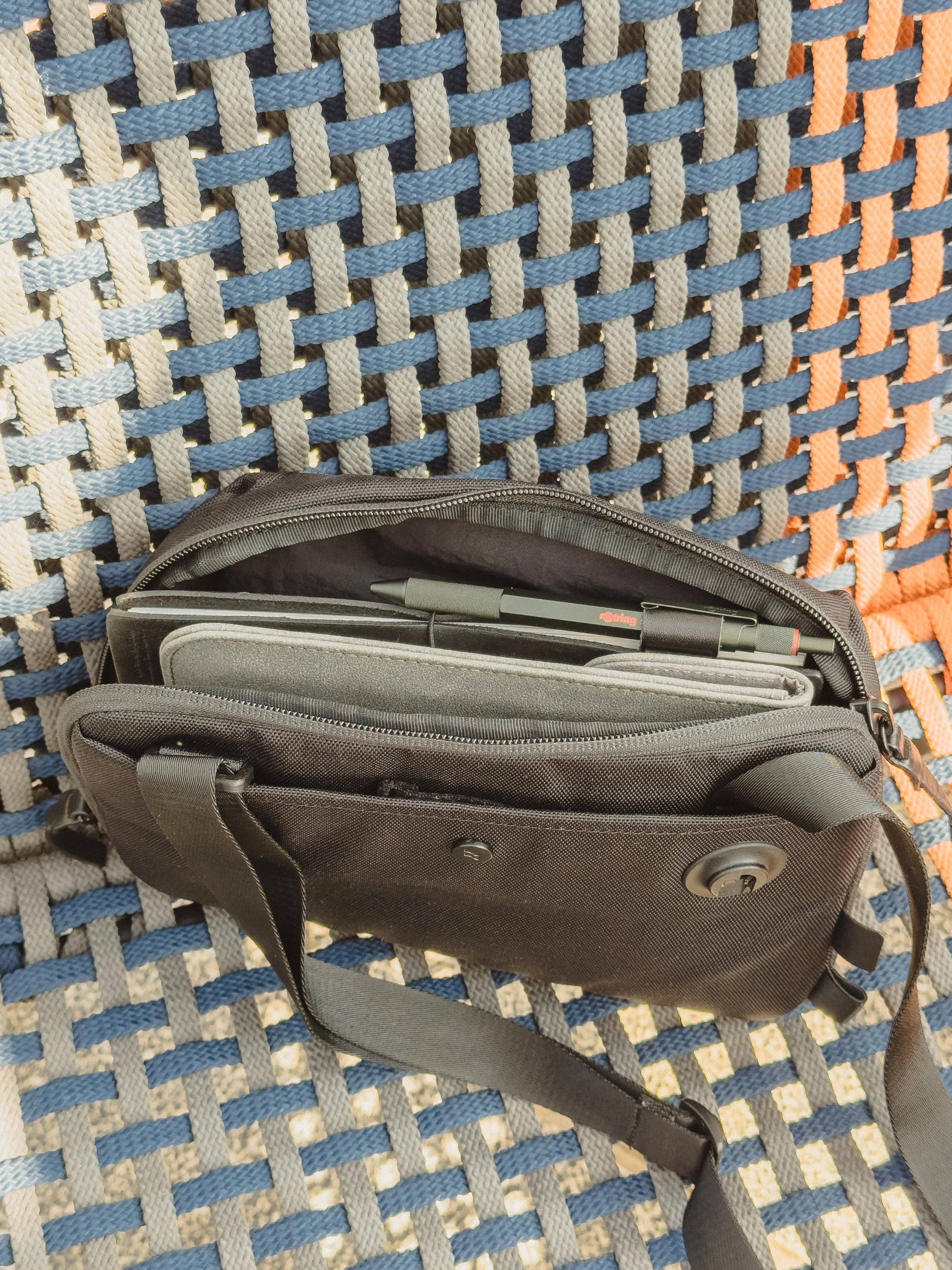
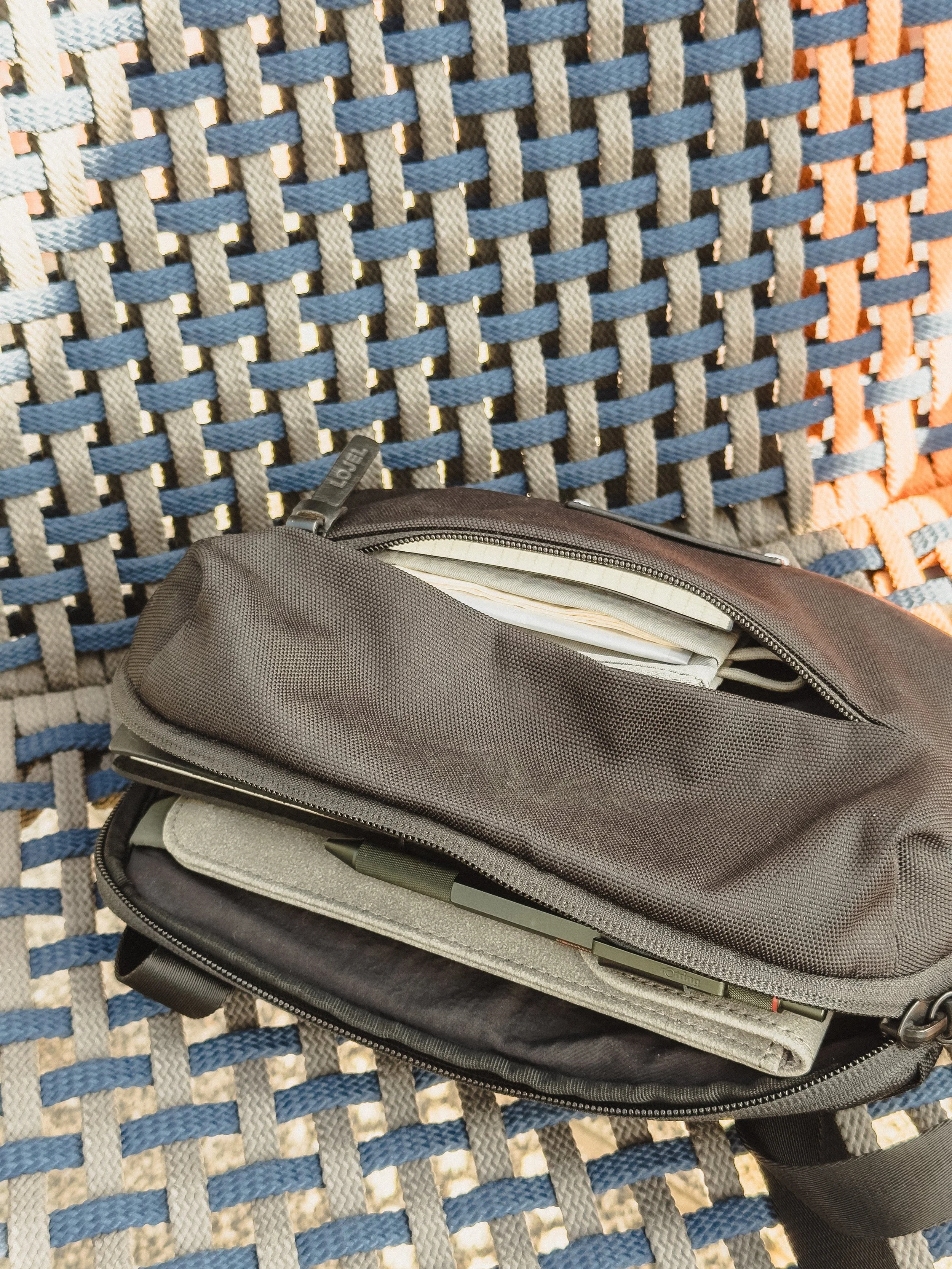
The main compartment has a phone (or small tablet) sleeve, two stretchy mesh pockets, and a cavernous main area. The gusset allows the sling to open wide and fit bulkier items inside. In fact, the volume and shape of the sling allow it to carry a full-size Traveler’s Company notebook, a Kindle in a bulky case, a phone, and some other smaller bits. It is a standout feature of the sling, in my opinion, as my other 2.5-liter sling—Bellroy Venture Ready Sling—is not capable of holding this gear.
The back pocket is designed for stowing the strap when clipping the sling to the backpack. It can be a nice dump pocket when you are wearing the sling.
Using the Sling and the Backpack
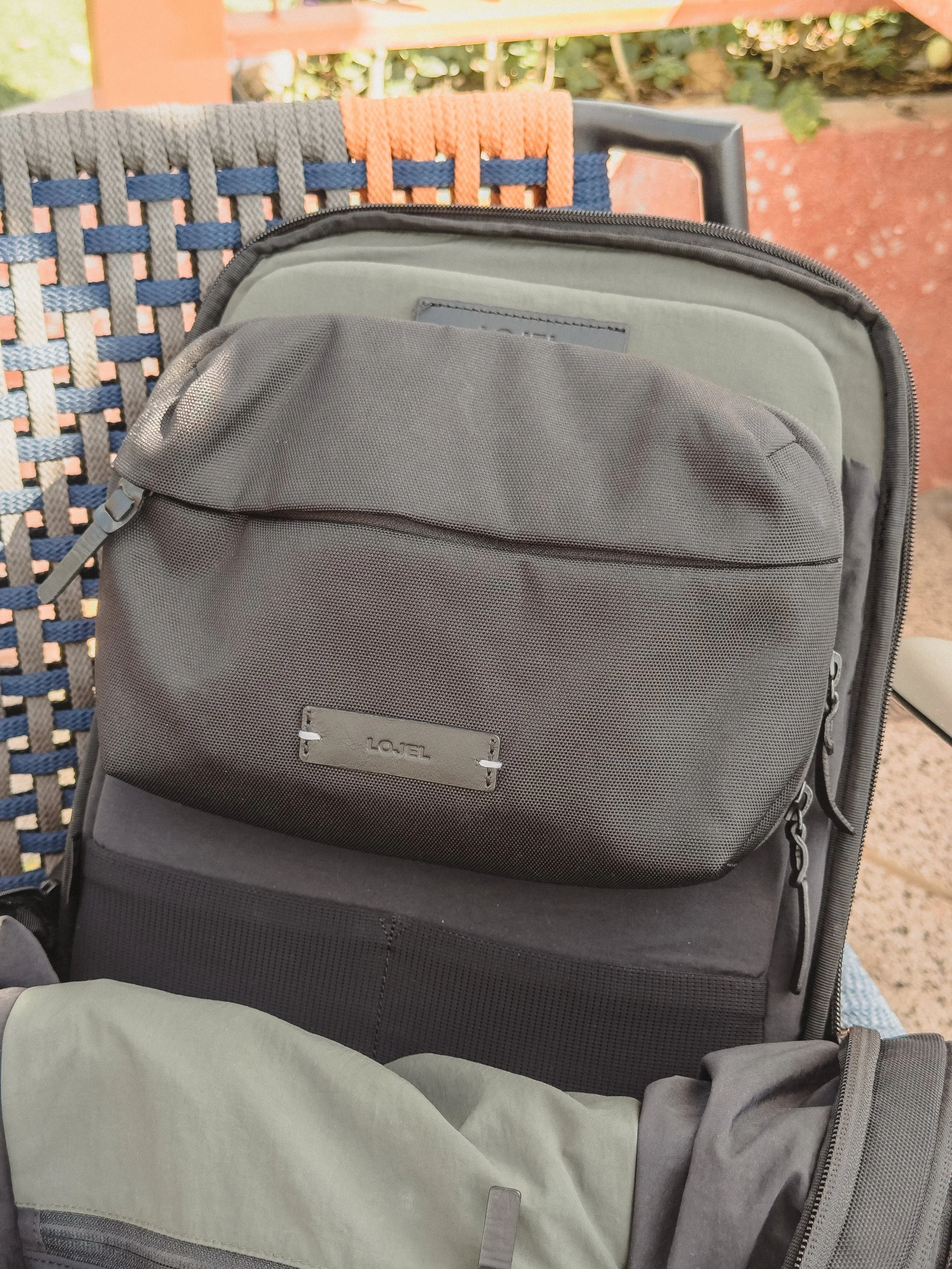
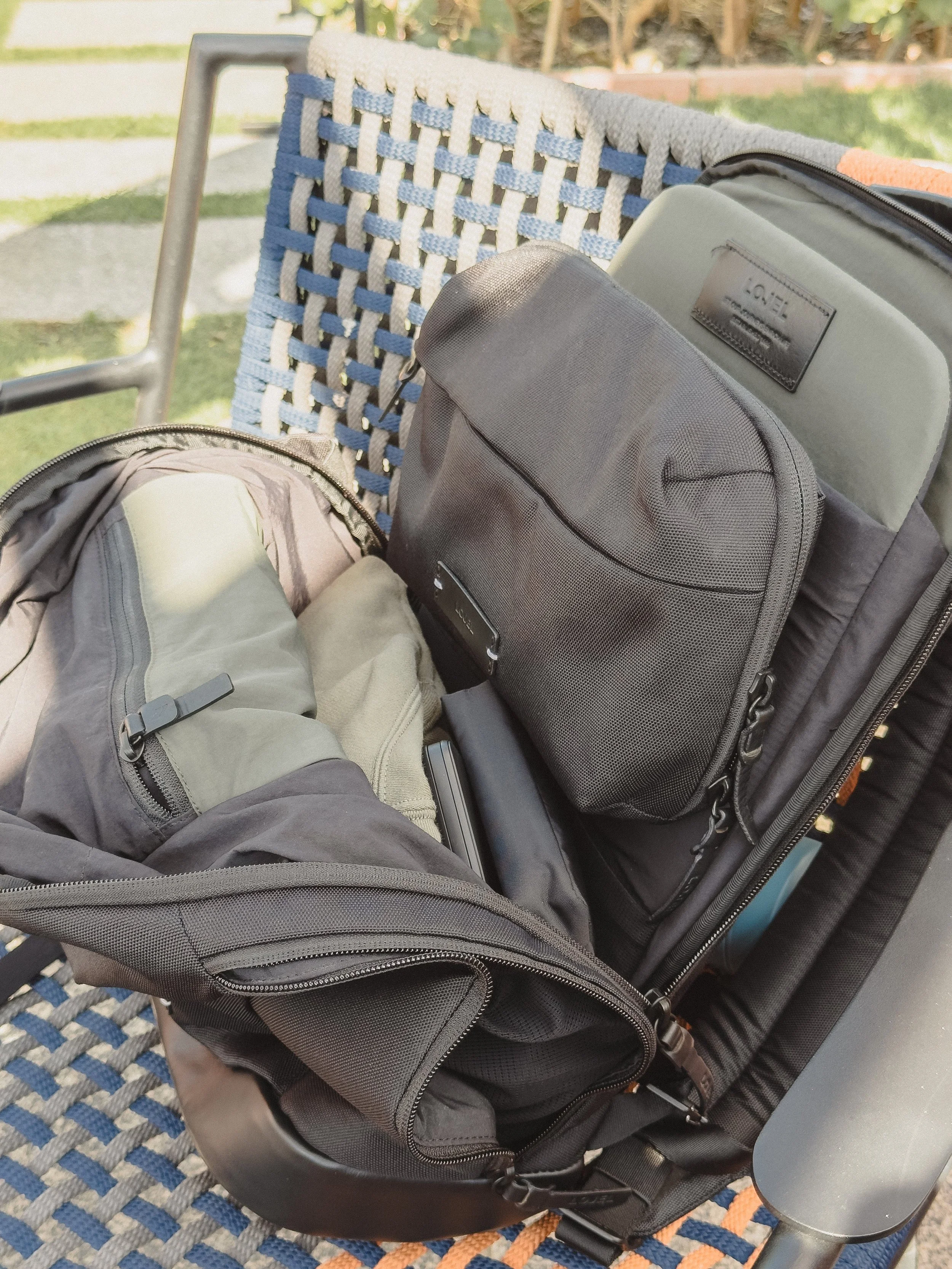
The sling works well for daily outs and abouts, but when you need a bit more space you put the sling into the backpack and go. No need to transfer your stuff to the backpack. That is the idea.
To put the sling into a backpack, you stow away the strap in the back pocket and clip the sling to magnetic hooks in the main compartment. The sling stays right there on top of the backpack and does not fall to the bottom, making its compartments accessible without needing to take it out of the backpack. This system generally works well but has some caveats.
Both the backpack and the sling have dark interiors, which often caused me to navigate by touch alone.
When attached, the sling essentially halves the volume of the backpack’s main compartment. With this greatly reduced volume, you can still put a hoodie and a pouch or two at the bottom of the bag, but not much else.
Comfort
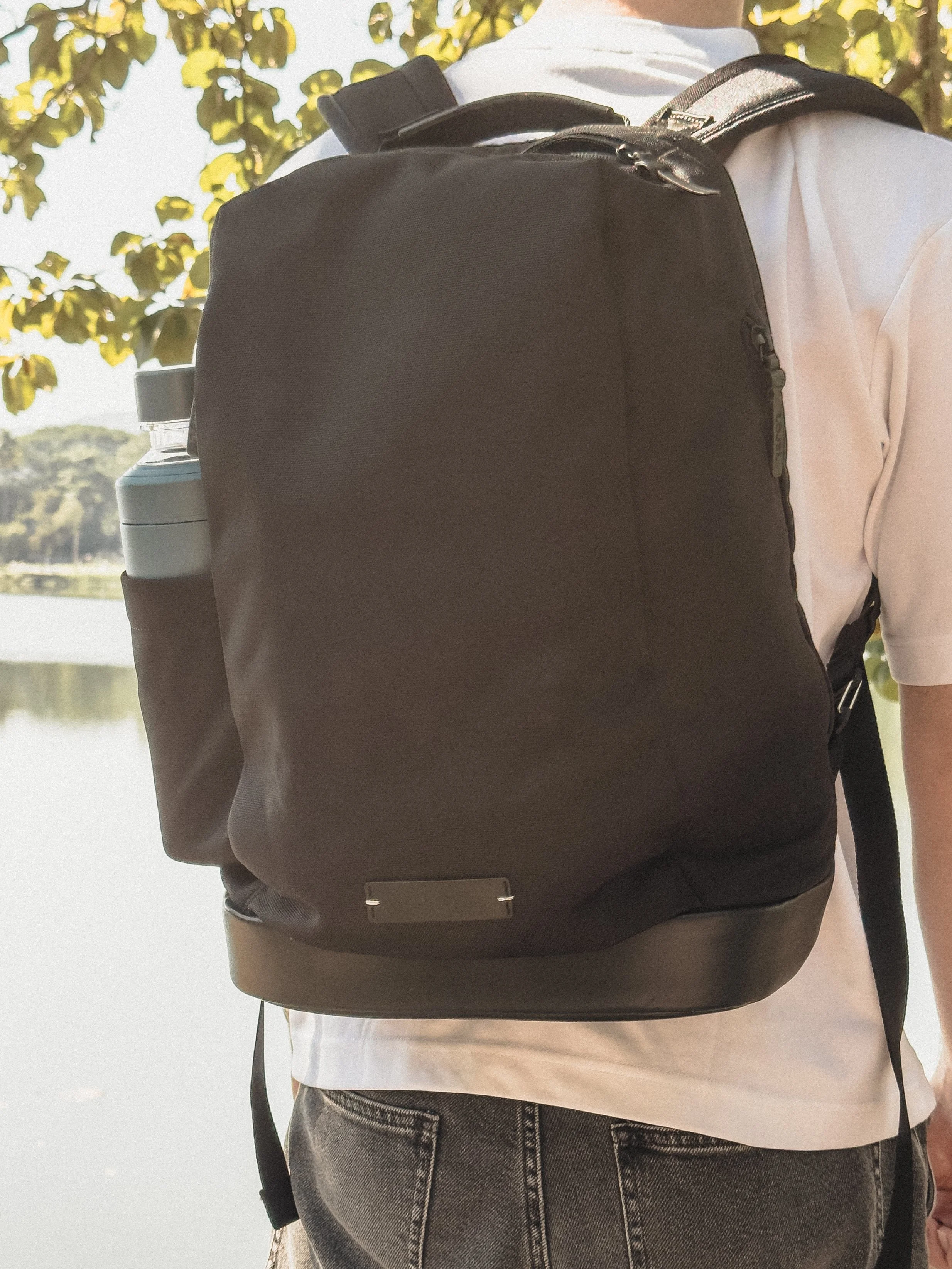
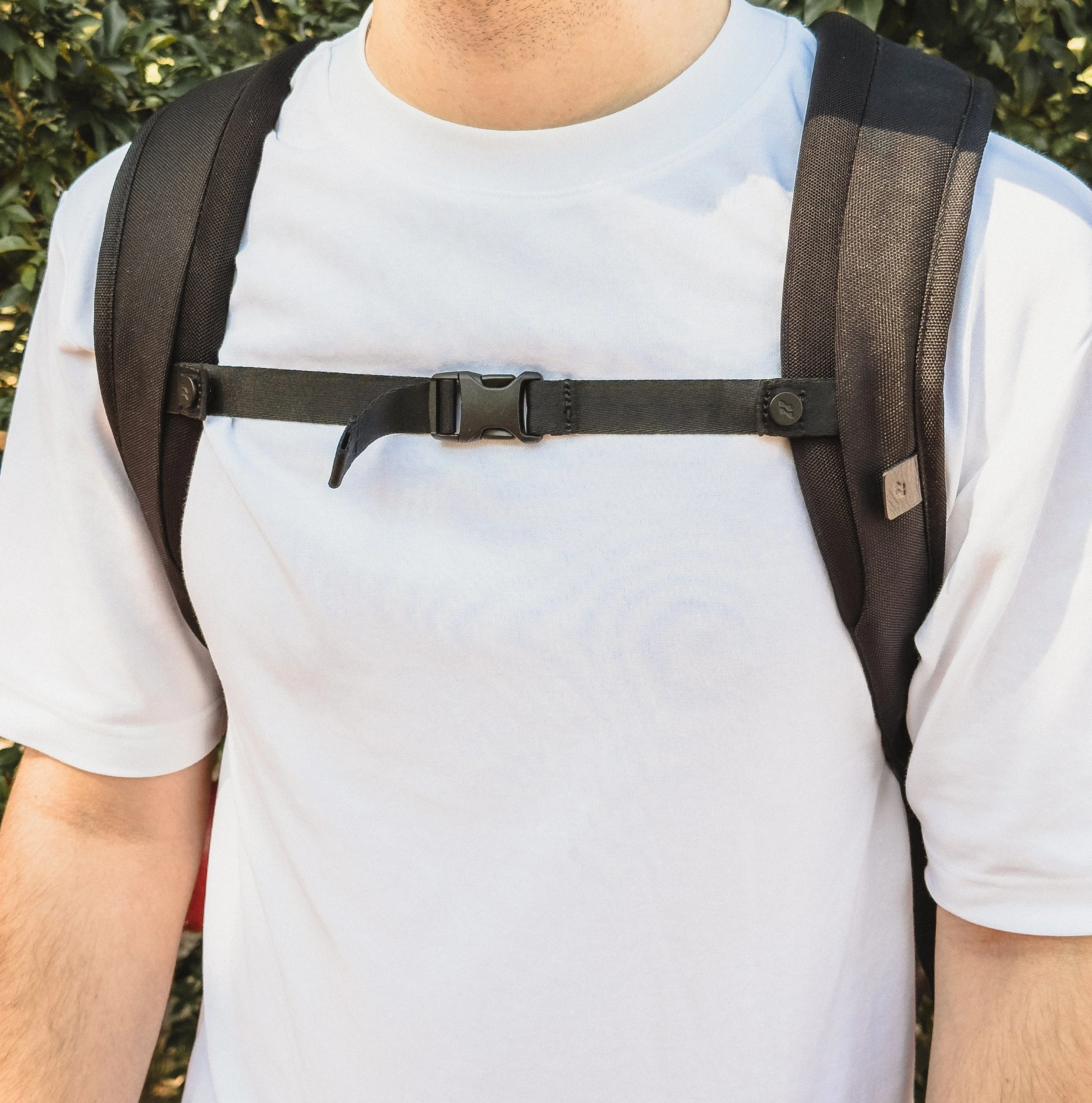
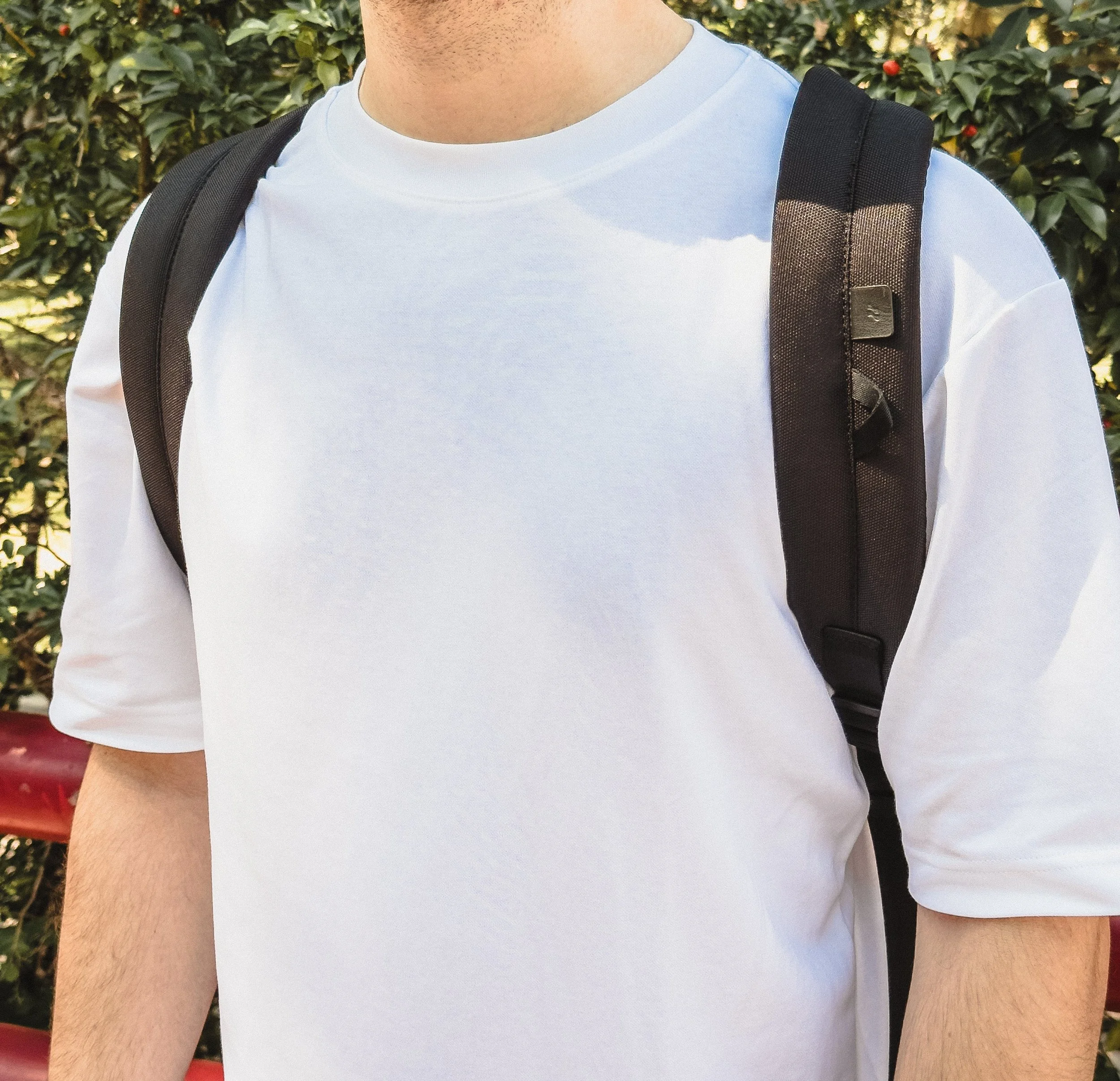
As I teased earlier, comfort is not the best part of the Eblo. In fact, it’s the comfort that made me give it up. Let’s start with the sling.
The strap is rather slippery, making the sling slide around a lot. In addition, the strap is thin. Both of these things make it dig into the neck quite a bit, especially under a heavy load. Most of the time it’s good enough, but never truly comfortable. This made me go back to my trusty Bellroy Venture Ready Sling. Now to the backpack.
I couldn’t wear the backpack for any reasonable period of time when using the City Straps. The way those straps connect to the bag makes them sit right on the edge of my shoulder, digging into the armpits. The stitch in the middle should have helped the strap flow better, but the padding is so firm that the straps remain rigid.
The Active Straps curve better to the shape of the body, and the sternum strap helps keep the shoulder straps on, well, my shoulders. But the padding is still way too firm for long-term comfort. It’s only thanks to the fact that I bought the All-Terrain Set that features those Active Straps that I was able to get any use out of the backpack. The base version only has the City Straps.
Pros and Cons
Pros
Premium exterior materials: 900D Cordura polyester and full-grain leather.
Smart-casual aesthetic that does not force you into any specific style and looks good from office to trail.
Stowable and replaceable shoulder straps.
Smart side pocket, practical top pocket, and useful stretchy water-bottle holder.
Spongy back-panel padding.
Great luggage-passthrough feature.
Voluminous sling that can fit even bulkier items, with a clean sling-to-backpack attachment system.
Cons
Expensive: 310 USD for the medium configuration.
Heavy: 1.15 kilos when empty, with just 18 liters capacity.
Collapses when under-loaded.
Dark, low-contrast interior lining often causes fishing by feel inside both the bag and sling.
No false bottom on the laptop sleeve.
Unbranded zippers.
Hard leather on the top handle.
Docked sling cuts the usable space in the main compartment in half.
Sling straps are thin and slippery, digging into the neck under heavy load.
The backpack’s City Straps are practically unusable because of their fit and rigid structure. Active Straps are only marginally better, thanks to the sternum strap.
Conclusion
I wanted to love the Lojel Eblo so much. Its idea and aesthetics resonated with me enough to leave my old Bellroy backpack in the hotel in Hong Kong and fly back home with a brand-new Eblo, only to disappoint me in terms of comfort enough to make me give up on it and switch to a different backpack six months later.
I still love Lojel—I own the Cubo Fit suitcase and the Niru duffel—and look forward to trying out their other products, but the Eblo is not it.